
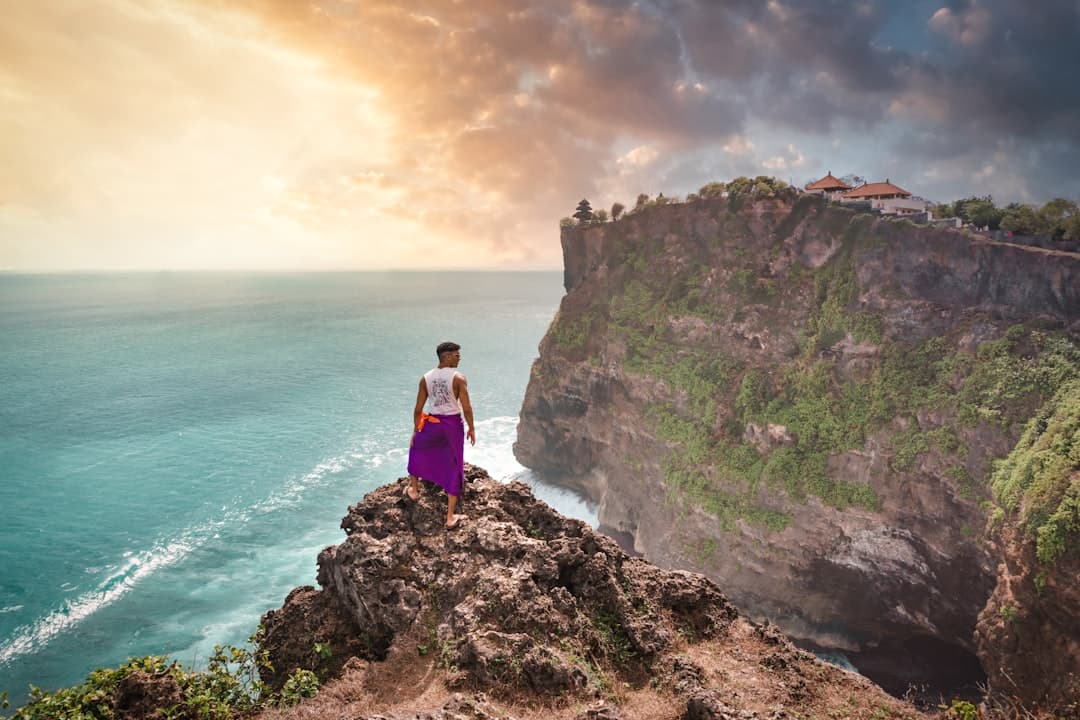
Lempuyang Temple
Bali / Lempuyang Temple

Lempuyang Temple

Bali's most photographed gate, framed perfectly by sacred Mount Agung.

🏛️ Sights & Landmarks🌿 Nature & Outdoors🎯 Activities & Experiences
🧗 Adventurous🎭 Cultural🌹 Romantic

Lempuyang Temple — formally known as Pura Lempuyang Luhur — is one of Bali's nine directional temples, a classification that places it among the island's most spiritually significant sites. Perched on the slopes of Mount Lempuyang in the Karangasem regency in east Bali, it has been a place of Hindu worship for centuries. Most visitors know it from a single image: the Candi Bentar, a split gateway that frames Mount Agung perfectly in the background. That photograph has circulated so widely online that Lempuyang has become one of the most recognizable landmarks in all of Southeast Asia, drawing thousands of visitors a week.

In practice, visiting Lempuyang is more of a pilgrimage than a sightseeing stop. The full temple complex climbs the hillside in a series of seven temples connected by steep stone staircases — a proper hike that takes several hours if you commit to the whole route. Most tourists, however, come for the famous gateway shot at the lowest temple, Pura Penataran Agung Lempuyang. There's always a queue for the photo. Local photographers with reflective boards create the illusion of a pool of water in the foreground, mimicking an effect that social media made famous. Beyond the shot, the setting is genuinely beautiful: jungle-covered hills, misty air, stone carvings draped in ceremonial cloth, and real religious activity happening alongside the tourism.

The temple is an active place of worship, and visitors need to approach it with respect. Sarongs and sashes are required and are provided at the entrance. Come early — well before 8am if you want any chance of a manageable queue for the gate photo, which can stretch to two or more hours by mid-morning. The drive to Lempuyang from Ubud takes around 1.5 to 2 hours, making it a full-day commitment from most parts of Bali. A driver for the day is the most practical option, as public transport doesn't serve this area well.

Local Tips

  1. 1

    The 'reflection pool' in the famous gate photo is actually a mirror or reflective board held by local photographers — there's no natural pool there. Pay the small fee, let them do their job, and you'll get the shot.

  2. 2

    If you want to see Mount Agung clearly through the gate, go on a dry-season morning with low humidity. Even then, the mountain can disappear behind cloud by 9 or 10am.

  3. 3

    The upper temples above Penataran Agung Lempuyang see almost no tourists and offer a completely different, meditative experience — budget an extra 2–3 hours if you want to climb the full complex.

  4. 4

    Hire a local driver rather than joining a group tour; having your own vehicle means you can leave at first light and get back to the gate before the queues form.

When to Go

Best times
April–October (Dry Season)

Clear skies give you the best chance of Mount Agung being visible through the gate — cloud cover frequently obscures the mountain during wetter months.

Before 7:30am

The queue for the gate photo builds fast. Arriving at opening time is the only reliable way to avoid a wait of 60–90+ minutes.

Try to avoid
November–March (Wet Season)

Afternoon rain and low cloud often shroud Mount Agung entirely, undermining the famous view. Paths can also become slippery.

10am–2pm

Peak crowd hours — the queue for the gate photo is at its longest, the heat is intense, and the site feels overwhelmed with tour groups.

Why Visit

01

The split gate framing Mount Agung is one of the most striking natural compositions in Bali — and it looks even better in person than in photos.

02

The full temple climb through jungle-covered hillside is a genuine spiritual and physical journey, with six more temples above the famous gate that most tourists never see.

03

Karangasem is east Bali at its most authentic — the drive alone passes rice terraces, black-sand coastline, and villages untouched by Seminyak-style development.