
Sacred Monkey Forest
Bali / Sacred Monkey Forest

Sacred Monkey Forest

Six hundred long-tailed macaques roam free through ancient temple grounds in the heart of Ubud.

🏛️ Sights & Landmarks🌿 Nature & Outdoors🎯 Activities & Experiences
🧗 Adventurous👨‍👩‍👧 Family-friendly🎭 Cultural

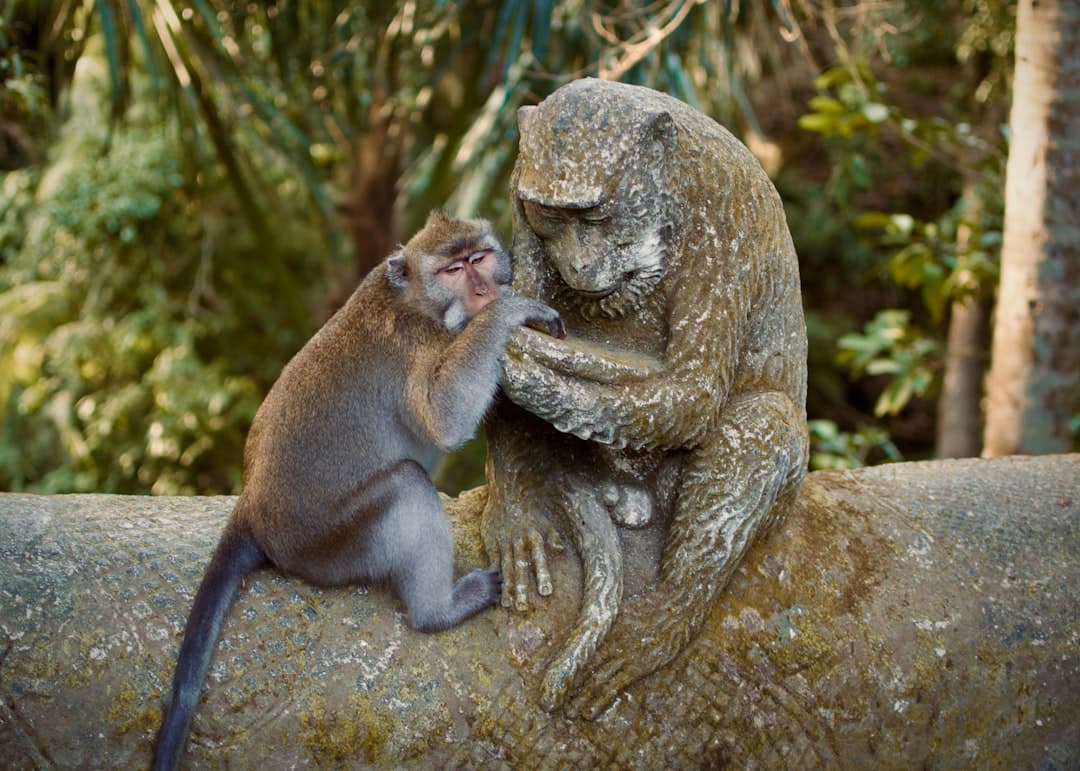
The Sacred Monkey Forest Sanctuary — officially known as Mandala Wisata Wenara Wana — is a nature reserve and Hindu temple complex in the center of Ubud, home to around 700 Balinese long-tailed macaques living freely among moss-draped trees, stone carvings, and three functioning temples. It's not a zoo or a theme park. The monkeys are wild, the temples are active, and the forest has been sacred to the local community of Padangtegal for centuries. Proceeds from entry fees go directly to village conservation and upkeep, so visiting here genuinely supports the community that maintains it.

Walking through feels like stepping into a fairy tale that occasionally turns feral. Stone pathways wind beneath enormous banyan trees hung with roots like curtains, past mossy statues of Ganesha and Rangda, while monkeys leap overhead, groom each other on temple walls, and — if you're not careful — rifle through your bag for snacks. The three temples inside (Pura Dalem Agung, Pura Beji, and Pura Prajapati) are genuinely important sites of Balinese Hinduism, still used for cremation ceremonies and religious festivals. The depth of the forest is denser and quieter than the main paths, and worth exploring.

Go early — 9am when it opens — to avoid the midday tour-group rush and to catch the monkeys at their most active. Don't bring food or anything that crinkles like food packaging. The monkeys are fearless and have mastered the zip-pocket. Bags with external pockets are their specialty. Entrance for foreigners is around 80,000–100,000 IDR, which is very reasonable for what's genuinely one of Bali's most atmospheric and layered experiences.
Local Tips

  1. 1

    Don't bring bananas, plastic bags, or anything that makes a crinkling sound — the monkeys associate these sounds with food and will investigate aggressively. Sunglasses on your head are also a target.

  2. 2

    The deeper you walk into the forest away from the main entrance path, the fewer tourists you'll encounter and the more atmospheric it becomes — the Pura Prajapati cremation temple area especially.

  3. 3

    If a monkey climbs on you, stay calm, don't make eye contact, and don't try to shake it off suddenly. The staff stationed throughout the forest are experienced at intervening — flag one down if you feel uncomfortable.

  4. 4

    The forest connects at the southern end to a quiet riverside walk along the Wos River that most visitors miss entirely — follow the steps down from near Pura Dalem Agung for a peaceful exit route.

When to Go

Best times
April to October (dry season)

Paths are drier and more comfortable to walk, and the forest canopy is at its most photogenic without heavy rain dampening visibility or making the stone paths slippery.

November to March (wet season)

Afternoon downpours can be intense and the stone paths get slippery. The forest is lush and often quieter with fewer tourists, but pack accordingly.

9am opening

Arrive right when the gates open for the fewest crowds and the most active monkeys — they're alert, playful, and the light through the banyans is beautiful.

Try to avoid
Midday, 11am–2pm

Tour groups peak during these hours and the main paths get crowded. The monkeys also tend to be less active in the heat of the day.

Why Visit

01

Wild macaques living in an active Hindu temple complex — an unlikely combination that somehow works perfectly and feels completely unique to Bali.

02

The forest itself is genuinely beautiful: ancient banyans, carved stone shrines, and cool shade that's a relief from Ubud's midday heat.

03

It's centrally located on Monkey Forest Road, so you can fold it into a broader afternoon in Ubud — galleries, warung lunches, and market stalls are all within a short walk.