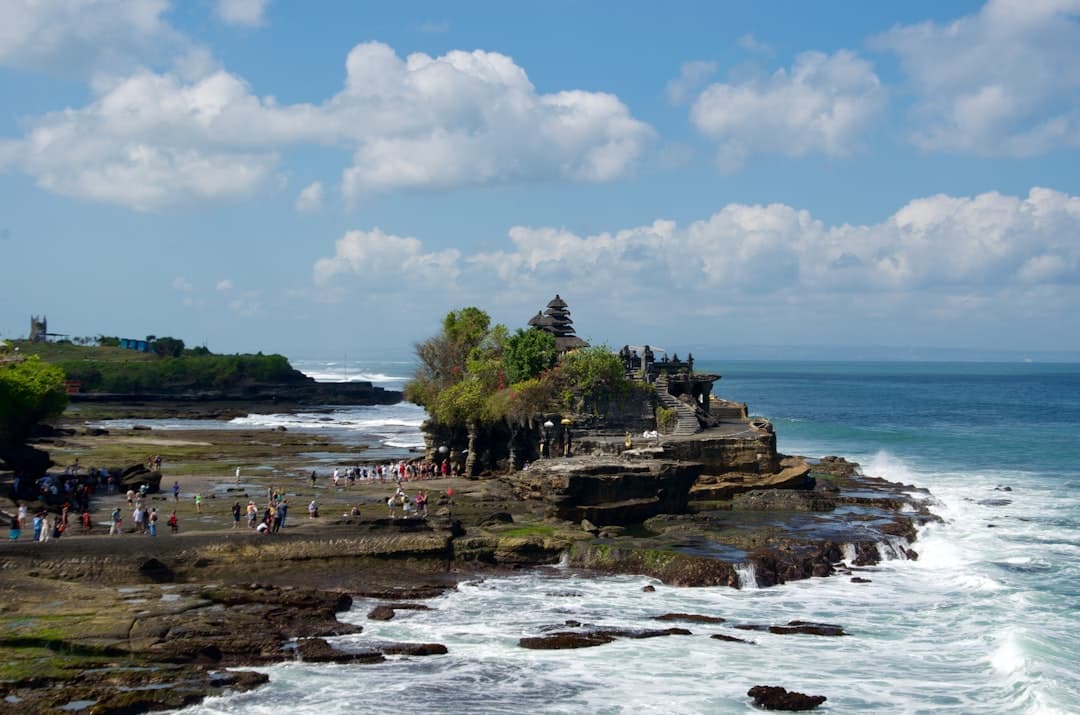
Tanah Lot Temple
A sea temple perched on a rock stack, framed by one of Bali's most iconic sunsets.
Tanah Lot is one of Bali's most sacred Hindu temples, built on a dramatic offshore rock formation that rises from the Indian Ocean along the island's southwest coast. Constructed in the 16th century and attributed to the influential Hindu priest Dang Hyang Nirartha, who is said to have stopped here during a pilgrimage across Bali, the temple sits at the intersection of spiritual devotion and raw natural spectacle. It's a place of genuine religious significance for Balinese Hindus — ceremonies and prayers happen here regularly — while also being one of the island's most-visited landmarks for travelers from around the world.
At low tide, you can walk across the exposed rocky causeway to the base of the rock, where Balinese priests sometimes offer blessings with holy water to visitors. The temple itself is off-limits to non-Hindu worshippers, but the surrounding clifftop paths and viewpoints give you sweeping perspectives of the rock, the crashing waves, and the smaller sea shrines tucked into nearby grottos. The area is famously home to sea snakes believed to be sacred guardians of the temple — you can sometimes spot them sheltering in crevices at the base of the rock. As the sun drops toward the horizon, the silhouette of the temple against a molten sky becomes one of those genuinely arresting travel moments that lives up to the photographs.
The surrounding complex has expanded significantly over the years and now includes restaurants, a cultural park, souvenir stalls, and the upscale Tanah Lot Art Market. It gets extremely crowded in the late afternoon as visitors converge for the sunset — arriving earlier in the day means calmer conditions and better access to the rock base at low tide. Check tide charts before you go, since high tide submerges the causeway entirely. The entry fee is modest and collected at the main gate; sarongs are provided for those who want to approach the temple area.