
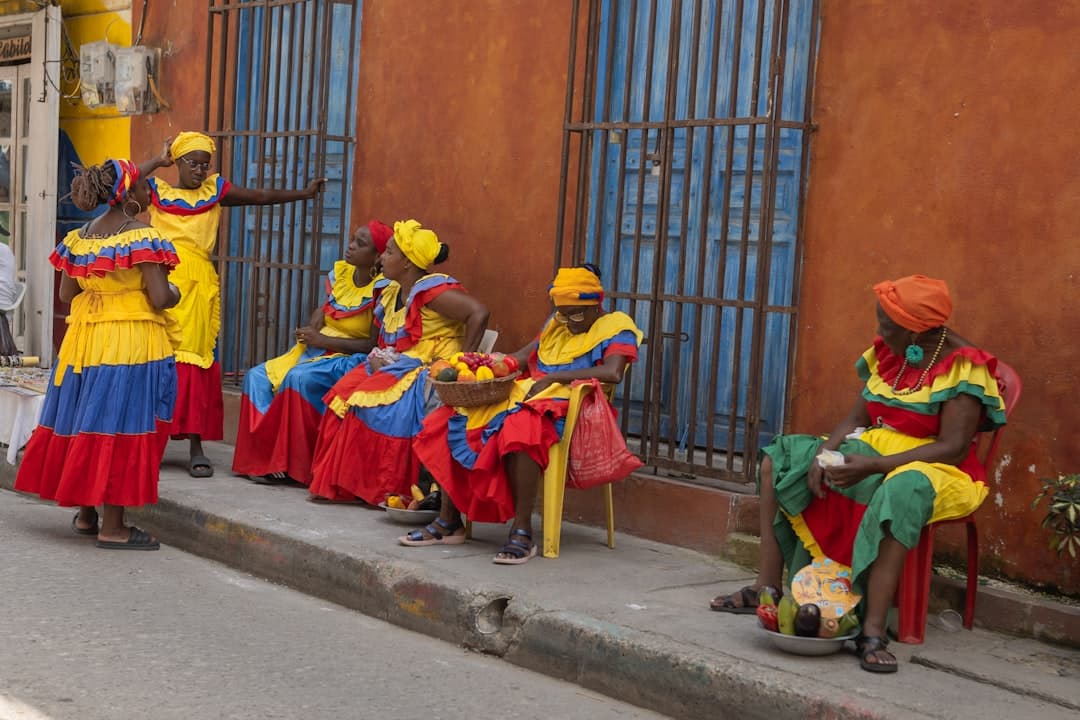
Old Town Cartagena
Four centuries of Caribbean history wrapped in coral-stone walls and bougainvillea.
Old Town Cartagena — officially known as the Centro Histórico — is a UNESCO World Heritage walled city on Colombia's Caribbean coast, and one of the best-preserved Spanish colonial cities in the Americas. Founded in 1533, it served as the primary port through which gold and silver from the New World were shipped back to Spain, which made it enormously wealthy and a constant target for pirates and rival empires. The massive stone walls and fortifications you walk along today were built over centuries precisely to protect that wealth. The result is a city center that feels almost impossibly cinematic: pastel-painted mansions draped in bougainvillea, cobblestone streets too narrow for most cars, church towers visible from every angle, and the warm Caribbean light that makes everything look slightly golden.
In practical terms, the Old Town divides into a few distinct neighborhoods within the walls. El Centro is the busiest and most commercial, home to the Plaza de los Coches, the Gold Museum, and the Cathedral. El Getsemaní, just outside the walls, is the grittier, more local barrio where Gabriel García Márquez famously set parts of his work and where the best street art and hole-in-the-wall restaurants have emerged over the last decade. San Diego, the quieter residential quarter inside the walls, has boutique hotels in converted colonial mansions and the Plaza de San Diego, one of the best places to sit with a beer as the evening cools down. You walk everywhere — this is a place for wandering without a fixed itinerary.
Cartagena's Old Town is busiest from December through March, when the Caribbean dry season coincides with peak tourist season and the city fills with Colombians escaping winter elsewhere. Come in the shoulder months — October and November are rainy but the crowds thin dramatically and the pace slows into something that feels more authentically local. The heat is relentless year-round (expect 30°C / 86°F most days), so mornings and evenings are when you want to be on foot. The tourist infrastructure here is excellent — this is not a backpacker town, it has world-class restaurants and hotels — but it rewards the traveler who peels away from the main plazas and follows a random street to see where it leads.