
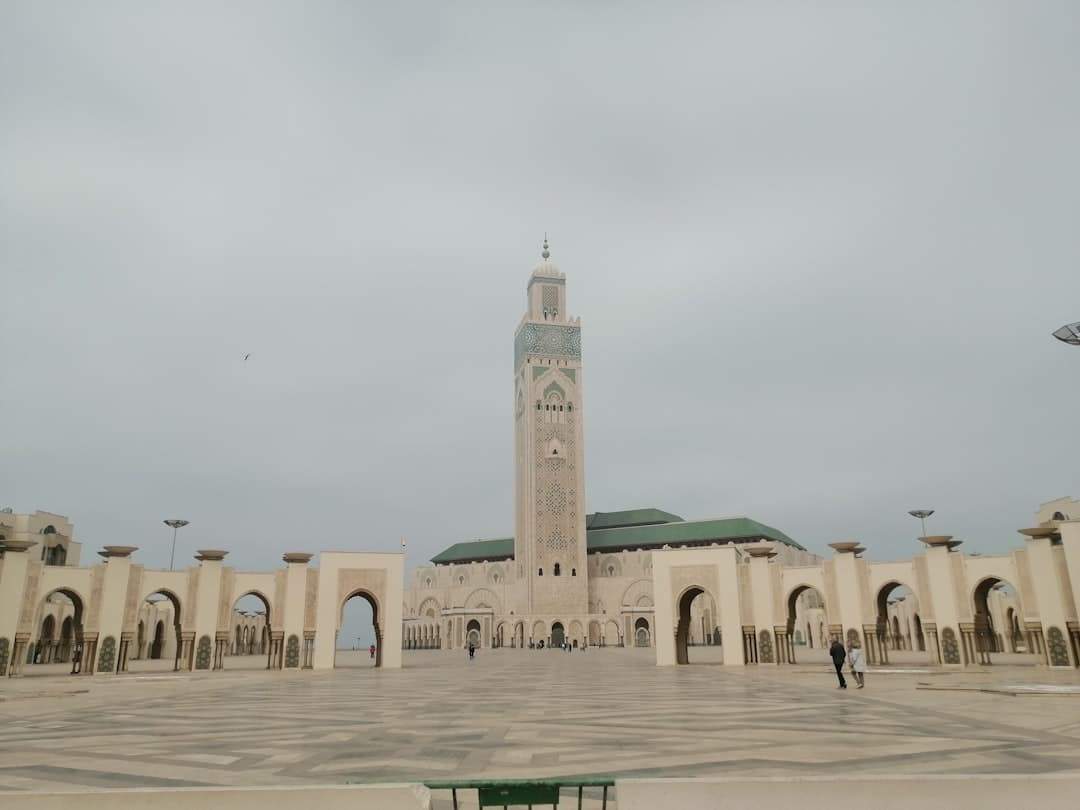
Royal Palace of Casablanca
A working royal residence you can admire only from its ornate gates.
The Royal Palace of Casablanca — known in Arabic as Dar el-Makhzen — is one of several official residences used by the Moroccan royal family, and the one that sits within Morocco's largest and most commercially important city. Unlike some royal palaces that have been converted into museums or tourist attractions, this one remains genuinely in use, which means visitors experience it from the outside only. That's not a disappointment — it's actually part of what makes it interesting. The palace complex covers a large footprint in the heart of the city, and its elaborate ceremonial gates are among the finest examples of traditional Moroccan craftsmanship you'll find in Casablanca.
What you actually do here is walk the perimeter and take in the architecture. The monumental entrance gates — adorned with intricate zellij tilework, carved plasterwork, and ornamental brass fittings — are genuinely spectacular, and the broad ceremonial esplanade in front gives you space to appreciate the scale. Royal Guard soldiers in traditional dress stand post at the gates, adding to the atmosphere. The surrounding neighbourhood has a slightly formal, unhurried feel compared to the city's chaotic commercial districts, and the streets nearby reward a slow wander.
The opening hours listed online — including claims it's open 24 hours on certain days — almost certainly refer to the public exterior and surrounding streets, not any kind of interior access. The palace itself is never open to the public. Visit during daylight for the best photographs of the tilework and gates. Combine it with a walk to the nearby Mohammed V Square, the civic heart of colonial-era Casablanca, which is only a short distance away.