Dubai Creek
The ancient waterway that reveals the city Dubai replaced.
Dubai Creek — known locally as Khor Dubai — is a natural saltwater inlet that splits the city into two historic districts: Deira to the north and Bur Dubai to the south. Long before the skyscrapers and the malls, this was Dubai: a pearl-diving and trading port that attracted merchants from India, Persia, and East Africa. The Creek is essentially the reason Dubai exists at all, and wandering its banks is the closest you'll get to understanding what this place was before it became what it is now.
The experience revolves around the water and the activity on either side of it. You cross by abra — the small wooden water taxis that have been making this crossing for generations — for just one dirham, one of the great travel bargains anywhere. On the Deira side, the Gold Souk and Spice Souk are a short walk from the waterfront, their lanes packed with merchants hawking saffron, frankincense, and stacked towers of 24-karat jewellery. On the Bur Dubai side, the restored heritage area around the Dubai Museum and Al Fahidi Historical Neighbourhood offers wind-tower architecture and a genuine sense of pre-oil Dubai. The Creek itself stays busy with dhows — traditional wooden cargo vessels — that still operate trade routes to Iran and India.
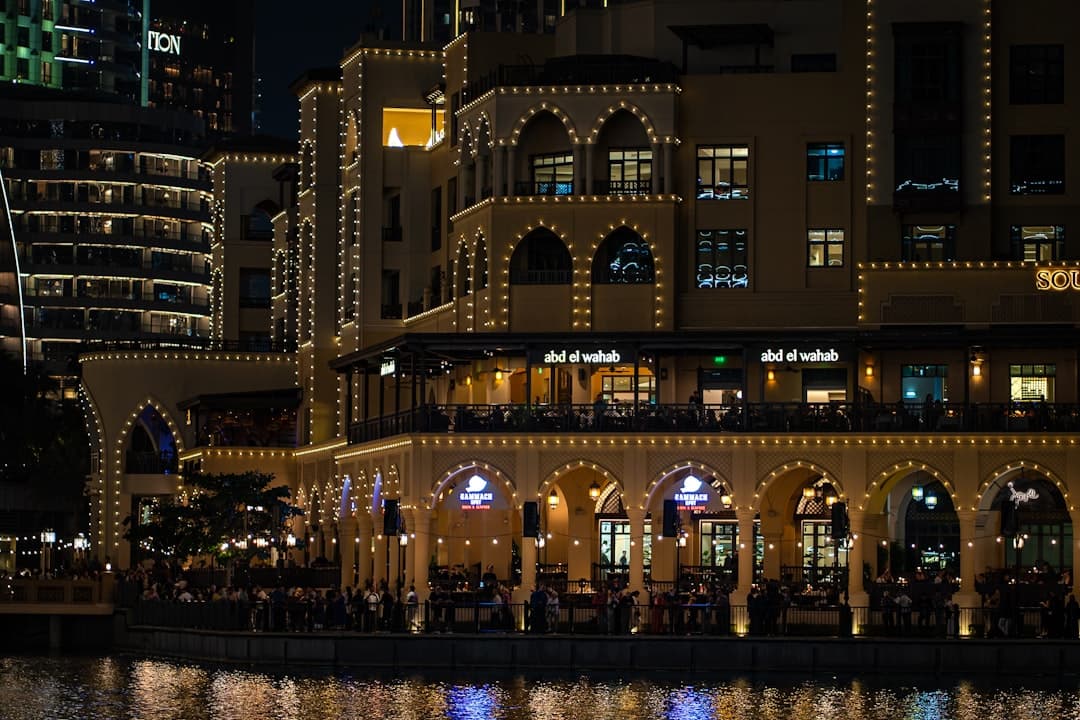
Evening is when the Creek really sings. The light softens, the air cools slightly, and the dhows light up along the Deira waterfront. A dinner cruise is a reliable way to see the whole stretch, though the quality varies — stick to operators with proper catering rather than the cheapest option. If you just want to sit, the waterfront promenade on the Bur Dubai side near the old souk area is an underrated spot to watch the abras dart back and forth while the city hums around you.