
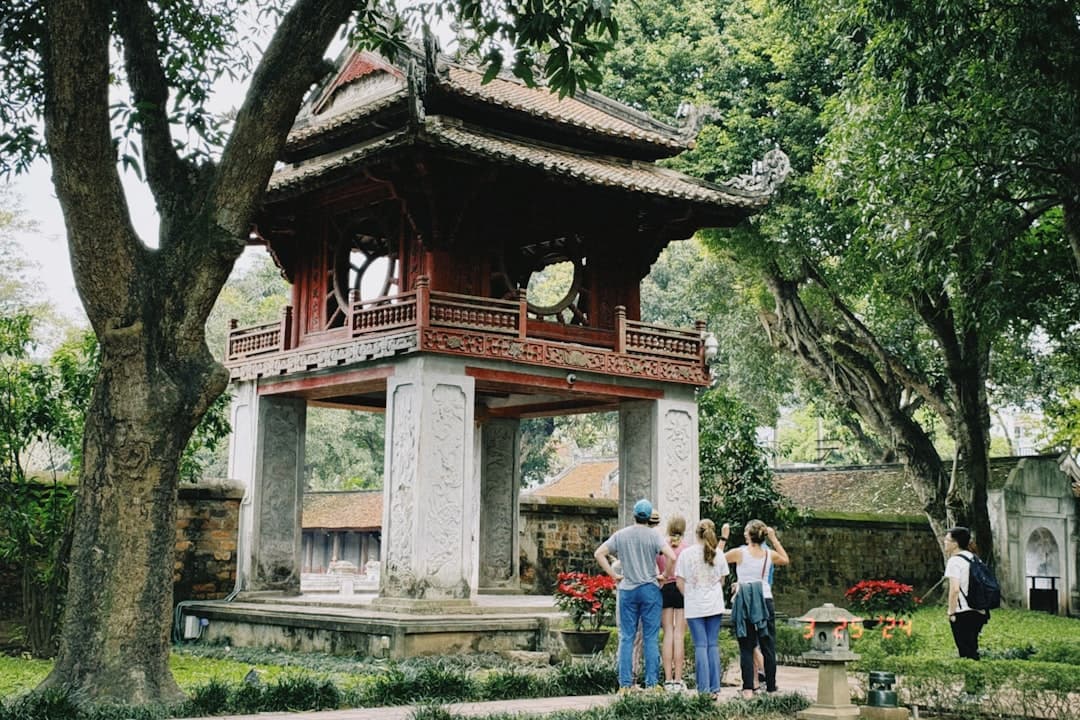
Hanoi Old Quarter
Hanoi / Hanoi Old Quarter

Hanoi Old Quarter

A 36-block maze of street food, silk, and 1,000 years of commerce.

🛍️ Shopping🎶 Nightlife🏛️ Sights & Landmarks🍽️ Food & Drink🎯 Activities & Experiences🏘️ Neighborhoods
🧗 Adventurous🍽 Foodie🎭 Cultural

The Old Quarter — Phố Cổ in Vietnamese — is the beating commercial heart of Hanoi, a dense warren of 36 ancient guild streets that has been continuously inhabited and traded upon since the 13th century. Each street was historically dedicated to a single trade, and many still carry those names today: Hàng Bạc (Silver Street), Hàng Đào (Silk Street), Hàng Thiếc (Tin Street). It's one of the best-preserved medieval urban quarters in Southeast Asia, and visiting it feels less like a tourist attraction and less like a theme park than it should — because people actually live and work here, in the same narrow tube-house architecture their ancestors built.

On the ground, the experience is joyfully overwhelming. You weave through motorbikes, past women carrying bánh mì baskets on bamboo shoulder poles, down alleyways where entire families run tailoring shops from their living rooms. The food alone could occupy days: bún chả grilled pork noodles on Hàng Mành, egg coffee at Cà Phê Trứng on Đinh Tiên Hoàng, pho at the no-name stalls that open only at dawn. Beyond food, you'll find Đồng Xuân Market (the quarter's enormous covered wholesale bazaar), centuries-old communal houses tucked behind unmarked doors, and the weekend Walking Street around Hoàn Kiếm Lake when the roads close to traffic.

The Old Quarter rewards wanderers more than planners. Pick a direction, get lost, and say yes to whatever a street vendor hands you. Early mornings — before 8am — are genuinely magical: the light is soft, the traffic is light, and the food stalls are in full swing. Avoid the peak heat of midday in summer by ducking into the covered sections of Đồng Xuân or sitting down for an iced cà phê đá. The area around Tạ Hiện Street, known informally as Beer Street, is the nightlife nucleus — chaotic, cheap, and completely unpretentious.

Local Tips

  1. 1

    The street addresses in the Old Quarter can be wildly misleading — numbers jump, alleys share names with streets, and Google Maps regularly sends you to the wrong block. Navigate by landmark and allow extra time.

  2. 2

    Sit on a plastic stool at street level whenever you see locals eating — if the stools are full by 7am, that's the stall worth queuing for.

  3. 3

    Hàng Gai (Silk Street) is the best place to get custom clothing made quickly, but get quotes from at least three shops and never pay the first price asked.

  4. 4

    The communal house at 38 Hàng Đào and the Bach Ma Temple on Hàng Buom are genuinely ancient and almost always overlooked by visitors walking past them — worth stepping inside.

When to Go

Best times
October–April

The cooler dry season is the most comfortable time to walk the streets for hours. November and December are particularly pleasant — mild temperatures and low humidity.

May–August

Summer heat and humidity can be punishing by midday. Tropical downpours are frequent and short. Still very much worth visiting, but plan outdoor walking for early morning or evening.

Tet (Lunar New Year, late Jan–Feb)

Many local shops and restaurants close for 5–10 days during Tet. The streets are dramatically quieter, which is fascinating to witness but limits the food and shopping experience.

Weekend evenings (Fri–Sun)

The Walking Street around Hoàn Kiếm Lake closes to traffic and fills with performers, vendors, and locals. It's lively and fun but extremely crowded — not ideal if you dislike dense crowds.

Why Visit

01

The street food here is among the most concentrated and authentic in Vietnam — pho, bún chả, bánh cuốn, and egg coffee all within a few blocks of each other.

02

The 36 guild streets preserve a medieval urban layout that has survived wars, colonialism, and modernization — walking them is a genuine connection to Hanoi's 1,000-year history.

03

The sensory intensity — the noise, the smells, the motorbike choreography, the layered chaos — is unlike anywhere else in Asia and impossible to replicate.