
Amber Fort
Jaipur / Amber Fort

Amber Fort

A 16th-century Rajput fortress where every courtyard tells a story in stone.

🏛️ Sights & Landmarks🎯 Activities & Experiences
🧗 Adventurous👨‍👩‍👧 Family-friendly🎭 Cultural🌹 Romantic

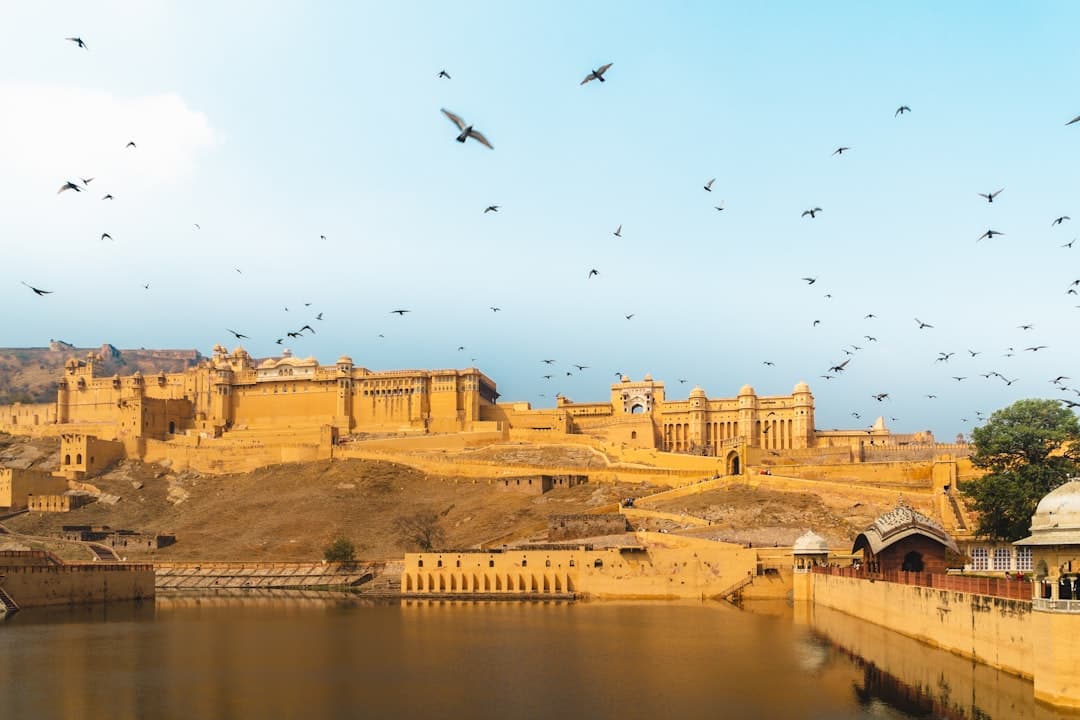
Amber Fort — properly called Amer Fort — sits on a rocky ridge above a narrow lake about 11 kilometres north of Jaipur city centre, and it's one of the most impressive examples of Rajput military architecture anywhere in India. Built in 1592 by Raja Man Singh I and expanded over the next century by his successors, it served as the capital of the Kachhawa Rajput clan before Jaipur was founded in the plains below. The fort is a UNESCO World Heritage Site as part of the Hill Forts of Rajasthan group, and unlike many heritage monuments in India that feel roped-off and remote, Amber rewards genuine exploration — you can walk through dozens of rooms, climb unexpected staircases, and lose yourself in its layered history.

The approach alone is worth savouring: the road winds up past Maota Lake, and the fort rises in tiers above you, its warm amber sandstone glowing against the Aravalli Hills. Inside, the complex divides into several distinct sections. The Diwan-i-Aam (Hall of Public Audience) gives way to the Ganesh Pol gateway, one of the most ornately painted archways you'll see anywhere. Beyond it lies the Sheesh Mahal — the Mirror Palace — where thousands of tiny glass tiles set into intricate plasterwork create a constellation effect when a single candle or torch is lit. The Sukh Niwas has channels carved into its floors that once carried cool water through the rooms, a medieval air-conditioning system that still impresses. Further in, the zenana quarters and the older Jai Mandir section have a quieter, more intimate feel.

Go early — doors open at 7am and the fort gets crowded by mid-morning, especially with tour groups. The light in the first hour is spectacular for photography, and the temperature is manageable. The sound-and-light show in the evenings is popular but reviewed inconsistently, so treat it as optional rather than essential. Skip the elephant rides at the base — they've been controversial on welfare grounds for years, and the walk or jeep up is easy enough. Hire a guide at the entrance rather than relying on audio guides, because the oral history of the Kachhawa clan is what gives the architecture meaning.
Local Tips

  1. 1

    Hire a government-approved guide at the main entrance rather than accepting unsolicited offers on the walk up — a good guide unlocks the Sheesh Mahal's history and explains the hidden passages that most self-guided visitors walk straight past.

  2. 2

    The fort connects via a ridgeline path to Jaigarh Fort above — if you have energy and stamina, the walk between the two takes about 20 minutes and the views are extraordinary. Your Amber ticket doesn't cover Jaigarh, so budget separately.

  3. 3

    The jeep shared taxis from the base are cheap, fast, and far more ethical than the elephant rides. Most drivers run a loop and drop you at the Suraj Pol (Sun Gate) entrance.

  4. 4

    The sound-and-light show runs in the evenings in both Hindi and English sessions — book through the Archaeological Survey of India office rather than through touts, and confirm show times on the day as they vary by season.

When to Go

Best times
October to February

Cool, dry weather makes climbing the ramparts comfortable and the skies are clear for photography. This is peak season for good reason.

July to September (Monsoon)

The hills turn green and the lake fills up, making the scenery unexpectedly lush. Crowds thin out significantly. Check for occasional closures after heavy rain.

7am–9am daily

Arrive at opening to beat tour groups, enjoy softer morning light on the sandstone, and have key spaces like the Sheesh Mahal largely to yourself.

Try to avoid
April to June

Temperatures regularly exceed 40°C and the exposed stone surfaces radiate heat intensely — visiting becomes genuinely punishing, especially midday.

Why Visit

01

The Sheesh Mahal (Mirror Palace) is a genuine jaw-dropper — its ceiling is encrusted with thousands of mirrored tiles that turn a single flame into a galaxy of light.

02

The fort's scale and walkability set it apart: you can wander freely through palaces, gardens, and defensive ramparts across a hilltop complex that took over a century to build.

03

The views over Maota Lake and the Aravalli Hills from the upper ramparts are among the best in Rajasthan — far more rewarding than anything you get from the city below.