Teotihuacán
Ancient pyramids that predate the Aztecs by centuries, built by a civilization we still can't name.
Teotihuacán is one of the most remarkable archaeological sites in the world — a massive pre-Columbian city that was, at its peak around 450 CE, among the largest urban centers on the planet, home to an estimated 125,000 people. And yet we don't know who built it. The Aztecs, who arrived centuries after the city had already been abandoned, named it Teotihuacán — 'the place where the gods were created' — because they found it so awe-inspiring they assumed it must be the birthplace of the sun and moon. The site covers roughly 83 square kilometers and sits about 50 kilometers northeast of Mexico City in the State of Mexico.
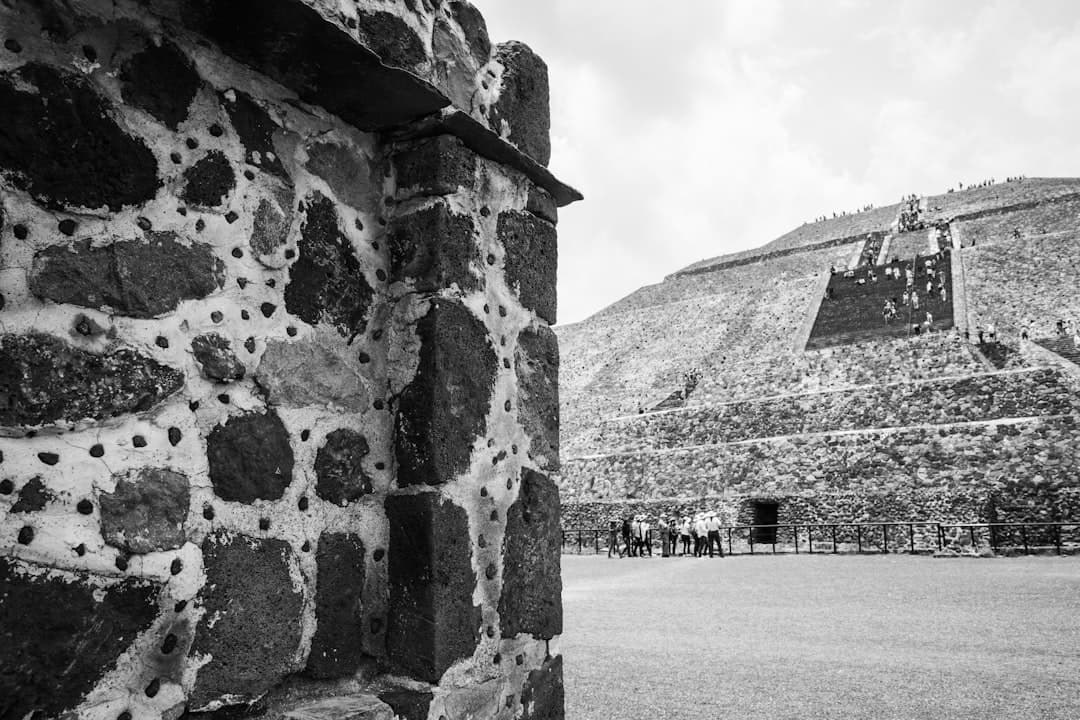
At the heart of the site is the Avenue of the Dead, a broad ceremonial boulevard flanked by temples and platforms that stretches for more than two kilometers. At one end rises the Pyramid of the Moon; dominating the skyline is the Pyramid of the Sun, the third-largest pyramid in the world by volume, which you can climb via a steep staircase of 248 steps for a panoramic view across the entire ancient city. Beyond the pyramids, the Temple of the Feathered Serpent (also called the Temple of Quetzalcoatl) is elaborately carved with serpent heads and rain deity masks — the finest decorative stonework on the site. Murals in the Tepantitla compound show vivid scenes of paradise and ritual life in colors that have survived nearly two millennia.
Get here early — gates open at 9am and the site gets genuinely crowded by mid-morning, especially on weekends. The vendors selling obsidian figurines along the Avenue of the Dead are relentless but good-humored; a polite 'no gracias' works fine. The on-site museum (Museo de la Cultura Teotihuacana) is small but excellent and worth 30 minutes of your time. Many visitors come as a day trip from Mexico City, but the town of San Juan Teotihuacán itself has a few decent mezcal and pulque stops if you want to linger into the afternoon.