
Nairobi National Park
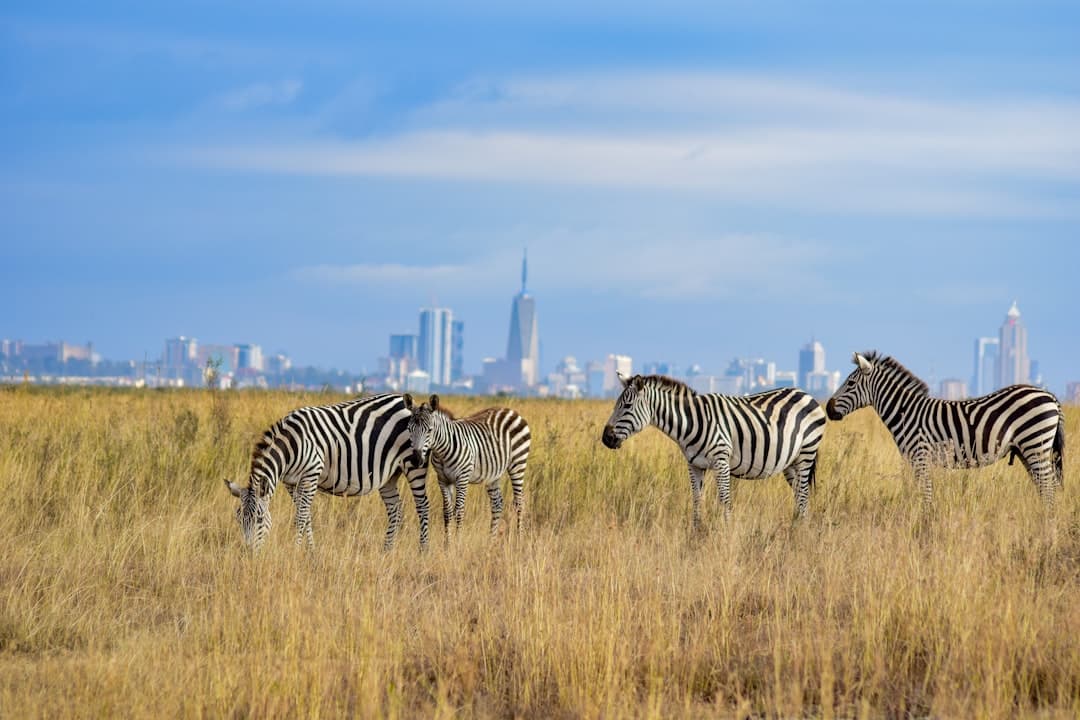
A full big-five safari experience with Nairobi's skyline as the backdrop.
Nairobi National Park is one of the most unlikely wildlife spectacles on earth — a fully functioning national park sitting on the southern edge of a capital city of five million people. Established in 1946 as Kenya's first national park, it covers roughly 117 square kilometres of open grassland, bush, and riverine forest. Lions, leopards, buffalo, rhinos, and hundreds of hippos and crocodiles live here, and the park is particularly celebrated as one of Africa's most important black rhino sanctuaries. The northern boundary has no fence, which means wildlife migrates freely between the park and the wider Athi-Kapiti ecosystem to the south.
A game drive here is genuinely surreal. You are watching a cheetah stalk prey across open savannah, and behind it, framed in your binoculars, are the glass towers of Nairobi's central business district. It never gets less strange or less wonderful. The park holds around 400 bird species, making it a serious destination for birders even on days when the big mammals are elusive. The Nairobi Safari Walk and Animal Orphanage sit at the main gate and offer a more contained wildlife encounter — useful for families with young children or anyone short on time for a full drive.
Enter through the main gate off Langata Road — it's well signposted from the city. Self-drive is permitted, and the road network is manageable, though a guide will dramatically improve your game-spotting success. Early morning drives between 6am and 9am are when predators are most active and the light is extraordinary. Kenya Wildlife Service manages the park, and entry fees are paid through their online system — foreign adult rates apply unless you have a Kenyan ID. Build in at least a half day; the park rewards slow, patient driving.