
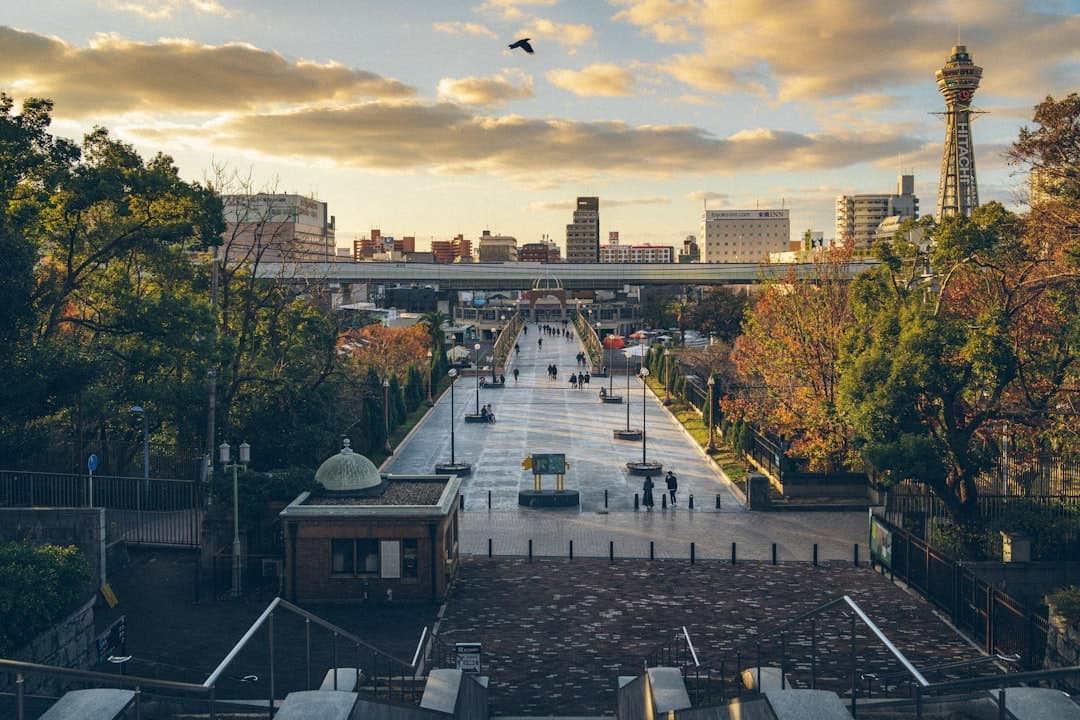
Shinsekai
Retro working-class Osaka at its most unfiltered and delicious.
Shinsekai is a dense, atmospheric neighborhood in southern Osaka that feels like a time capsule from the mid-20th century. Built in 1912 as a utopian entertainment district modeled on Paris and Coney Island, it fell into decline over the following decades and became one of the city's poorer, rougher areas. Rather than being demolished or gentrified into blandness, it survived largely intact — neon signs, retro pachinko parlors, old-school sento bathhouses, and all. Today it's one of the most distinctive and genuinely characterful corners of any major Japanese city, dominated by the Tsutenkaku Tower that has stood at its center since 1956.
The experience here is overwhelmingly about eating, wandering, and soaking up atmosphere. The neighborhood is famous above all for kushikatsu — skewered, deep-fried meat and vegetables dunked in a communal sauce, with a strict no-double-dipping rule that every restaurant enforces with cheerful aggression. The streets are lined with kushikatsu joints, many of them tiny, standing-room affairs run by elderly Osakans who've been at it for decades. Between bites you'll pass vintage game arcades, old men playing shogi outside convenience stores, mahjong parlors, and shops selling Billiken figurines — the good-luck deity who has been Shinsekai's mascot since the early 1900s. Climbing Tsutenkaku Tower gives you a view over the whole scene and a chance to rub Billiken's feet for luck.
Shinsekai sits next to Tennoji, one of Osaka's main transport hubs, so it's genuinely easy to reach — yet it still feels off the well-worn tourist trail. Come in the early evening when the neon kicks in and the kushikatsu restaurants are humming. Avoid weekends if you're claustrophobic, as the central strip around Tsutenkaku can get packed. The neighborhood has a slightly rough-and-ready edge that is absolutely part of the charm — this isn't a theme park recreation of old Osaka, it's the real thing.