
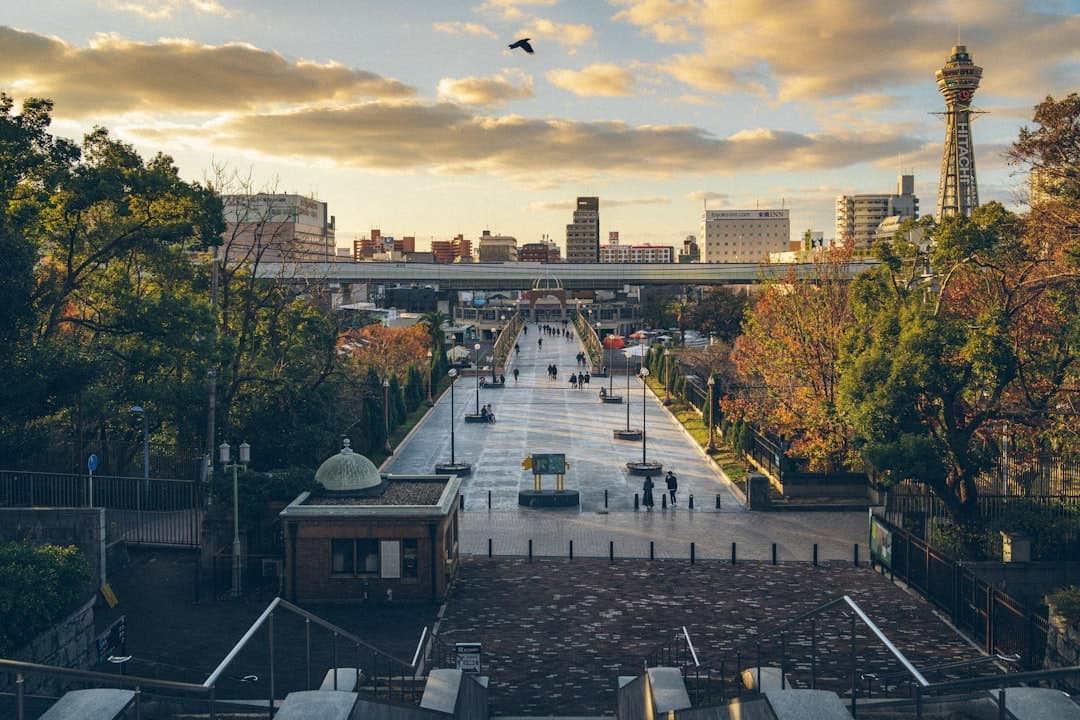
Tennoji Park
Osaka / Tennoji Park

Tennoji Park

Osaka's breathing room: a vast green park anchoring the city's ancient southern core.

🏛️ Sights & Landmarks🌿 Nature & Outdoors🎯 Activities & Experiences🎭 Arts & Entertainment
🌿 Relaxing👨‍👩‍👧 Family-friendly🎭 Cultural

Tennoji Park is a large urban park in the heart of Osaka's Tennoji Ward, occupying around 26 hectares just south of Tennoji Station. It's one of the oldest public parks in Japan, opened in 1909, and sits in a part of the city with deep historical roots — the nearby Shitennoji Temple, founded in 593 AD by Prince Shotoku, is considered one of Japan's oldest Buddhist temples. This cluster of heritage, greenery, and civic life in one compact area makes Tennoji one of the most layered and rewarding districts in all of Osaka.

The park itself contains several distinct attractions. The Osaka City Museum of Fine Arts sits within its grounds, as does the Keitakuen Garden, a traditional Japanese strolling garden that often goes unnoticed by visitors rushing to the nearby zoo. Tennoji Zoo, one of Japan's oldest zoos, occupies a large section of the park and draws families year-round. Beyond those anchors, the park has broad lawns, walking paths, and a relaxed local energy — you'll see office workers eating lunch, elderly couples walking slowly, and kids in school uniforms on field trips. The Tsutenkaku Tower looms visibly to the north, marking the edge of the Shinsekai entertainment district, which makes the whole area feel like a convergence of old and new Osaka.

Practically speaking, the park itself is free to enter, with admission charged separately for the zoo, the fine arts museum, and Keitakuen Garden. It's worth timing a visit to combine at least two of these. Morning is the calmest time — the lawns are quieter, the garden light is beautiful, and you beat the school group rush at the zoo. The surrounding neighbourhood is also excellent for eating, especially in Shinsekai to the north, where the local kushikatsu (deep-fried skewers) scene is the most authentic in the city.

Local Tips

  1. 1

    Keitakuen Garden charges a small separate entry fee (around ¥150) and is almost always quiet — it's one of the most underrated spots in the park and deserves at least 30 minutes.

  2. 2

    If you're heading to Shinsekai for kushikatsu after the park, go at lunch rather than dinner — the lines at places like Daruma are shorter and the neighbourhood has a more relaxed, local feel in the daytime.

  3. 3

    The park is a known gathering spot in certain areas after dark — perfectly safe, but the crowd shifts noticeably in the evening, which is worth knowing if you're visiting with young children.

  4. 4

    Tennoji Station connects the Osaka Loop Line, the Midosuji subway line, and several other lines — it's a genuinely useful transit hub, so Tennoji Park pairs well with almost any other part of the city on the same day.

When to Go

Best times
Late March – Early April

Cherry blossom season transforms the park's lawns and paths — the sakura here are well-established and the setting, framed by the city, is beautiful. Crowds are heavy on weekends.

November

Autumn foliage makes Keitakuen Garden especially photogenic, and the weather is mild enough to spend a full morning outdoors comfortably.

Try to avoid
July – August

Osaka summers are brutally hot and humid. Outdoor time in the park becomes uncomfortable by mid-morning, and the zoo in particular is draining in the heat.

Why Visit

01

The Keitakuen Garden is a hidden gem inside the park — a beautifully maintained traditional Japanese garden that most visitors walk straight past on their way to the zoo.

02

Tennoji Zoo is one of Japan's oldest, opened in 1915, and a genuinely enjoyable half-day for families or anyone who wants to see pandas and big cats without the scale of a theme park.

03

The park puts you within easy walking distance of Shitennoji Temple, Shinsekai's famous food street, and the retro Tsutenkaku Tower — making it a natural base for exploring the full depth of southern Osaka.