
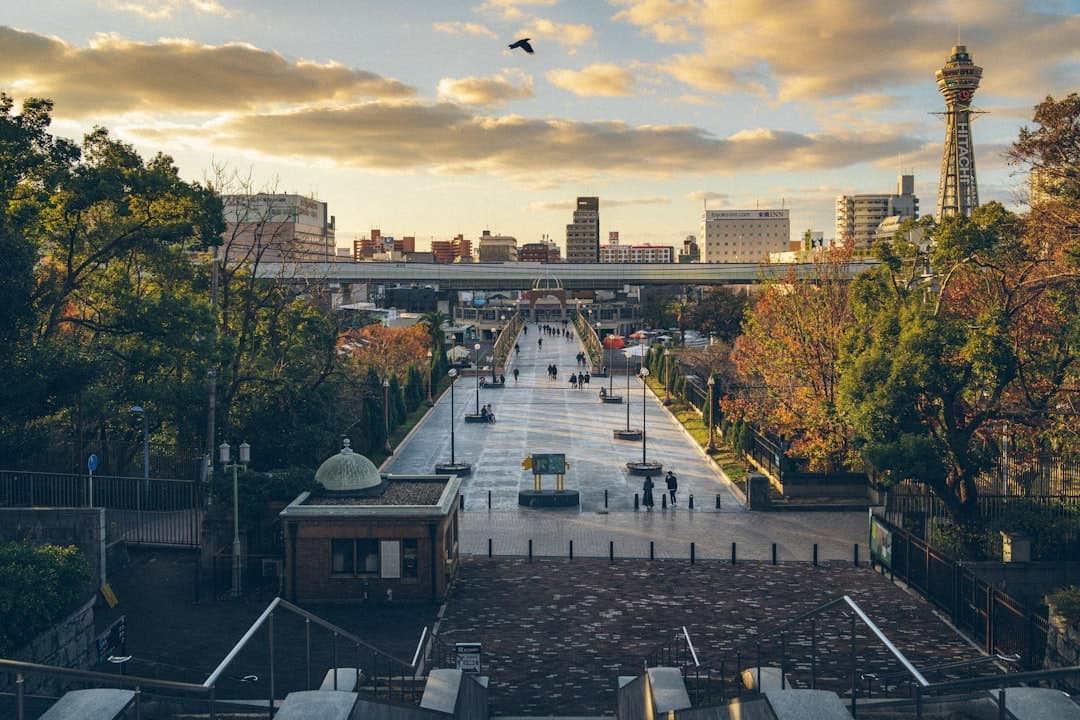
Tsutenkaku Tower
Osaka's retro tower standing proud over its most nostalgic neighbourhood.
Tsutenkaku is a 108-metre steel tower in the Shinsekai district of southern Osaka, and it's one of the city's most recognisable symbols. The name translates roughly as 'tower reaching heaven,' and the original version — built in 1912 as part of an ambitious entertainment district modelled loosely on Paris and Coney Island — was demolished during World War II for scrap metal. The current tower opened in 1956 and has been a beacon of working-class Osaka ever since. It's not the tallest or flashiest observation tower in Japan, but that's almost the point: Tsutenkaku wears its scrappiness with pride, and the neighbourhood around it feels genuinely lived-in in a way that most tourist districts don't.
Inside, the tower has multiple floors of observation decks and a decent amount of kitsch to work through on the way up — souvenir shops, displays about the tower's history, and a whole lot of Billiken, the American-designed 'god of luck' figure that Osaka has thoroughly adopted as its own. The main observation deck at 91 metres gives you solid views over Shinsekai's low-rise rooftops and neon signs, and on clear days you can see across to the distant mountains. There's also a glass floor section and a newer outdoor observation deck near the top for those who want a bit more exposure. The real experience, though, is the ground-level neighbourhood itself — the kushikatsu restaurants, the old-school pachinko parlours, the guys playing shogi in the park.
Tsutenkaku is genuinely cheap to enter by Japanese tourist attraction standards, and lines move reasonably quickly. Come in the evening when the tower's neon illumination is at its best and Shinsekai's street food scene is in full swing. Avoid the peak midday window on weekends if you can. The Shin-Imamiya or Dobutsuen-mae subway stations drop you right at the edge of the neighbourhood — from there it's a five-minute walk through the heart of Shinsekai.