Prague Castle
A thousand years of Czech history crowning the city's highest hill.
Prague Castle isn't just a castle — it's an entire walled city perched above the Vltava River, and at roughly 70,000 square metres it holds the title of the largest ancient castle complex in the world. It has been the seat of Czech rulers since the 9th century, housing Bohemian kings, Habsburg emperors, and now the Czech president. The complex contains palaces, churches, gardens, galleries, a basilica, a former convent, a toy museum, and the extraordinary St. Vitus Cathedral — all within a single fortified precinct. It is, in every sense, the symbolic heart of the Czech nation.
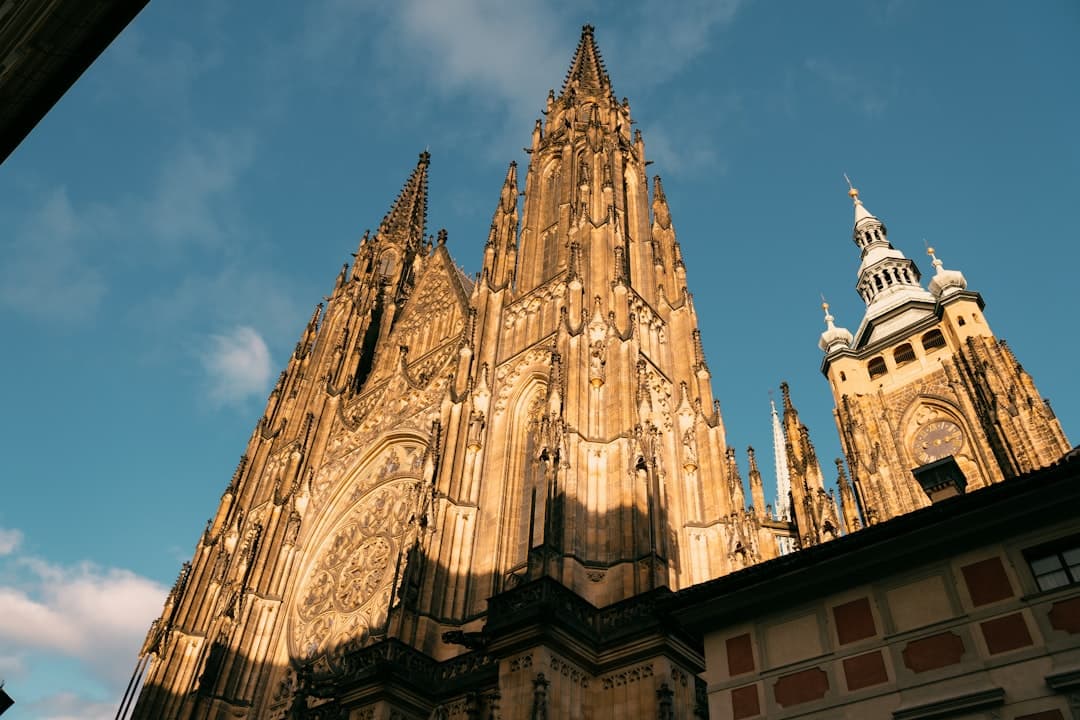
Visiting means working your way through layers of history at your own pace. St. Vitus Cathedral dominates everything — its Gothic towers took nearly 600 years to complete, and stepping inside to see the Mucha stained-glass windows and the tomb of St. Wenceslas is genuinely moving. The Old Royal Palace holds the vast Vladislav Hall, used for jousting tournaments in the 15th century. Golden Lane is a row of tiny colourful houses built into the castle walls where Franz Kafka briefly lived at number 22. The castle gardens — especially the South Gardens redesigned by Josip Plečnik in the 1920s — offer some of the best elevated views over the red rooftops of Malá Strana and the Old Town below.
The castle grounds themselves are free to enter and open early; it's the individual monuments and buildings that require a ticket. There are several ticket tiers, and the Circuit B option covers the Cathedral, Old Royal Palace, St. George's Basilica, and Golden Lane — which is the right call for most visitors. Come as early as possible to beat the tour groups that descend by mid-morning. The changing of the guard happens on the hour at the main gate and is worth a glance, but don't rearrange your whole visit around it.