Basilica di Santa Maria Maggiore
Rome's oldest surviving church, built on a legend of miraculous August snow.
Santa Maria Maggiore is one of Rome's four papal basilicas — the great churches that rank above all others in the Catholic world — and it holds the distinction of being the largest church in Rome dedicated to the Virgin Mary. Founded in the 5th century and substantially rebuilt over the following centuries, it sits atop the Esquiline Hill and has been a place of pilgrimage for over 1,500 years. The basilica's founding legend is a good one: in 358 AD, the Virgin Mary reportedly appeared to Pope Liberius and a Roman nobleman in a dream, instructing them to build a church on the spot where snow would fall the following morning. On August 5th, snow fell on the Esquiline — in the middle of a Roman summer — and the church was born. That miracle is still commemorated every August 5th with a ceremony where white flower petals are released from the ceiling to simulate the snowfall.
Inside, the basilica rewards slow, careful attention. The 5th-century mosaic panels along the nave walls are among the oldest surviving Christian mosaics in existence — Old Testament scenes rendered in glittering Byzantine gold that have outlasted virtually everything around them. The coffered ceiling, gilded with what is said to be the first gold brought from the Americas by Columbus, catches the light dramatically. The Sistine Chapel here — not to be confused with the one in the Vatican — is a lavish papal funerary chapel on the right side of the nave, while the Pauline Chapel opposite holds Borghese family tombs and a revered Byzantine icon of the Madonna. Beneath the high altar, a crystal and gold reliquary is said to contain fragments of the crib of Jesus from Bethlehem.
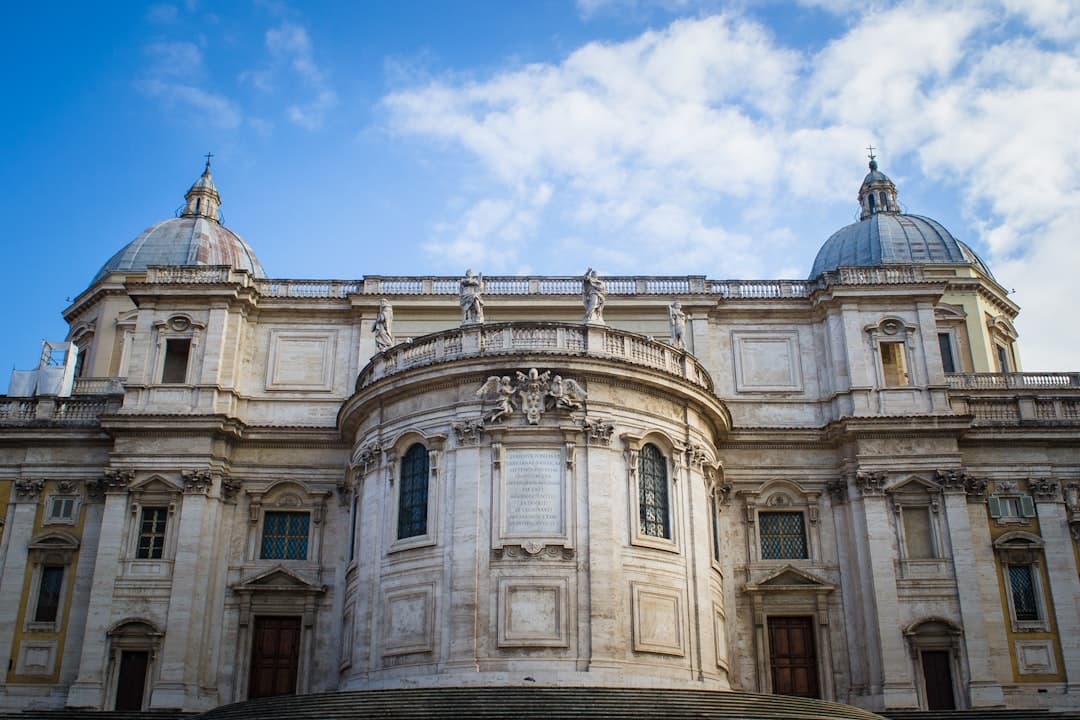
Because Santa Maria Maggiore sits slightly off the main tourist circuit — it's near Termini station rather than the Colosseum or Piazza Navona — it draws fewer crowds than St. Peter's or San Giovanni in Laterano. That makes it easier to actually absorb what you're looking at. The exterior apse facing Piazza dell'Esquilino is particularly photogenic in the early morning, with its great 13th-century apse mosaics visible through the curved exterior wall. Come here after a visit to Palazzo Massimo across town to see how Roman mosaic-making evolved over centuries.