Chinatown Singapore
Singapore / Chinatown Singapore

Chinatown Singapore

Five centuries of Chinese heritage packed into a living, breathing urban neighborhood.

🛍️ Shopping🏛️ Sights & Landmarks🍽️ Food & Drink🎭 Arts & Entertainment🏘️ Neighborhoods
🍽 Foodie👨‍👩‍👧 Family-friendly🎭 Cultural

Singapore's Chinatown — known in Hokkien as Niu Che Shui, or 'bullock cart water' — is one of Southeast Asia's most historically layered urban districts. It was established in the 1820s when Sir Stamford Raffles designated this area for the Chinese immigrant community, and over the following century it became a dense, chaotic, and vital hub for Hokkien, Teochew, Cantonese, and Hakka settlers who arrived seeking work. Today it occupies a cluster of streets southwest of the Singapore River — Pagoda, Trengganu, Sago, Smith, and Banda among them — and blends beautifully restored shophouses with active temples, hawker centres, and a genuinely diverse street life that resists being reduced to a tourist trap.

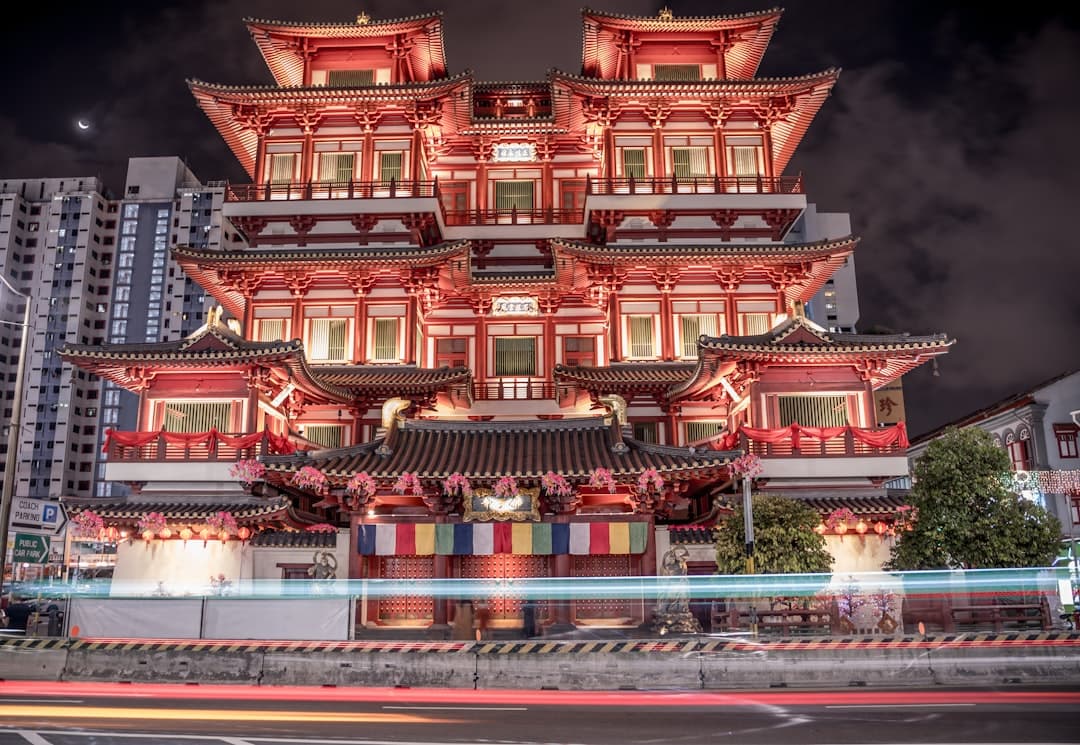
Walking through Chinatown means moving between layers of time. The Sri Mariamman Temple on South Bridge Road — a stunning South Indian Hindu temple that has stood here since 1827 — sits a few minutes' walk from the Buddha Tooth Relic Temple on South Bridge Road, a grand Tang dynasty-style complex that opened in 2007 and houses what is believed to be a relic of the Buddha. The Chinatown Heritage Centre on Pagoda Street reconstructs the cramped shophouse living conditions of early immigrants with genuine emotional weight. In between, you'll find medicinal halls selling dried seahorses and bird's nest, bak kwa (sweet dried pork) shops doing brisk business, and the Chinatown Food Street and Maxwell Food Centre drawing queues from morning through night.

The district is honest about the tension between heritage preservation and commercialization — souvenir shops selling fridge magnets do share space with century-old businesses — but if you venture half a block off the main drag, the authenticity comes roaring back. Come early morning to watch elderly residents doing tai chi in the small parks, or come after dark when the string lights illuminate the five-foot ways and the hawker centres hit their stride. Chinese New Year transforms the whole district into something genuinely spectacular, with lantern displays and street markets running for weeks.
Local Tips

  1. 1

    Tian Tian Hainanese Chicken Rice at Maxwell Food Centre (stall 10) is the one Anthony Bourdain visited and frequently queued for — arrive before 11am or after 2pm to avoid the worst of the lunchtime line.

  2. 2

    The upper floors of the Buddha Tooth Relic Temple contain a museum and a rooftop garden with a large prayer wheel — most visitors never make it past the ground floor, and those upper levels are far less crowded.

  3. 3

    Ann Siang Hill and Club Street, on the northeastern edge of Chinatown, have a completely different character — quieter, more upscale, with good cocktail bars and restaurants in heritage shophouses. It's worth the five-minute walk.

  4. 4

    The Chinatown MRT station (NE line and DT line) drops you right into the heart of the district — exit A leads directly onto Pagoda Street, which is the most atmospheric entry point.

When to Go

Best times
Chinese New Year (Jan–Feb)

The entire district transforms with elaborate light displays, a massive street market on Eu Tong Sen Street, and a festive atmosphere that's genuinely electric — this is Chinatown at its most alive.

Weekday mornings

The best time to visit — temples are active with worshippers, hawker centres serve fresh breakfast options, and the streets are calm enough to actually look at the buildings.

Try to avoid
Weekend afternoons (year-round)

Pagoda and Trengganu Streets get extremely crowded on weekend afternoons, making it hard to move freely and harder to enjoy the architecture or find a seat at popular hawker stalls.

Why Visit

01

Maxwell Food Centre, one of Singapore's most celebrated hawker centres, serves some of the best Hainanese chicken rice and char kway teow you'll find anywhere — at prices that will shock you with their reasonableness.

02

The Buddha Tooth Relic Temple is a free, architecturally stunning complex with a rooftop garden and a museum floor — far more impressive inside than the exterior suggests.

03

The shophouse streetscapes along Pagoda and Sago Streets are some of the best-preserved examples of colonial-era Chinese urban architecture in the world, and they're free to simply walk and photograph.