
Bondi Beach
Sydney / Bondi Beach

Bondi Beach

Sydney's most iconic stretch of sand, surf, and coastal energy.

🏛️ Sights & Landmarks🌿 Nature & Outdoors🎯 Activities & Experiences🏘️ Neighborhoods
🧗 Adventurous🌿 Relaxing👨‍👩‍👧 Family-friendly

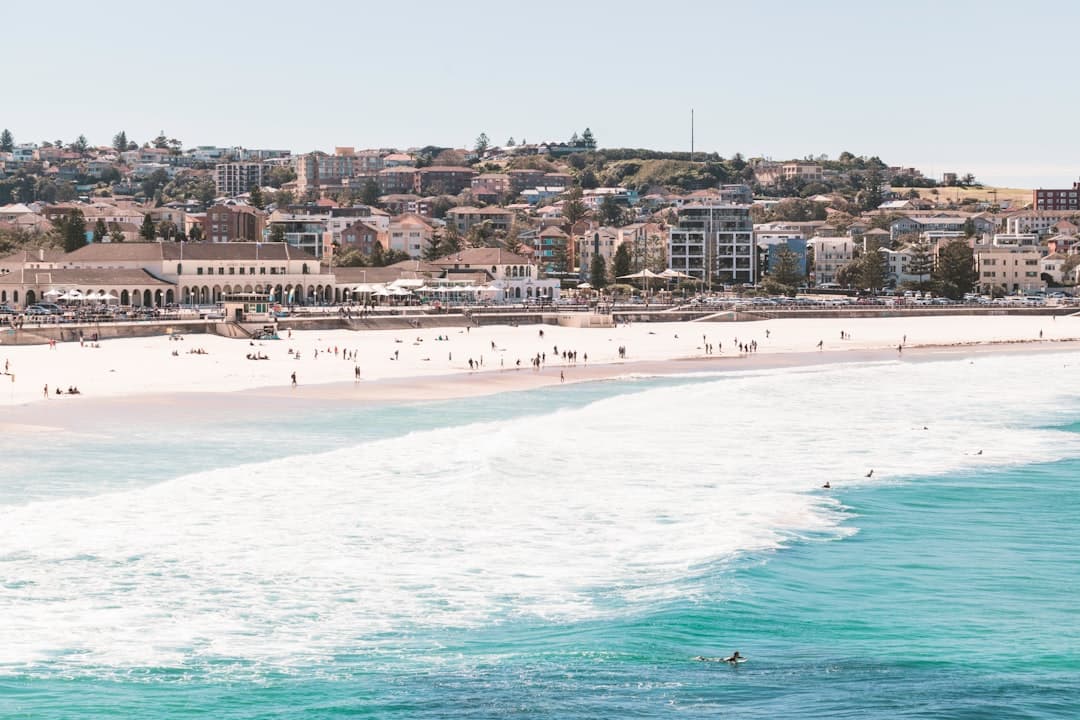
Bondi Beach is a crescent-shaped stretch of golden sand about 8 kilometres east of Sydney's CBD, and it's arguably Australia's most famous beach. The name comes from the Aboriginal word meaning 'water breaking over rocks' — fitting, given the powerful Pacific swells that roll in year-round. It's not just a beach; it's a self-contained world with its own culture, rhythms, and regulars, from serious surfers to backpackers on a pilgrimage to retirees doing their morning ocean swim.

The beach itself is about one kilometre long, flanked by grassy headlands at each end. The northern end tends to attract families and calmer swimmers, while the southern end, near the famous Bondi Icebergs pool, draws surfers and a more athletic crowd. Watching the surf lifesavers — the iconic bronzed figures in red and yellow caps — conduct training drills on the sand is a quintessentially Australian experience. The Bondi to Coogee coastal walk starts from the southern headland and is one of Sydney's great free experiences, threading past sea pools, clifftop parks, and Aboriginal rock engravings over about six kilometres.

Come early on a weekday if you want breathing room — summer weekends see the promenade and sand packed shoulder-to-shoulder. Campbell Parade, the main road running parallel to the beach, is lined with cafes, restaurants, and surf shops. Bill's Bondi and Icebergs Dining Room are the perennial crowd-pleasers for food, but the whole area rewards wandering. Parking is genuinely brutal in summer; the train to Bondi Junction plus the 333 bus is the stress-free move.
Local Tips

  1. 1

    Swim between the red and yellow flags — always. The surf can be deceptively powerful and rips form quickly. The flags mark where lifesavers are watching.

  2. 2

    The 333 bus from Bondi Junction station drops you right on Campbell Parade and is far less painful than driving. Street parking in summer is a genuine time-waster.

  3. 3

    For the Bondi to Coogee walk, start from Bondi and walk south toward Coogee — you get the best cliff views facing the right direction, and you can finish with lunch in Coogee village.

  4. 4

    Icebergs pool is closed on Thursdays for cleaning — don't make the trip specifically for the pool on that day.

When to Go

Best times
December to February (Australian Summer)

Peak season — warm water, festivals, and the beach at its liveliest. Also the most crowded, with weekend parking impossible and the sand packed by midday.

Weekend mornings in summer

Arrive before 9am to claim a spot on the sand and beat the crowds. By 11am on a sunny Saturday it's wall-to-wall.

June to August (Australian Winter)

The beach is quiet and genuinely beautiful — crisp air, clear water, and far fewer people. Swimmers still use Icebergs. Not beach weather for most visitors, but great for the coastal walk.

Sculpture by the Sea (late October to early November)

A free outdoor sculpture exhibition takes over the coastal walk between Bondi and Tamarama — one of the most popular free arts events in Australia.

Try to avoid
Weekend afternoons in January

Hottest, most congested time — crowds are overwhelming and the bus queues back to Bondi Junction can be 30+ minutes.

Why Visit

01

The Bondi to Coogee coastal walk is one of the world's great free urban hikes — dramatic cliff scenery, tidal pools, and ocean views for six uninterrupted kilometres.

02

Bondi Icebergs, the saltwater ocean pool carved into the southern headland, is an Australian institution — watching waves crash over the lane ropes while you swim is unlike anything else.

03

The beach itself captures something genuinely Australian: volunteer surf lifesavers, a democratic mix of locals and tourists, and a café culture built around flat whites and post-swim eggs.