Ginza
Tokyo / Ginza

Ginza

Tokyo's most glamorous shopping district, where old-money elegance meets cutting-edge retail.

🛍️ Shopping🏛️ Sights & Landmarks🍽️ Food & Drink🎭 Arts & Entertainment🏘️ Neighborhoods
🌿 Relaxing🎭 Cultural🌹 Romantic

Ginza is Tokyo's most prestigious commercial neighborhood — a grid of wide, tree-lined boulevards in central Tokyo that has served as the city's luxury heartland since the Meiji era. Think of it as the Japanese equivalent of Paris's Champs-Élysées or New York's Fifth Avenue, but with more architectural ambition and considerably better food. Department stores like Mitsukoshi and Matsuya anchor the neighborhood alongside flagship boutiques from every major European luxury house, but what really sets Ginza apart is the density of serious culture — galleries, auction houses, and some of Tokyo's most respected restaurants share space with the designer storefronts.

On the ground, Ginza rewards wandering. The main artery is Chuo-dori, which runs north to south and becomes a pedestrian boulevard on weekend afternoons — a genuinely pleasant place to walk, people-watch, and window-shop. The 6-chome intersection is the de facto center, anchored by the iconic Wako department store with its clock tower, a Ginza landmark since 1932. Duck into any of the side streets and you'll find intimate galleries showing serious contemporary Japanese art, standing sushi bars where a lunchtime omakase costs a fraction of what dinner would, and old-school kissaten (coffee shops) that have been pouring their particular blends since the postwar decades. The Sony Building's replacement, the Ginza Sony Park, brought a more playful edge to the neighborhood when it opened as a public event space.

Ginza is expensive but not inaccessible. The trick is to separate the looking from the buying — the architecture alone, including Hermès's glass-brick tower by Renzo Piano and the perforated aluminum Chanel building by Peter Marino, is worth the trip. Come hungry and work your way through the basement food halls of any of the major department stores, where you can eat extraordinarily well for very little money. The Tokyo Metro Ginza Line, Marunouchi Line, and Hibiya Line all converge at Ginza Station, making it one of the easiest neighborhoods in the city to reach.
Local Tips

  1. 1

    The standing sushi bars on and around 4-chome and 6-chome serve the same-quality fish as the sit-down omakase restaurants nearby but at a quarter of the price — look for counters where you can see the chef working.

  2. 2

    Ginza has a serious gallery scene that most visitors walk straight past. The area around 1-chome through 8-chome has dozens of small contemporary art galleries, most of which are free to enter and genuinely show excellent work.

  3. 3

    The Itoya stationery shop on Chuo-dori is a nine-floor institution — even if you have no interest in paper goods, the selection and presentation inside is a masterclass in Japanese retail culture and worth thirty minutes of your time.

  4. 4

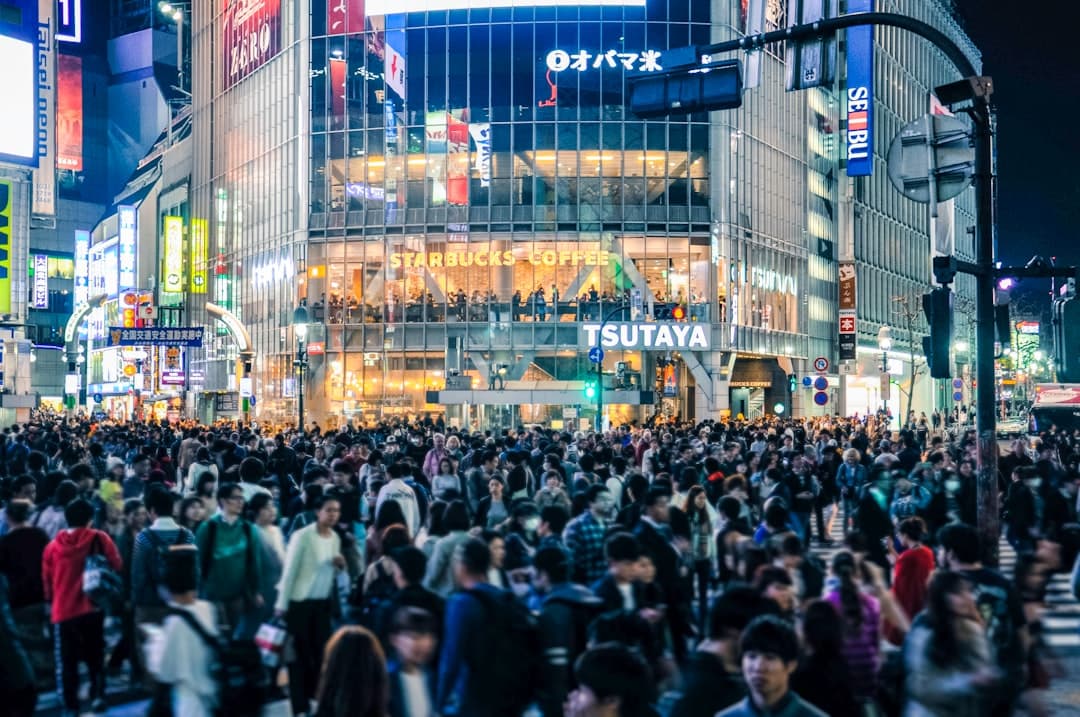
    If you want to see Ginza at its most cinematic, come on a clear evening when the illuminated storefronts and wide pavements make the whole neighborhood feel like a film set. The Saturday pedestrian hours extend into early evening.

When to Go

Best times
Weekend afternoons year-round

Chuo-dori closes to vehicles on Saturday and Sunday afternoons, making it the best time to walk the main boulevard without traffic. In warmer months, outdoor seating spills onto the street.

Late December

Ginza's Christmas illuminations are among the city's most elegant, and the department stores go all-out for year-end gifting season. Crowds are intense and prices spike at restaurants, but the atmosphere is genuinely festive.

Try to avoid
New Year's holiday (Jan 1–3)

Many independent restaurants and galleries close entirely, and the neighborhood runs on reduced hours. Most major department stores open for New Year sales, so if shopping is the goal it can still work.

Why Visit

01

The concentration of landmark architecture is extraordinary — buildings by Renzo Piano, Peter Marino, and other major international architects line the same blocks as century-old Japanese department stores.

02

The basement food halls of Mitsukoshi and Matsuya are among the best in Tokyo — a dense, affordable way to graze through Japanese sweets, sushi, prepared foods, and regional specialties without a reservation anywhere.

03

Chuo-dori closes to traffic on weekend afternoons, turning one of Tokyo's grandest boulevards into a rare, relaxed pedestrian space in the heart of the city.