La Boqueria Market
Barcelona / La Boqueria Market

La Boqueria Market

Barcelona's legendary covered market, where serious food culture meets daily chaos.

🛍️ Shopping🏛️ Sights & Landmarks🍽️ Food & Drink
🍽 Foodie👨‍👩‍👧 Family-friendly🎭 Cultural

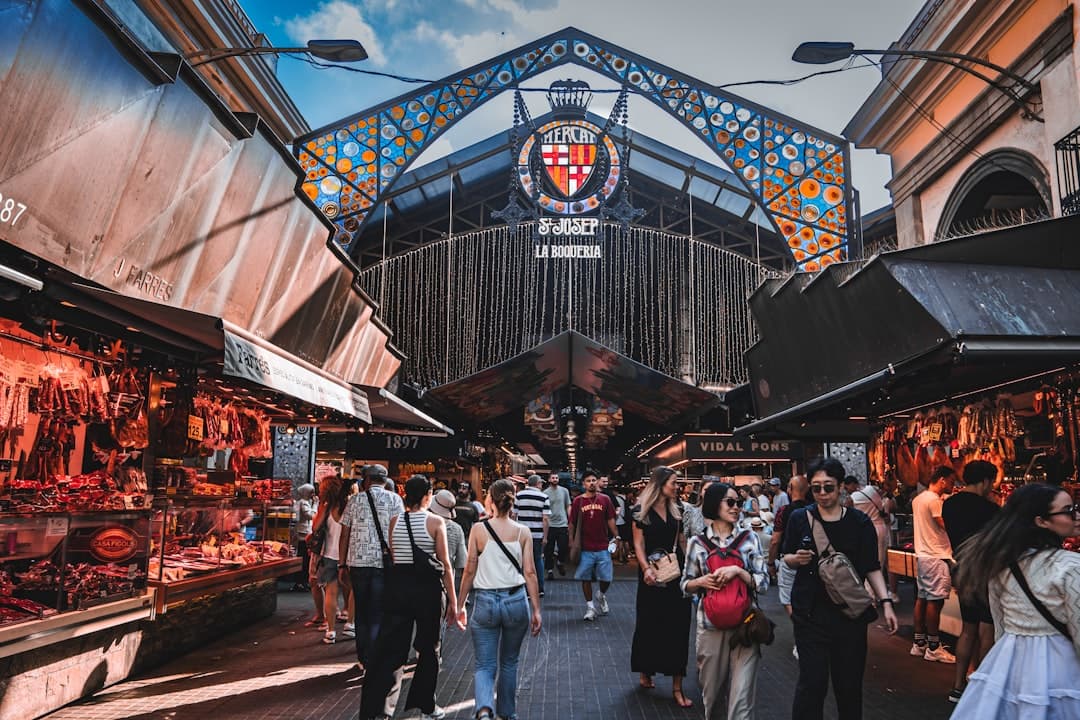
Mercat de Sant Josep de la Boqueria — everyone just calls it La Boqueria — is a vast covered public market sitting just off Las Ramblas in the heart of Barcelona's old city. It's been a market site since at least the 13th century, though the current iron-and-glass structure dates to the 19th century. For locals, it's a working food market. For visitors, it's one of the most visually spectacular places in the city: a cathedral of produce, meat, fish, spices, and prepared food, packed under a vaulted metal roof with light streaming in from the sides.

Walking in from Las Ramblas, you pass through a grand arched entrance and immediately hit the famous fruit and juice stalls — towers of tropical fruit, lurid smoothies, and cut portions of melon and pineapple arranged with an almost theatrical precision. Move deeper and the market opens up: whole fish and live shellfish on ice, hanging jamón legs, counters of Catalan charcuterie, stalls selling wild mushrooms or dried peppers, and a scattering of small stand-up bars where locals eat breakfast or lunch. The smell shifts every few metres. The colour is relentless. Some stalls have been run by the same families for generations.

Be honest with yourself about what you're walking into: La Boqueria is heavily touristed, and the stalls closest to the entrance are priced accordingly. The juice cups are overpriced; the pre-cut fruit is fine but not a bargain. The real La Boqueria is found deeper in — past the tourist perimeter — where fishmongers are loud and specific, where butchers sell things you won't find in a supermarket, and where the bar stools at counters like Bar Pinotxo or El Quim de la Boqueria are occupied by people who come back every week. Go on a weekday morning, eat something at a counter, and ignore the Instagram stalls by the door.
Local Tips

  1. 1

    Bar Pinotxo, just inside the main entrance on the right, is one of Barcelona's most beloved breakfast spots — owner Juanito has been there for decades. Arrive early; the stools fill fast and there's no reserving them.

  2. 2

    El Quim de la Boqueria is another legendary counter deeper in the market, known for creative tapas using whatever's fresh that day — fried eggs with baby squid is a signature.

  3. 3

    The fruit and juice stalls right at the entrance are tourist-priced. The same produce sold 20 metres deeper in the market is often noticeably cheaper.

  4. 4

    La Boqueria is closed on Sundays, and some stalls also close on Mondays — a Tuesday-to-Friday morning visit gives you the best chance of seeing everything open and fully stocked.

When to Go

Best times
Weekday mornings (before 10am)

The market is busiest and most chaotic from mid-morning onward, especially on weekends. Arriving early on a weekday means fewer crowds, fresher stock, and a better chance of getting a stool at Bar Pinotxo.

Try to avoid
Weekend afternoons

Las Ramblas crowds flood in during weekend afternoons and the market becomes genuinely difficult to move through. Stalls also start running low on stock.

Summer (July–August)

Tourist volumes peak and the market is at its most overwhelmed. Still worth visiting, but go as early as possible.

Why Visit

01

The sheer visual spectacle of the place — the colours, the abundance, the architecture — is genuinely unlike any supermarket or food hall you've been to before.

02

Some of Barcelona's best casual eating happens at the market's stand-up bar counters, where chefs cook with whatever's fresh that morning.

03

It's a real, functioning market that's been feeding the city for centuries — history you can smell, touch, and eat.