La Pedrera
Gaudí's undulating apartment building turned the whole concept of architecture inside out.
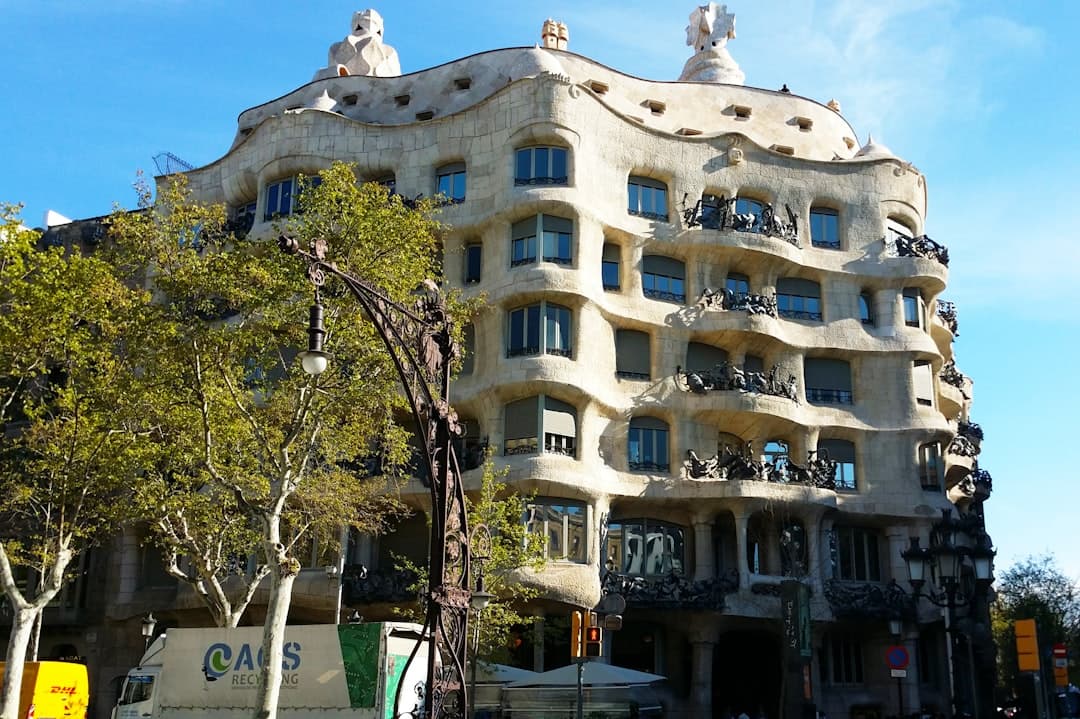
La Pedrera — formally known as Casa Milà — is Antoni Gaudí's last civilian building, completed in 1912 on the elegant Passeig de Gràcia. Commissioned by the wealthy Milà family, it caused a scandal when it was built: Barcelonans mocked its rippling stone facade and organic curves, dubbing it La Pedrera, or 'the stone quarry,' as an insult. The nickname stuck, but the mockery didn't. UNESCO made it a World Heritage Site in 1984, and it's now recognized as one of the most radical and beautiful buildings ever constructed.
The experience rewards slow exploration. You move through the apartment building's original interior, stopping at a fully furnished period apartment that recreates bourgeois life in early 20th-century Barcelona, then climb into the extraordinary attic — a parabolic brick forest of catenary arches that houses a detailed exhibition on Gaudí's life and methods. But the roof terrace is the real revelation: a surreal landscape of twisting chimneys and ventilation towers that Gaudí disguised as warriors, nicknamed 'the witch-scarers.' The views over the Eixample grid toward the sea are superb, and the sculptural forms up close are genuinely otherworldly.
The building is managed by the Fundació Catalunya La Pedrera, which runs it professionally and well. Book tickets online in advance — this is one of Barcelona's most visited sites and same-day tickets often sell out, especially in summer. The evening 'Gaudí's La Pedrera: The Origins' experience, which includes a sound-and-light show on the roof, is excellent and tends to be less crowded than the daytime rush. If you're visiting during the day, aim for opening time or late afternoon to avoid the worst of the crowds.