Palau de la Música Catalana
Modernisme's most extravagant concert hall, built from stained glass and imagination.
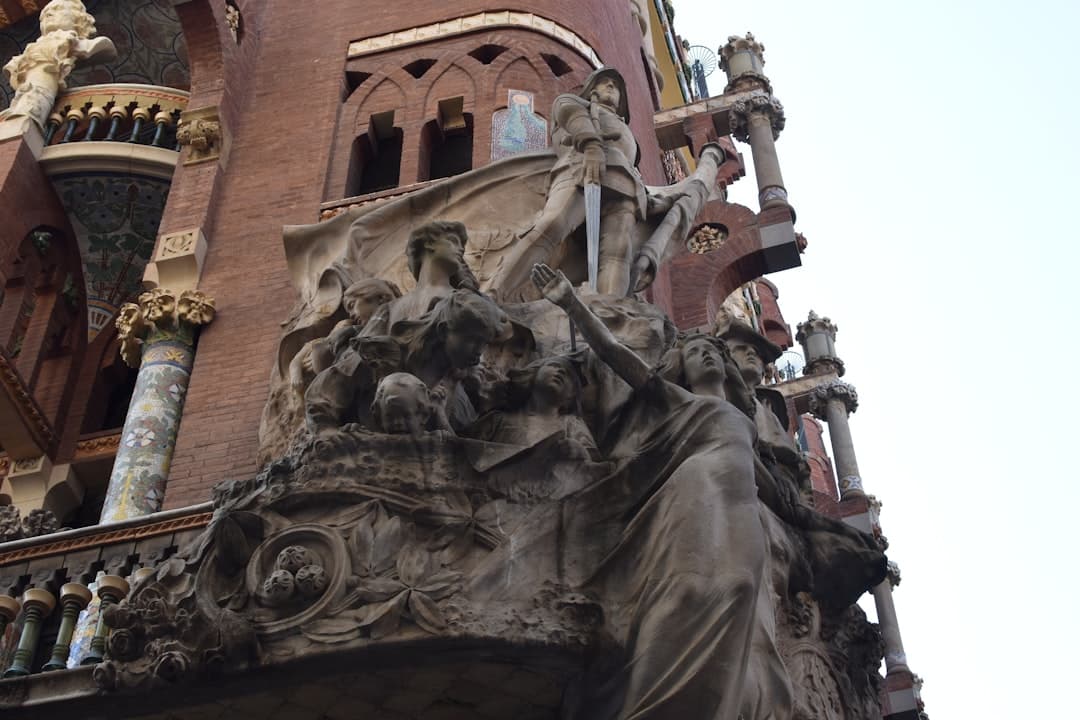
The Palau de la Música Catalana is a concert hall designed by the Catalan architect Lluís Domènech i Montaner and completed in 1908. It is one of the definitive masterworks of Catalan Modernisme — the Barcelona-rooted architectural movement that ran parallel to Art Nouveau across Europe — and a UNESCO World Heritage Site. But knowing those facts in advance barely prepares you for the building itself, which is covered floor to ceiling, inside and out, with ceramic mosaics, sculpted stone, iron latticework, and stained glass on a scale that feels genuinely delirious. It was built for the Orfeó Català, a choral society founded to promote Catalan music and culture, and that civic, almost defiant pride is woven into every tile.
The centrepiece of the interior is the auditorium's stained-glass skylight — an enormous inverted dome of amber and cobalt glass that floods the hall with natural light during daytime performances. The stage is framed by sculptural groups referencing Catalan folk song on one side and Beethoven and Wagner on the other, with ceramic busts of composers embedded into the structure. You can visit on a guided or self-guided tour of the building itself during the day, which gives you access to the main hall, the foyer, and the ornate exterior facade. The better experience, though, is attending a live concert — the hall hosts everything from flamenco and jazz to classical orchestras, and hearing music performed here makes the architecture make sense in a way a daytime tour simply cannot replicate.
The Palau sits in the El Born neighbourhood, a short walk from the Gothic Quarter but slightly off the main tourist drag, which means the surrounding streets are quieter and more local-feeling. Tours run throughout the day and can sell out, especially in high season, so booking ahead online is genuinely necessary. If you want to attend a concert, the programming ranges from serious classical to more accessible world music and flamenco nights — the latter are specifically designed for visitors and are a reliable way to combine a concert experience with the architecture. Check the official website for the current season.