
Bruges Canal
Bruges / Bruges Canal

Bruges Canal

Medieval waterways that made Bruges the Venice of the North.

🏛️ Sights & Landmarks🌿 Nature & Outdoors🎯 Activities & Experiences
🌿 Relaxing👨‍👩‍👧 Family-friendly🎭 Cultural🌹 Romantic

The canals of Bruges — locally called reien — are the veins of one of Europe's best-preserved medieval cities. Bruges built its fortune in the 13th and 14th centuries as a leading trading hub of the Hanseatic League, and its waterways were the arteries of that commerce, connecting the city to the sea and to merchants from across Europe. When trade eventually shifted to Antwerp, Bruges was essentially frozen in time, and those same canals survived largely intact. Today they wind through a city of step-gabled guildhalls, stone bridges, and weeping willows, offering one of the most cinematic urban landscapes on the continent.

The main experience here is simply being beside the water — or better yet, on it. Boat tours depart regularly from several jetties around the city center, particularly near the Dijver and Rozenhoedkaai, and give you an entirely different perspective on the medieval architecture that lines the banks. The Rozenhoedkaai — the quay of the rosary — is arguably the most photographed corner in Belgium, where a bend in the canal frames the Belfort tower with willow branches overhead. On foot, the towpaths and canal-side streets like Groenerei and Langerei take you past belfries, almshouses, and small stone bridges into quieter residential neighborhoods where tourists rarely venture.

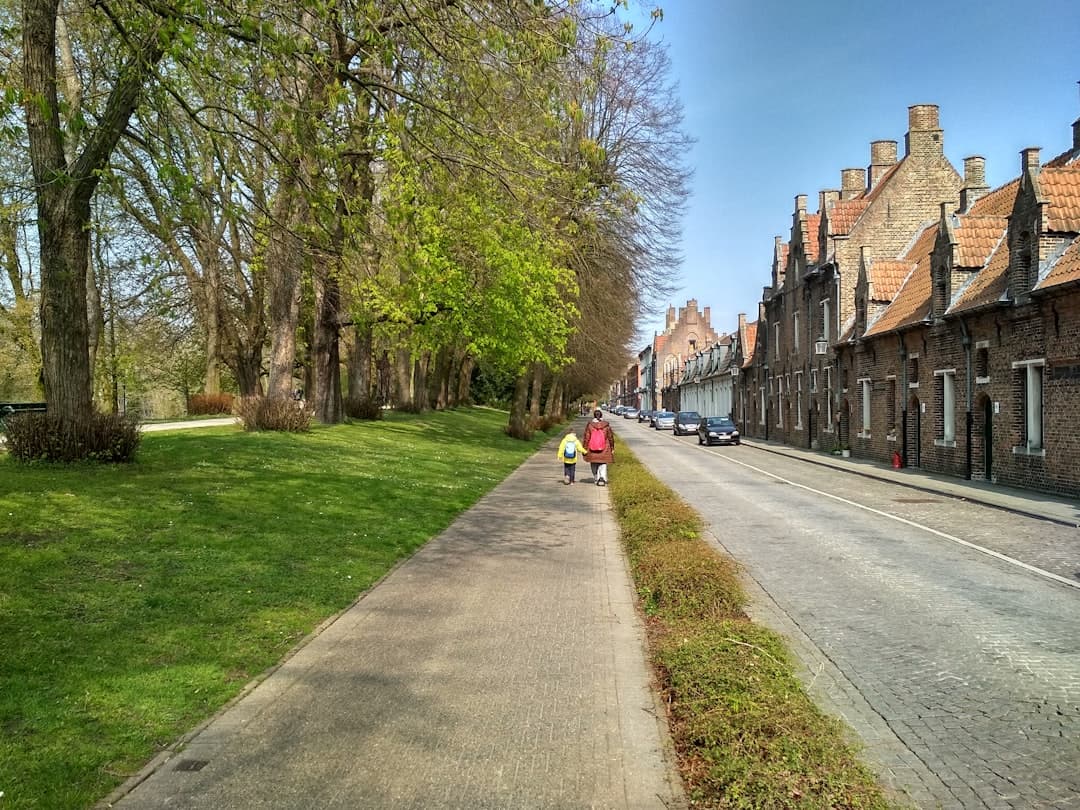
The canal identified by this address connects Bruges to Ostend and the coast, which gives it a slightly different, less-touristed character than the inner-city waterways — wider, calmer, and without the boat-tour traffic. For the classic canal experience in the historic core, head to Rozenhoedkaai or the Minnewater (the Lake of Love) in the south of the city. Go in the early morning if you can — the light is extraordinary, the crowds haven't arrived, and the reflections on the water are at their sharpest.

Local Tips

  1. 1

    Skip the first boat-tour jetty you find near Dijver and walk a few minutes to see if queues are shorter at another departure point — there are several along the inner canals and they run the same routes.

  2. 2

    The Rozenhoedkaai view is best photographed from the bridge looking southeast toward the Belfort; arrive before 8am in summer and you may have it entirely to yourself.

  3. 3

    Walk north along Langerei away from the Markt and you'll enter a quiet, residential stretch of canal that most visitors never reach — it's Bruges without the crowds and almost as beautiful.

  4. 4

    The Minnewater park at the southern end of the canal network is a lovely, shaded spot for a picnic and far less hectic than the city center — locals come here to walk dogs and sit by the water.

When to Go

Best times
Spring (April–May)

Mild temperatures, blooming trees and flowers along the banks, and manageable crowds before the summer peak — the best all-round time to visit.

Winter (December)

The Christmas market fills the city center and the canals look magical in low winter light, often with mist on the water — worth braving the cold.

Early morning (before 9am)

The best light for photography, almost no crowds, and mist frequently sits on the water in cooler months — an entirely different and more atmospheric experience.

Try to avoid
Summer (July–August)

Peak tourist season means boat tour queues can be long and canal-side paths get crowded; go very early morning to reclaim some quiet.

Why Visit

01

The boat tours offer a completely different view of Bruges's medieval architecture — you see the backs of buildings, hidden gardens, and low stone bridges that you'd never notice on foot.

02

The canal-side walking routes, especially along Groenerei and Langerei, take you into quiet residential Bruges where the Instagram crowds disappear and the city feels genuinely lived-in.

03

At Rozenhoedkaai, a single bend in the water frames a skyline of towers, spires, and gabled rooftops that has barely changed in 600 years — it's one of those views that actually lives up to the hype.