
Central Market Hall
Budapest / Central Market Hall

Central Market Hall

Budapest's grand 19th-century market hall where locals still shop and tourists find the real thing.

🛍️ Shopping🏛️ Sights & Landmarks🍽️ Food & Drink
🍽 Foodie👨‍👩‍👧 Family-friendly🎭 Cultural

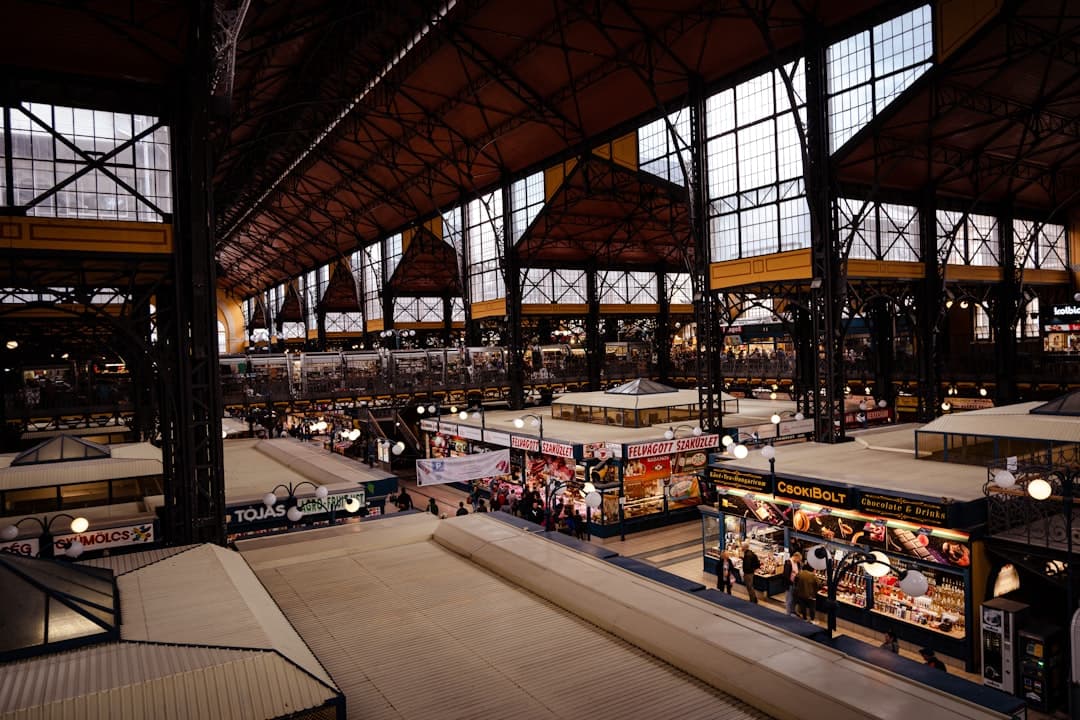
The Central Market Hall — Nagy Vásárcsarnok in Hungarian — is Budapest's largest and oldest covered market, built in 1897 as part of a city-wide modernisation push. The building itself is a piece of architecture worth stopping for: a soaring iron-and-brick cathedral of commerce designed by Samu Petz, with a roof tiled in the distinctive Zsolnay ceramics that appear all over the city. It sits at the Pest end of the Liberty Bridge, right on the Danube, and after a major post-Cold War renovation it's as handsome as it's ever been.

Inside, three floors do very different things. The ground floor is a working food market — produce stalls piled with paprika and pickled vegetables, butchers selling kolbász and mangalica pork, fish counters and dairy vendors. This is where Budapest households still shop, especially early on weekday mornings. The upper gallery is more tourist-facing, with embroidered tablecloths, folk pottery, and lace alongside a row of food stalls dishing out lángos (deep-fried dough topped with sour cream and cheese, a Hungarian street food staple) and other snacks. The basement holds more produce, pickles, and a handful of meat and fish vendors.

Come on a weekday morning if you want to feel the market at its most authentic — Saturday afternoons skew heavily toward tour groups. The lángos at the upper level stalls gets a lot of attention but the quality varies between vendors; look for the one with the longest local queue. Cash is still king at most stalls, though this has been slowly changing. Prices on the upper floor for souvenirs are negotiable if you're buying in volume, and the ground-floor produce prices are genuinely good by European standards.
Local Tips

  1. 1

    Go early on a weekday — by 10am on weekends the tour buses have arrived and the upper floor becomes a scrum. Weekday mornings before 9am are a different market entirely.

  2. 2

    The ground-floor produce stalls sell strings of dried paprika that travel well and are significantly cheaper here than at airport shops or tourist boutiques elsewhere in the city.

  3. 3

    Bring cash — many stalls still don't take cards, and even those that do often prefer forint in hand. There's an ATM nearby but it's easier to come prepared.

  4. 4

    The basement level is almost entirely skipped by visitors and has some of the best pickle and preserved vegetable vendors in the building — worth a quick lap before you leave.

When to Go

Best times
December

The market takes on an atmospheric pre-Christmas character with seasonal produce, gift items, and a generally festive mood — busier than usual but worth it.

Weekday mornings (7–10am)

Local shoppers outnumber tourists, produce is freshest, and the market feels like the living neighbourhood institution it still is.

Try to avoid
Summer weekend afternoons

Tour group traffic peaks in July and August on Saturday afternoons, making the upper floor uncomfortably crowded and the lángos queues very long.

Why Visit

01

One of Europe's great 19th-century market halls, with the architecture to match — iron vaults, Zsolnay tile roof, and a riverfront location that makes it as much a sight as a market.

02

Ground-floor stalls sell the real building blocks of Hungarian cooking — dried paprika, pickled vegetables, salami, and mangalica pork — making it the best single stop for edible souvenirs.

03

The upper-level food stalls serve lángos, Hungary's beloved deep-fried street food, straight from the oil — a cheap, filling, and genuinely local experience you won't get at most Budapest restaurants.