
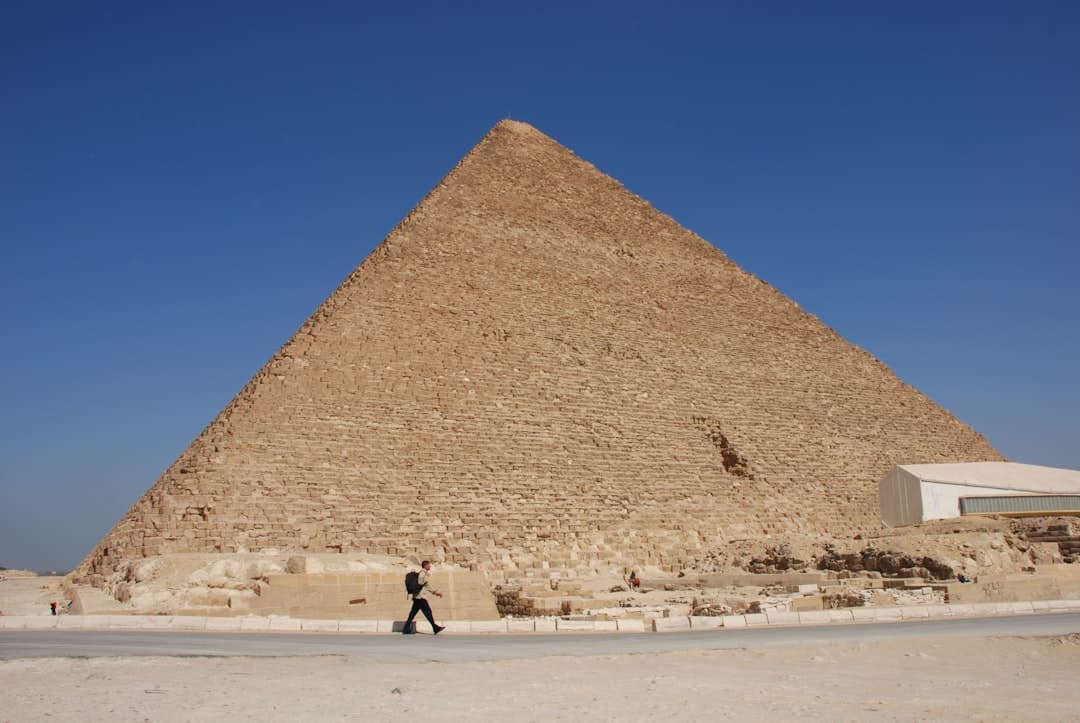
Great Sphinx
Cairo / Great Sphinx

Great Sphinx

The world's oldest monumental sculpture, carved from living rock 4,500 years ago.

🏛️ Sights & Landmarks🎭 Arts & Entertainment
🧗 Adventurous👨‍👩‍👧 Family-friendly🎭 Cultural

The Great Sphinx of Giza is a colossal limestone statue of a reclining lion with a human head, built during the reign of Pharaoh Khafre around 2500 BCE. At roughly 73 metres long and 20 metres tall, it is the largest surviving monumental sculpture from the ancient world — and one of the most recognisable images on earth. It stands guard on the Giza Plateau, just east of the pyramid of Khafre, and was carved directly from the bedrock of the plateau itself rather than assembled from cut blocks. For millennia it was buried up to its neck in sand, and the mystery of who built it, why, and what it originally looked like still generates genuine academic debate.

Visiting the Sphinx is an outdoor, walk-around experience. You approach via a broad path from the main Giza Plateau ticket area, descending to a lower enclosure that puts you close to the statue — close enough to see the weathering patterns on the limestone body, the ancient repair blocks on the chest and paws, and the remnants of a ceremonial beard now displayed in the Egyptian Museum in Cairo. The famous frontal view — the Sphinx gazing east toward the sunrise with the pyramids looming behind it — is the shot everyone comes for, and it genuinely delivers. There's a sound and light show in the evenings that projects dramatic narration onto the monuments, which is kitsch but entertaining.

The Sphinx is included in the general Giza Plateau ticket, though a separate ticket is sometimes required for the Sphinx enclosure itself — confirm at the gate. The site is managed by the Ministry of Antiquities and can get crowded fast, especially mid-morning when tour buses arrive. Touts and camel-ride operators work the surrounding area aggressively; a polite but firm 'la shukran' (no thank you) is your best tool. The light is extraordinary at sunrise and late afternoon, and visiting at those edges of the day also means far fewer people.

Local Tips

  1. 1

    The classic 'kissing the Sphinx' forced-perspective photo is taken from a specific spot on the right-hand side of the enclosure — look for the line of phones all pointing the same direction.

  2. 2

    Camel and horse operators near the Sphinx are persistent; if you're not interested, don't make eye contact or engage — a single acknowledgement is taken as an invitation to negotiate.

  3. 3

    The Sphinx and pyramids are part of the same Giza Plateau complex — buy a combined ticket and pair this with at least one pyramid interior visit to make the most of the journey.

  4. 4

    Evening sound and light shows run most nights and are ticketed separately; they're touristy but worth it once — the Sphinx is spectacularly lit and the narration gives useful historical context.

When to Go

Best times
October to February

Cooler temperatures — often 15–22°C — make walking the exposed plateau far more comfortable. This is peak season for good reason.

Sunrise

The site opens at 7am and the light on the eastern-facing Sphinx is extraordinary in the first hour. Crowds are thin, heat is manageable, and the atmosphere is genuinely special.

Try to avoid
June to August

Midday heat regularly exceeds 35°C on the open plateau with no shade. If you go in summer, arrive right at 7am or visit late afternoon only.

10am to 2pm

Peak tour bus hours. The enclosure becomes very crowded and the heat is at its worst. Avoid this window if you can.

Why Visit

01

Standing face-to-face with a 4,500-year-old sculpture carved from a single ridge of bedrock is genuinely humbling — no photograph prepares you for the scale.

02

The alignment of the Sphinx with the pyramids of Khafre and Khufu behind it creates one of the most iconic vistas in the world, and you can photograph it for free from the public enclosure.

03

The site raises questions that archaeologists still argue over — the erosion patterns, the missing nose, the buried body — and being there in person makes those mysteries feel alive rather than academic.