Dubai Spice Souk
Dubai / Dubai Spice Souk

Dubai Spice Souk

A sensory overload of saffron, cardamom, and frankincense in Old Dubai.

🛍️ Shopping🏛️ Sights & Landmarks🎯 Activities & Experiences
🧗 Adventurous🍽 Foodie🎭 Cultural

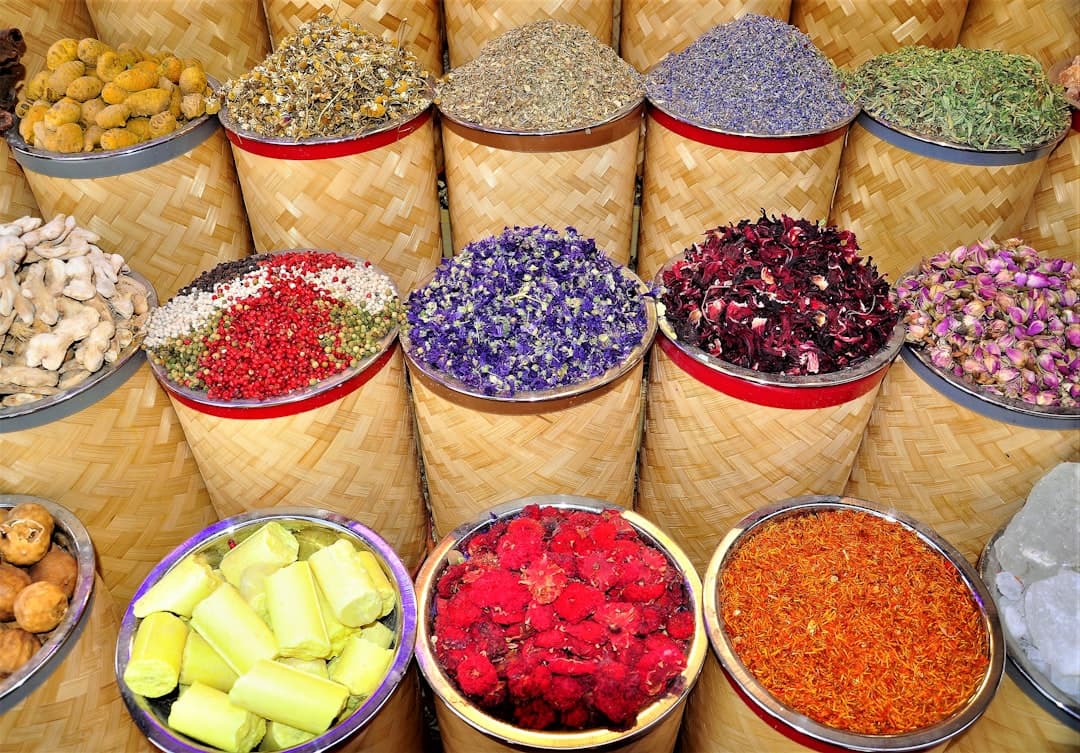
The Dubai Spice Souk is an open-air market in the historic Al Ras district, just a short walk from the Dubai Creek waterfront. It's one of the oldest trading markets in the city, and while Dubai has transformed into a skyline of glass towers and mega-malls, this corner of Deira has stayed largely as it was — a labyrinth of narrow lanes lined with sacks of dried rose petals, towers of turmeric, cinnamon sticks bundled like firewood, and walls hung with dried limes and barberries. It matters because it's one of the few places in Dubai where you can feel the city's identity as a trading port, not a theme park.

Walking through the souk, you move from stall to stall as vendors call out and offer small samples — a pinch of za'atar here, a whiff of oud incense there. The goods include culinary spices, medicinal herbs, henna powder, frankincense resins, and dried fruits. Many stalls sell loose-leaf teas and Persian saffron, which here is dramatically cheaper than what you'd find in a supermarket back home. Bartering is standard practice and expected, so the first price is never the final price. The souk is small enough to cover in an hour, but the experience rewards those who slow down and actually talk to the merchants.

Go in the morning, ideally before 10am, when it's cooler and less crowded. The souk is right next to the Gold Souk and a two-minute walk from the Creek abra (water taxi) stations, so it pairs naturally with a broader Old Dubai wander. Friday mornings are generally quieter than weekday afternoons. Bring cash — small denominations — as very few stalls take cards.
Local Tips

  1. 1

    Always negotiate — the opening price at most stalls is set high for tourists. A friendly counter-offer of 60–70% of the asking price is a reasonable starting point.

  2. 2

    The saffron here is predominantly Iranian in origin and is sold by weight. Ask to smell it before buying and look for deep red threads — avoid anything with too many yellow stamens.

  3. 3

    Combine your visit with the adjacent Gold Souk and a Creek abra ride across to Bur Dubai for a full Old Dubai half-day without needing a taxi.

  4. 4

    Some vendors double as informal pharmacists and will suggest traditional remedies for common ailments — it's genuinely interesting even if you're not buying.

When to Go

Best times
November to March

The cooler months make wandering the outdoor lanes genuinely pleasant rather than an exercise in heat endurance.

Early morning (before 10am)

Cooler, quieter, and merchants are in a good mood — you'll get more attention and better prices before the tour groups arrive.

Try to avoid
June to September

Midday temperatures regularly exceed 40°C and the market lanes offer little shade, making this a miserable time to browse unless you go early morning.

Why Visit

01

Buy high-quality saffron, oud incense, and Persian spices at a fraction of Western retail prices — this is genuine value, not tourist markup.

02

One of the best remaining windows into Dubai's pre-skyscraper soul as a creek-side trading hub connecting Arabia, Persia, and South Asia.

03

The smells alone are worth the trip — frankincense smoke, dried roses, and fresh-ground cardamom create an atmosphere you won't find anywhere else in the city.