
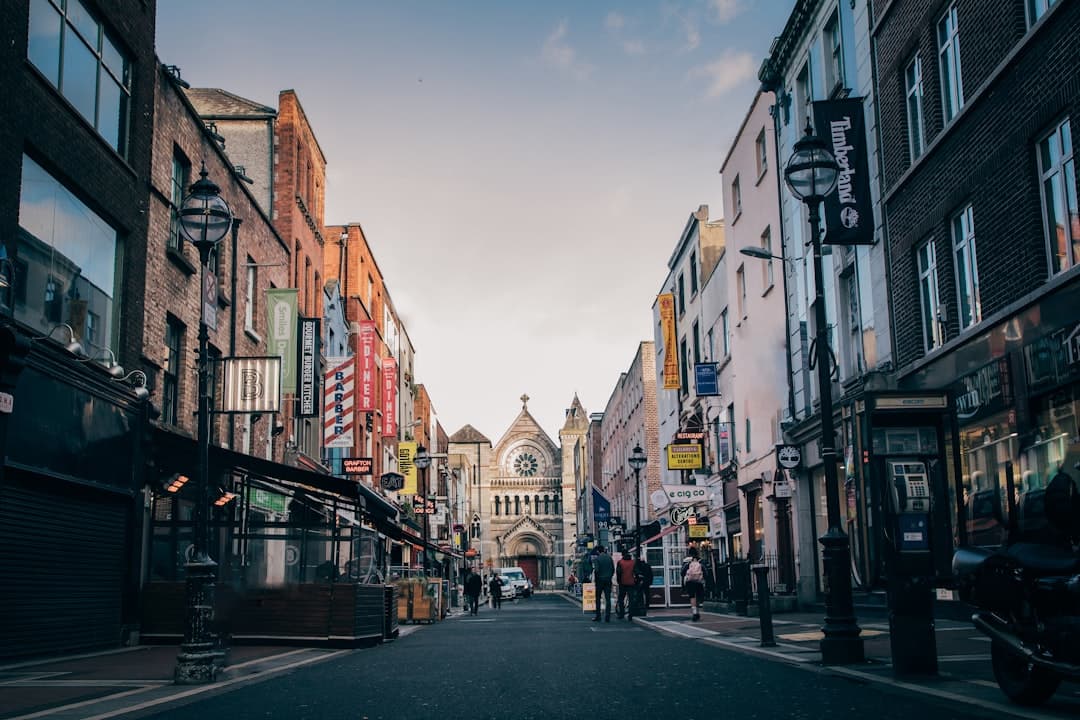
St Patrick's Cathedral
Ireland's oldest and grandest cathedral, with 800 years of history inside.
St Patrick's Cathedral is the largest church in Ireland and the national cathedral of the Church of Ireland. Built on a site where St Patrick himself is said to have baptised converts in the 5th century, the current stone structure dates largely from the 12th and 13th centuries, making it one of the oldest surviving buildings in Dublin. It sits just south of the city centre in the Liberties neighbourhood, a short walk from Christ Church Cathedral, and has witnessed more of Irish history than almost any other building in the country.
Step inside and you're immediately struck by the scale — a long, soaring nave lined with medieval stonework, regimental flags hanging from the ceiling, and memorials crowding the walls. The most famous tomb belongs to Jonathan Swift, author of Gulliver's Travels, who served as Dean of St Patrick's from 1713 to 1745. His grave is set into the floor of the south aisle, with a brass epitaph he wrote himself — one of the most celebrated epitaphs in the English language. The choir stalls, the stained glass, the carved stone details, and the atmospheric side chapels all reward a slow, unhurried walk around the building.
Entry is ticketed, which helps keep numbers manageable — this isn't a free drop-in like some European cathedrals. Sunday visiting hours are restricted to short windows around services, so if you want a proper look around, a weekday morning is ideal. The cathedral also hosts choral evensong and other musical performances throughout the year, which are an excellent reason to return after your initial visit.