
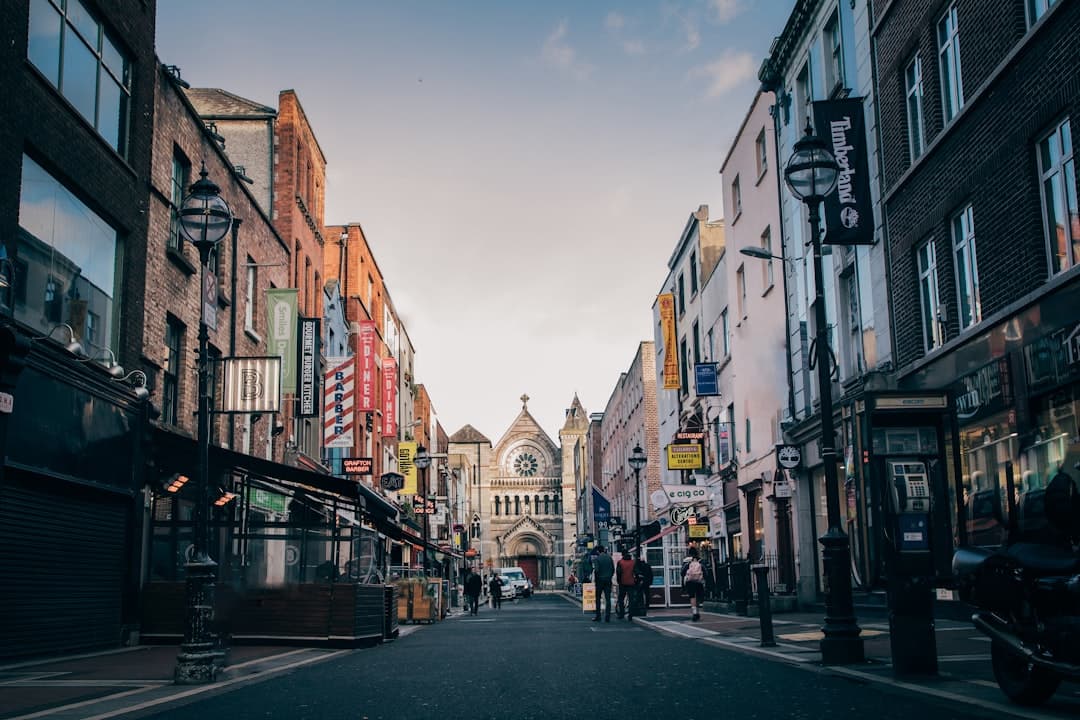
Temple Bar
Dublin's famous cultural quarter where live music spills onto cobblestone streets nightly.
Temple Bar is Dublin's best-known cultural and entertainment district, a compact web of cobblestone lanes running along the south bank of the River Liffey between Dame Street and the quays. It grew up organically in the 17th and 18th centuries as a commercial district, survived a near-death experience in the 1980s when the government nearly bulldozed it for a bus terminus, and was reinvented in the 1990s as a hub for arts, bohemian culture, and nightlife. Today it's the place most visitors end up on their first night in Dublin — sometimes intentionally, sometimes just by gravitational pull.
The experience is loud, lively, and unapologetically touristy in the best parts and the worst. The central square hosts the Saturday and Sunday markets, where you'll find fresh produce, vintage clothing, and artisan food stalls. Pubs like The Temple Bar itself, Oliver St. John Gogarty, and Fitzsimons are perpetually packed and reliably deliver live traditional music sessions — the kind where a fiddle player and a bodhrán drummer set up in a corner and the whole room eventually sways along. The Irish Film Institute, Project Arts Centre, and Gallery of Photography give the area genuine cultural credibility beyond the pints. Street performers work the main drag on Dame Street and the narrow lanes are good for an aimless wander.
The honest insider angle: Temple Bar is expensive by Dublin standards — you'll pay a premium for drinks in most of the main pubs, and the food in tourist-facing restaurants rarely reflects what Dublin actually eats. But dismiss it entirely and you miss something real. Go early evening before the stag parties arrive, duck into the smaller venues and side streets, and treat it as a starting point rather than a destination. The area is walkable from virtually everywhere in central Dublin and works best as part of a wider evening rather than a standalone pilgrimage.