
Old Town Walls
Dubrovnik / Old Town Walls

Old Town Walls

Walk the medieval ramparts encircling one of Europe's best-preserved walled cities.

🏛️ Sights & Landmarks🎯 Activities & Experiences
🧗 Adventurous🎭 Cultural🌹 Romantic

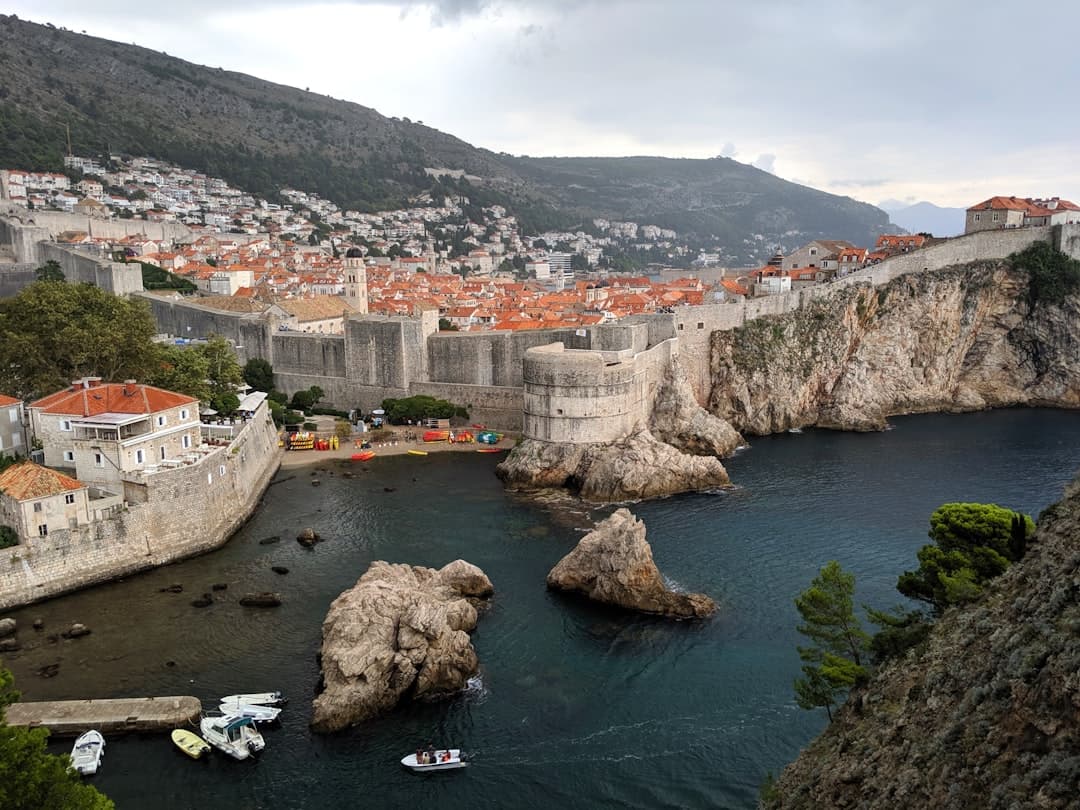
Dubrovnik's Old Town Walls are a near-complete circuit of medieval fortifications stretching roughly two kilometres around the historic city centre. Built and reinforced between the 12th and 17th centuries, they reach up to 25 metres in height and six metres in thickness in places, and they are the reason Dubrovnik survived as an independent republic for centuries. This is not a ruin or a fragment — it's an intact loop you can walk all the way around, which makes it one of the most impressive pieces of medieval urban engineering you'll encounter anywhere in the world.

The walk itself takes most people between one and two hours, though you could easily stretch it to three if you stop to photograph every angle (and you will want to). You move between towers, bastions, and open parapet walkways, looking inward over the orange-roofed Old Town and outward over the Adriatic and the island of Lokrum. The views from Fort Minčeta in the north and Fort St. John guarding the harbour are particularly dramatic. Along the way you'll pass small cafés built into the walls themselves — there's one near the Buža bar entrance point that's perfectly placed for a cold drink halfway through.

Tickets are sold at multiple entry points — the main ones are near the Pile Gate on the western side and near the Old Harbour on the eastern side. The walls are shared with a significant volume of tourists in summer, so early morning is genuinely transformative: cooler, quieter, and the light on the sea is extraordinary before 9am. The ticket also covers entry to the Maritime Museum and the Rupe Museum, which most people never use — but worth knowing. Go anticlockwise if you want to get the steepest section over with first and end with the harbour views.

Local Tips

  1. 1

    Go anticlockwise from the Pile Gate entrance — you tackle the steepest climb (up to Fort Minčeta) while you're still fresh, and you finish with the beautiful harbour views near St. John.

  2. 2

    There is almost no shade on the walls. In summer, a hat and water bottle are not optional — the stone radiates heat and there are long exposed stretches with nowhere to duck out.

  3. 3

    The small café built into the wall near the Buža area is a genuine halfway-point lifesaver. It's basic, but the position is excellent and the cold drinks are reasonably priced by Dubrovnik standards.

  4. 4

    Your walls ticket includes entry to the Maritime Museum inside Fort St. John — almost no one uses it, but if you're interested in Dubrovnik's history as a seafaring republic, it's worth the extra twenty minutes.

When to Go

Best times
Early morning (8–9:30am)

The walls open at 8am and the first hour is dramatically quieter than the rest of the day. The light is softer, the temperature is manageable, and you'll have the parapets largely to yourself.

April–May and September–October

Shoulder season brings comfortable temperatures, thinner crowds, and the sea still looks vivid blue. The best all-round window for this walk.

Try to avoid
July–August

Peak cruise ship season means the walls can feel uncomfortably crowded by mid-morning, and the heat on the exposed stone is intense. Not dangerous if you're prepared, but not pleasant.

November–March

Winter hours are reduced and some sections may close after rain as the stone gets slippery. The city is peaceful but check conditions before heading up.

Why Visit

01

The only place in Dubrovnik where you can see the entire Old Town laid out below you and the open Adriatic stretching to the horizon at the same time.

02

These walls are genuinely intact and walkable — not a reconstruction or a viewpoint, but the actual 14th-century fortifications that kept the city independent for 450 years.

03

The perspective from the ramparts changes every hundred metres, shifting between rooftop terraces, monastery gardens, boat-filled harbours, and sheer cliff drops to the sea.