Ponte Vecchio
A medieval bridge lined with goldsmiths, spanning the Arno since 1345.
Ponte Vecchio is Florence's oldest bridge and one of the most recognizable structures in Italy. Built in its current form in 1345 after a devastating flood destroyed its predecessor, it spans the Arno River at its narrowest point in the city center. What makes it unlike any other bridge in the world is what sits on top of it: a continuous row of small shops built directly onto the bridge's sides, a medieval urban arrangement that has survived largely intact for centuries. For much of its history those shops were occupied by butchers and tanners — until the 16th century, when the Medici, who used the private Vasari Corridor running above the bridge to travel between the Palazzo Pitti and the Uffizi, decided the smell was undignified and evicted them. Goldsmiths and jewelers moved in, and they've been there ever since.
Walking across Ponte Vecchio is one of those travel experiences that delivers exactly what you hope it will. The bridge is narrow and the overhanging shops create a tunnel-like effect that opens dramatically at the center, where a gap in the buildings frames views up and down the Arno — one of the great urban panoramas in Europe. The shops themselves are tiny, their windows filled with gold rings, pendants, and chains at every price point. Buying jewelry here is a genuine Florentine tradition, not a tourist trap, though you should browse with patience and a reasonable sense of market prices. Overhead, you can sometimes spot the grilled windows of the Vasari Corridor.
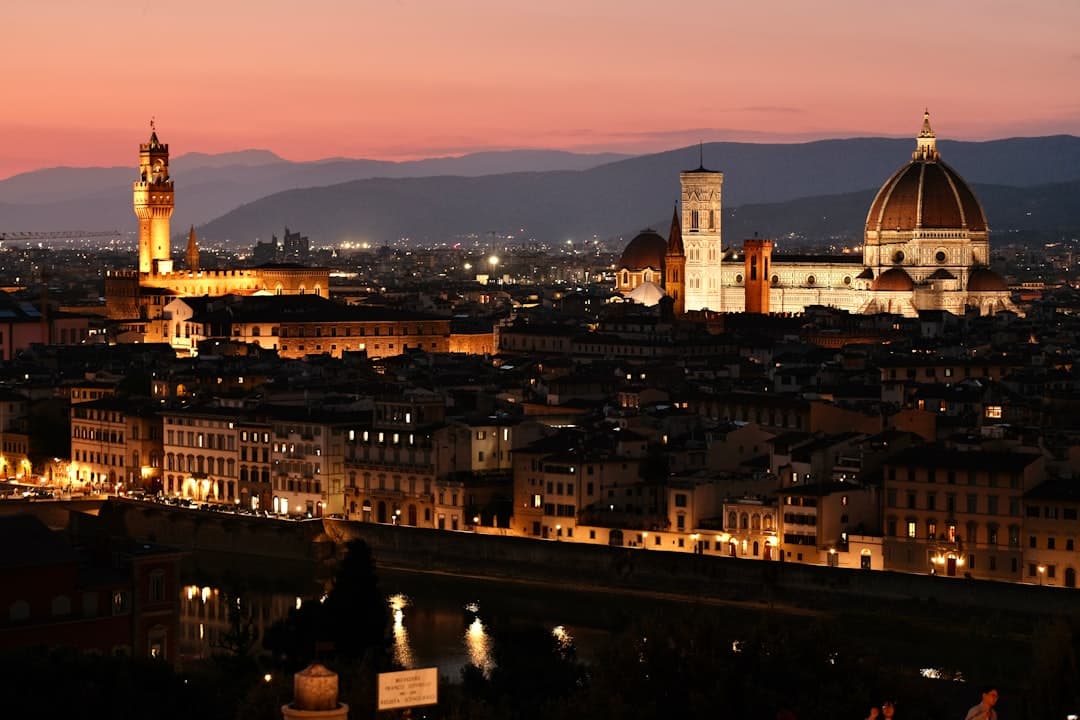
The bridge gets extremely crowded during the middle of the day, especially in summer. The single best strategy is to cross it early in the morning — ideally just after 7am — when the light on the Arno is soft and the vendors haven't yet opened their shutters. Come back at dusk for the view, when the bridge glows gold and the reflected light on the water is genuinely spectacular. The south end of the bridge opens onto the Oltrarno neighborhood, which is worth exploring further.