
Temple of Literature
Vietnam's oldest university, where 1,000 years of scholarly tradition still echo.
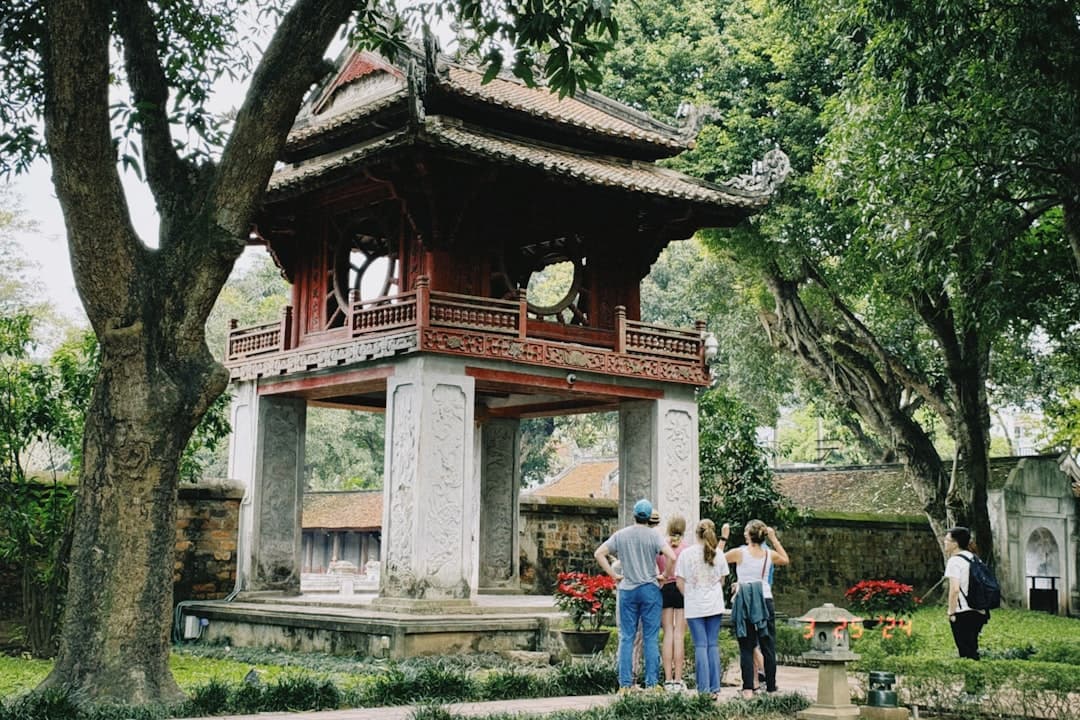
Founded in 1070 under Emperor Lý Thánh Tông, the Temple of Literature — Văn Miếu — is Hanoi's most important historic monument and one of the finest examples of traditional Vietnamese architecture in the country. Originally built to honor Confucius and the great scholars of Chinese and Vietnamese classical learning, it became home to the Quốc Tử Giám, Vietnam's first national university, in 1076. For nearly eight centuries it trained the mandarins and administrators who ran the country. Today it stands as a symbol of Vietnamese reverence for education and intellectual achievement — which is why you'll still see students come here to pray before exams.
The complex is laid out across five walled courtyards, each one drawing you deeper into a world of pavilions, lotus ponds, and ancient banyan trees. The highlight is the third courtyard, where 82 stone stelae sit atop stone tortoises — each one carved with the names of scholars who passed the royal exams between 1484 and 1780. These are UNESCO-recognized documents of world significance, and standing among them feels genuinely weighty. The inner sanctuaries are beautifully preserved, with lacquered altars, incense smoke drifting through dim halls, and offerings left by worshippers. Traditional music performances are sometimes held here too.
The Temple of Literature sits in the Đống Đa district, about 2km southwest of Hoan Kiem Lake — close enough to visit alongside other central sights. Admission is modest (around 70,000 VND as of recent years), and the site is well maintained and clearly signed in English. Mornings on weekdays are the quietest; weekends and public holidays bring school groups and local families in force. Go early if you want the courtyards to yourself and the light is at its best filtering through the trees.