
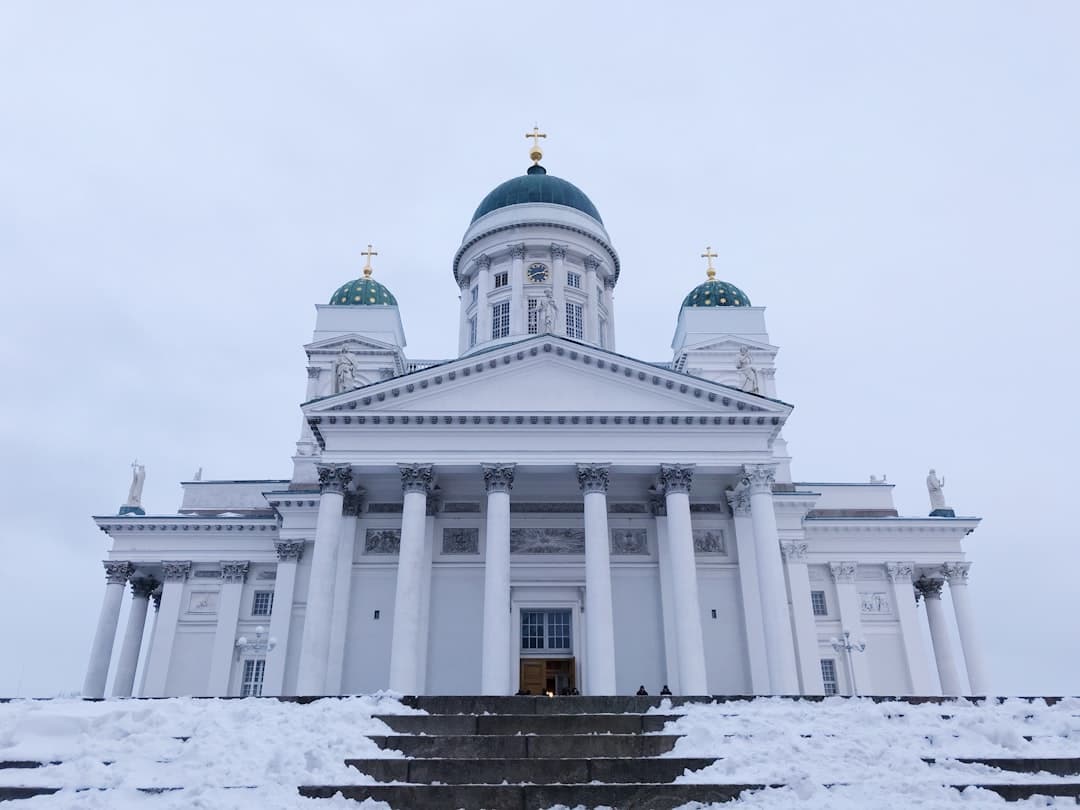
National Museum of Finland
Finland's full story told through 10,000 years of artifacts under one roof.
The National Museum of Finland is the country's primary historical museum, housed in a striking National Romantic building completed in 1916 — a style that blends medieval Finnish church architecture with Art Nouveau influences, making the building itself worth the visit before you've even stepped inside. It traces Finnish life from prehistoric times through to the present day, covering everything from Stone Age settlements to the country's path to independence and the complexities of 20th-century nationhood. If you want a single place to understand how Finland became Finland, this is it.
Inside, the permanent collection spans archaeology, cultural history, and ethnography across several floors. You'll walk through reconstructed interiors from different eras of Finnish domestic life, examine extraordinary folk costumes and textiles, and encounter objects that range from Bronze Age burial finds to royal gifts exchanged with Swedish and Russian rulers during Finland's centuries under foreign governance. The ceiling fresco in the main hall, painted by Akseli Gallen-Kallela — Finland's most revered painter — depicts scenes from the Kalevala, the Finnish national epic, and is genuinely one of the most beautiful things in Helsinki. The museum also runs rotating temporary exhibitions that tend to be thoughtfully curated and well attended.
The museum sits on Mannerheimintie, the main boulevard, just a short walk from the Parliament building and Finlandia Hall, so it fits naturally into a broader central Helsinki day. Entry is very affordable by Nordic standards, and the museum is free on Fridays between 4pm and 6pm. Tuesday evenings also sometimes offer extended hours. It's rarely overwhelmingly crowded, which makes it a pleasure to move through at your own pace — something you can't always say about major national museums elsewhere in Europe.