
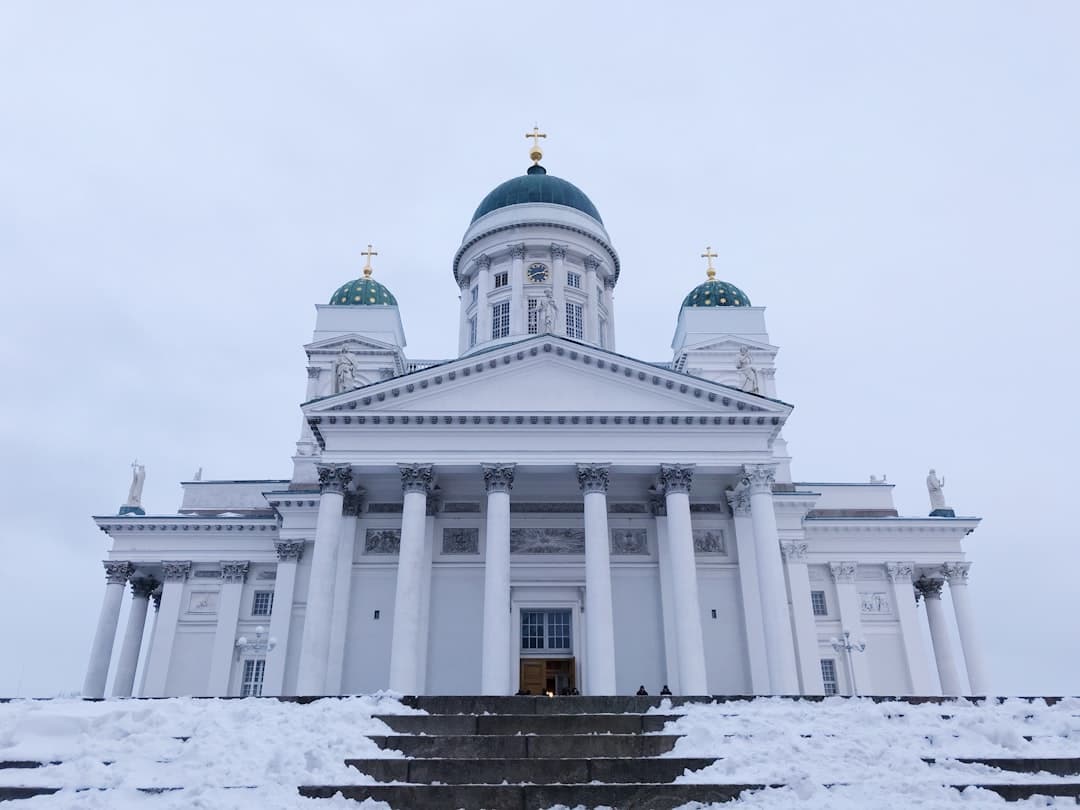
Uspenski Cathedral
Helsinki's Byzantine jewel — Orthodox opulence overlooking the harbour.
Uspenski Cathedral is the largest Orthodox church in Western Europe, a dramatic red-brick landmark that rises above the Katajanokka peninsula with its thirteen golden onion domes glinting over Helsinki's harbour. Built in 1868 and designed by Russian architect Aleksei Gornostayev, it was constructed during the period of Finnish autonomy under the Russian Empire, and that history is written into every stone — this is a building that tells you exactly why Helsinki is unlike any other Nordic capital. The name comes from the Russian word for the Dormition of the Virgin Mary, to whom the cathedral is dedicated.
Inside, the cathedral is a sensory shift from the clean Lutheran minimalism that dominates the rest of the city. The interior glows with icon screens, Byzantine frescoes, hanging brass chandeliers, and the warm scent of incense that seems to have soaked into the walls over more than 150 years. The iconostasis — the ornate screen of icons separating the nave from the sanctuary — is the centrepiece, richly gilded and deeply affecting even for secular visitors. Services are still held regularly, so there's a real chance you'll walk in during an active liturgy, which adds an entirely different dimension to the visit.
The cathedral sits on a rocky bluff just east of Market Square, making it an easy pairing with a morning at the Kauppatori (the main market square) and a walk along the waterfront. Entry is free, which feels almost unreasonably generous given what's inside. Come on a weekday morning if you want the space mostly to yourself — weekends and cruise ship days can push visitor numbers up noticeably.