
Jantar Mantar
Jaipur / Jantar Mantar

Jantar Mantar

An 18th-century open-air observatory built to read the sky with stone.

🏛️ Sights & Landmarks🎯 Activities & Experiences🎭 Arts & Entertainment
🧗 Adventurous👨‍👩‍👧 Family-friendly🎭 Cultural

Jantar Mantar is a collection of nineteen massive astronomical instruments built between 1727 and 1734 by Maharaja Jai Singh II, the founder of Jaipur. A scholar-king obsessed with astronomy and mathematics, Jai Singh wasn't satisfied with the brass instruments of his day — he believed larger, fixed structures made of stone and marble would yield more accurate measurements. The result is one of the most extraordinary scientific complexes in the world: a UNESCO World Heritage Site that still functions as a working observatory, capable of tracking celestial bodies, predicting eclipses, and measuring time with remarkable precision.

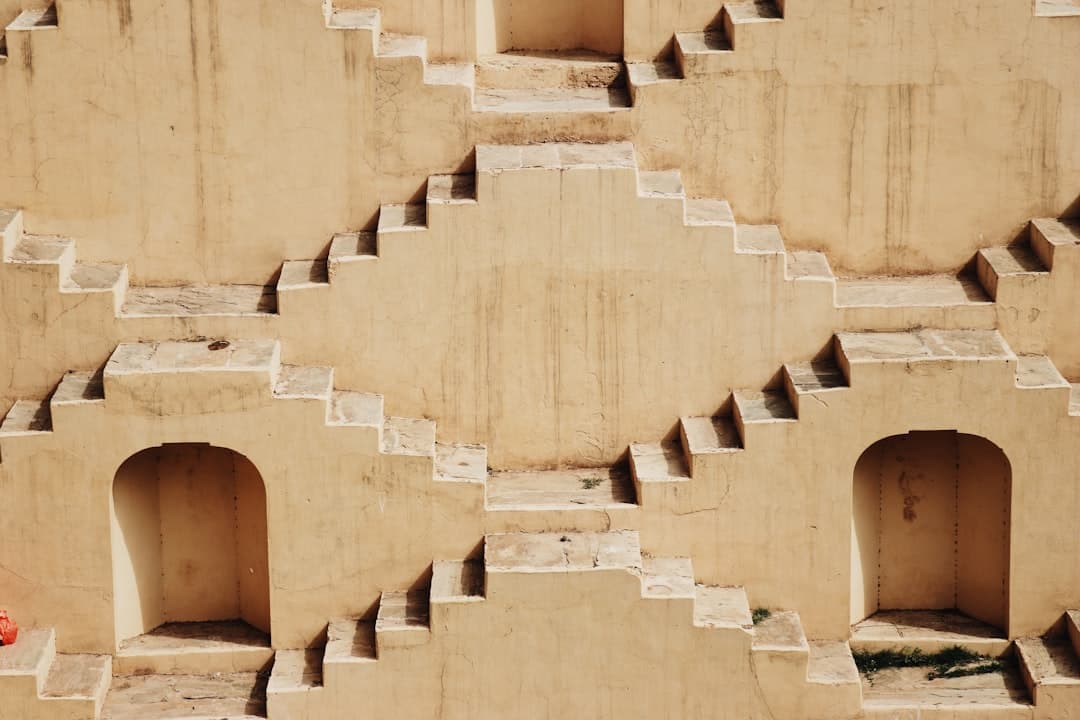
Walking through Jantar Mantar feels like entering a surrealist sculpture garden where everything has a purpose. The star attraction is the Samrat Yantra, the world's largest sundial, whose gnomon — the triangular ramp — soars nearly 27 metres into the sky and can measure local time accurate to two seconds. Nearby, the Jai Prakash Yantra consists of two hemispherical marble bowls sunk into the ground, their interiors etched with scales that map the heavens. Each instrument invites you to stop, look up, and recalibrate your sense of space and time. A good guide makes an enormous difference here — without one, many instruments look like abstract architecture rather than precision tools.

Jantar Mantar sits right next to the City Palace in the heart of the old walled city, making it an easy pairing with a visit to the palace or the nearby Hawa Mahal. Visit in the morning when the light is clean and the crowds haven't peaked. Hiring a licensed guide at the entrance is well worth the fee — they'll demonstrate exactly how the sundial works and show you how to read instruments that would otherwise remain mysterious. The whole site is outdoors, so avoid midday in summer when the stone radiates serious heat.
Local Tips

  1. 1

    Hire a guide at the entrance gate — the Archaeological Survey of India licenses them and the best ones can demonstrate each instrument live, including showing you the sundial reading against your phone's clock.

  2. 2

    Combine Jantar Mantar with the City Palace next door using a combined ticket, which saves money and is sold at both venues.

  3. 3

    The Samrat Yantra sundial reads Indian Standard Time, which is 5.5 hours ahead of GMT — asking the guide to walk you through the calculation is one of the most satisfying moments on the whole site.

  4. 4

    Photography is freely allowed throughout the site and the geometric forms of the instruments are genuinely spectacular at golden hour, though the site typically closes before sunset — arrive mid-afternoon for the best light.

When to Go

Best times
October to February

Cool, clear weather makes wandering the open-air site comfortable, and skies are sharp — ideal for understanding the solar instruments.

Morning (opening until 11am)

Light is softer, temperatures manageable, and crowds thin — you can actually linger at each instrument without being jostled.

Try to avoid
April to June

Rajasthan's brutal summer heat turns the stone instruments into radiators. Midday temperatures can exceed 40°C and the site offers almost no shade.

Monsoon (July to September)

Rain can make the polished stone slippery and overcast skies undercut the solar instruments' demonstrations, though crowds are lower.

Why Visit

01

The world's largest sundial still accurately tells local time — watching it work in real time is genuinely mind-bending.

02

It's one of the few places on earth where 18th-century science, architecture, and astronomy collide at this scale and this level of preservation.

03

The instruments were designed to be climbed and interacted with — this is hands-on history in the most literal sense.