
Fushimi Inari Shrine
Kyoto / Fushimi Inari Shrine

Fushimi Inari Shrine

Ten thousand vermillion gates climb a sacred mountain above Kyoto.

🏛️ Sights & Landmarks🌿 Nature & Outdoors🎯 Activities & Experiences
🧗 Adventurous👨‍👩‍👧 Family-friendly🎭 Cultural🌹 Romantic

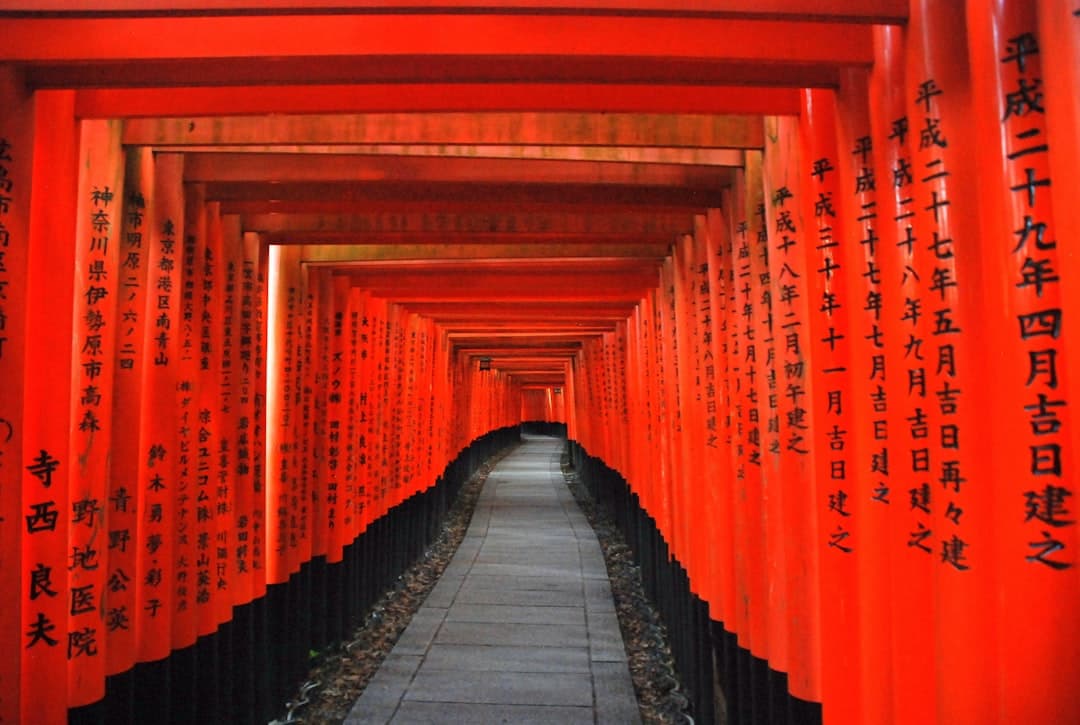
Fushimi Inari Taisha is one of Japan's most iconic Shinto shrines, dedicated to Inari, the deity of rice, agriculture, foxes, and prosperity. Founded in 711 AD — making it older than Kyoto itself — it sits at the base of Mount Inari in the city's southern Fushimi district and serves as the head shrine for roughly 30,000 Inari shrines scattered across Japan. The stone fox statues you'll see throughout the complex are the messengers of Inari, and the thousands of brilliant orange-red torii gates that tunnel up the mountain were donated by businesses and individuals seeking Inari's blessings. Entry is completely free.

The experience begins at the dramatic main gate (the Romon), but the real draw is the famous Senbon Torii — 'thousands of torii gates' — that line the trails winding up Mount Inari's forested slopes. The full loop to the mountain summit and back is around 4 kilometers and takes two to three hours at a relaxed pace, rising through increasingly quiet cedar forest. Most visitors stop at Yotsutsuji intersection, about halfway up, where there's a sweeping view over Kyoto — this is genuinely worth the climb even if you go no further. The lower sections bustle with food stalls selling grilled quail eggs, skewered meats, kitsune udon, and matcha treats.

The shrine is open 24 hours a day, every day of the year, which is the insider's greatest advantage. The lower precincts are absolute mayhem during midday — Fushimi Inari consistently ranks as Kyoto's most-visited attraction. Come at dawn or after 8pm and you'll have the gate-lined tunnels nearly to yourself, lit by lanterns at night, utterly atmospheric. Arriving via the JR Inari Station (one stop from Kyoto Station on the Nara Line) puts you directly at the main gate in under 10 minutes.
Local Tips

  1. 1

    The full mountain loop is about 4km and takes 2–3 hours — wear proper walking shoes, not sandals. The stone steps are uneven and steep in sections above Yotsutsuji.

  2. 2

    JR Pass holders can ride the JR Nara Line directly to JR Inari Station for free; the station exit opens almost directly onto the shrine's main approach.

  3. 3

    Each torii gate has the donor's name and the date of donation inscribed on the back — a detail almost everyone misses walking up the front-facing side.

  4. 4

    The small stalls near the base sell kitsune (fox-shaped) inari sushi and grilled skewers; the ones just inside the secondary Fushimi Inari station exit on the Keihan line tend to be slightly less crowded than those on the main JR approach.

When to Go

Best times
Early morning (before 8am)

The only reliable way to experience the iconic gate tunnels without wall-to-wall crowds; the lower path and Senbon Torii are nearly empty.

After 8pm

Lanterns illuminate the lower gates and most day-trippers are gone; the atmosphere shifts from tourist site to something genuinely sacred.

Autumn (mid-November)

Maples along the mountain trails turn red and gold, making the hike through the gates especially beautiful.

Try to avoid
Spring cherry blossom season and Golden Week (late April–early May)

The shrine is overwhelmed with visitors; lower paths can become nearly impassable at peak times.

Midsummer midday (July–August)

The forested trail offers some shade, but humidity is brutal — bring water and expect the lower precincts to be extremely crowded.

Why Visit

01

Walk through tunnels of thousands of vermillion torii gates — a visual experience that photographs can't fully prepare you for in person.

02

Hike a sacred forested mountain for free, with panoramic views over Kyoto from the halfway point at Yotsutsuji.

03

Visit at dawn or late evening when the crowds disappear and the lantern-lit gates become genuinely otherworldly.