Heian Shrine
A vivid recreation of ancient imperial Kyoto, framed by one of Japan's great garden landscapes.
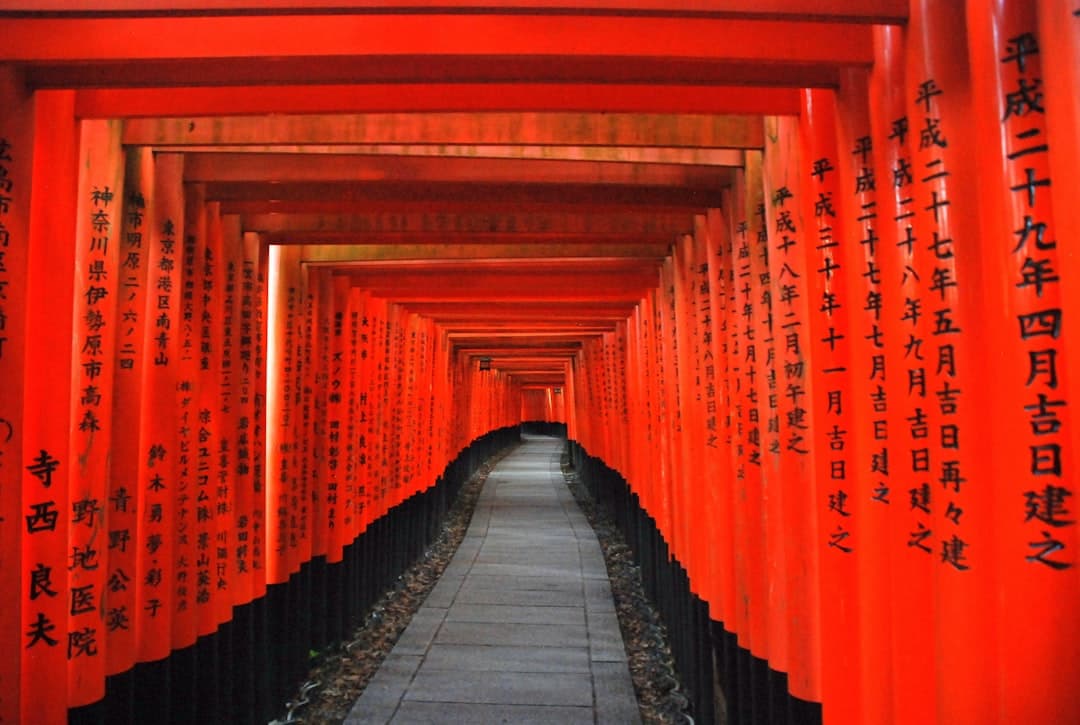
Heian Shrine was built in 1895 to commemorate the 1,100th anniversary of Kyoto's founding as the imperial capital. It's a large-scale replica of the original Imperial Palace from the Heian period — the era roughly between 794 and 1185 when Kyoto was the heart of Japanese civilization and culture. The complex is dedicated to the spirits of Emperor Kanmu, who founded the capital, and Emperor Komei, the last emperor to reign from Kyoto before the seat of power moved to Tokyo. The towering vermilion torii gate that greets you on the approach is one of the largest in Japan — a landmark you'll see long before you reach the shrine itself.
The shrine grounds are striking, with dramatic orange-and-white architecture set against a wide, raked gravel courtyard. But the real secret of Heian Shrine is the strolling garden — the Shin-en — that wraps around the back of the main buildings across four connected sections. Designed in the Meiji era, it uses ponds, stepping stones, weeping cherry trees, water irises, and a covered wooden bridge to create one of the most serene and carefully composed landscapes in Kyoto. You pay a separate small fee to enter the garden, and almost everyone who skips it regrets it.
Heian Shrine sits in the Okazaki district, an area packed with museums, the city zoo, and a broad canal-lined boulevard that gives the whole neighborhood an unusually spacious, uncrowded feel compared to central Kyoto. The shrine itself draws visitors year-round, but the garden truly earns its reputation in late March and mid-June when the cherries and irises are at their peak. Come early in the morning to have the gravel courtyard nearly to yourself — by mid-morning, tour groups arrive in force.