British Museum
Eight million objects, two million years of human history, one building in Bloomsbury.
The British Museum is one of the world's oldest and largest public museums, founded in 1753 and housed in a magnificent neoclassical building in central London. It holds a permanent collection of around eight million works spanning every continent and nearly every era of human civilisation — from ancient Egypt and Greece to Mesopotamia, Africa, Asia, and the Americas. Admission to the permanent collection is free, which makes it one of the most extraordinary free cultural experiences anywhere on earth.
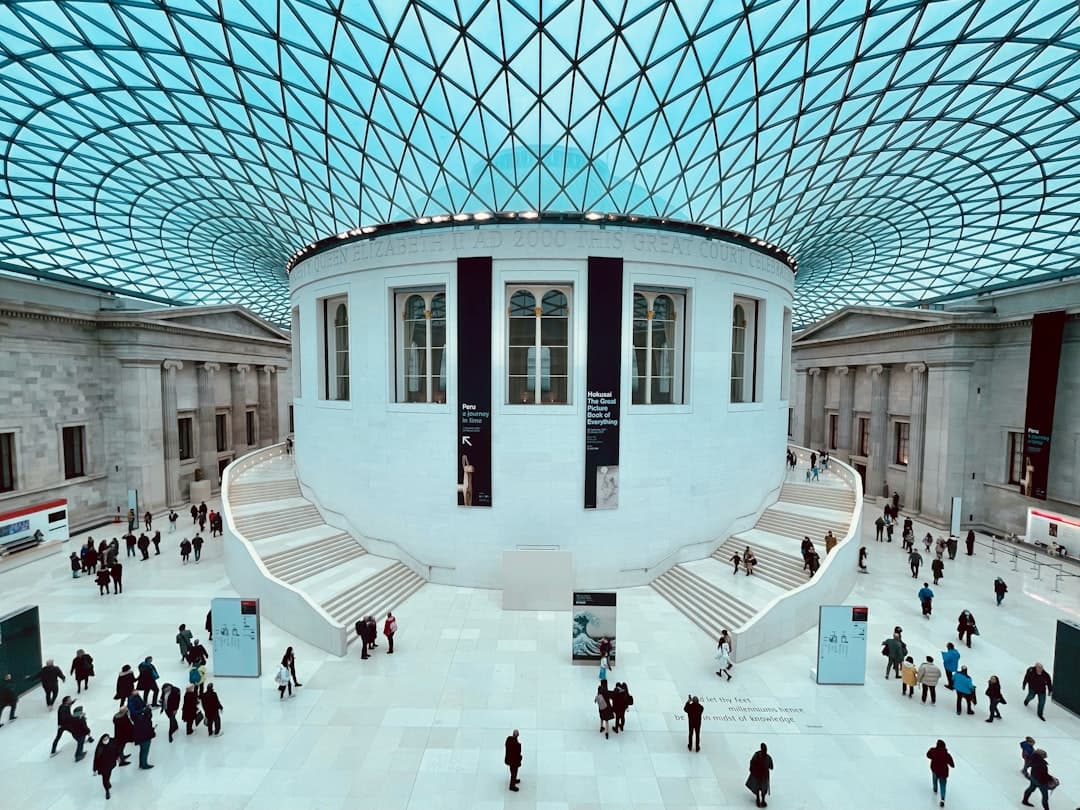
In practice, a visit means choosing your battles. The Egyptian galleries are the perennial draw — the Rosetta Stone sits in Room 4, usually surrounded by visitors jostling for photos, and the mummy collection nearby is genuinely remarkable. The Elgin Marbles (displayed as the Parthenon sculptures) in Room 18 are among the most debated objects in the museum world, carved for the Athenian Parthenon in the 5th century BC. The Lewis Chessmen, the Sutton Hoo helmet, the Lindow Man, the Warren Cup — the hits just keep coming. The 2000 Great Court, designed by Norman Foster, is a stunning glass-roofed atrium wrapping around the original Reading Room and worth seeing in its own right.
Friday evenings are the insider move — the museum stays open until 8:30pm and the crowds thin dramatically after 5pm. The permanent collection is free but ticketed temporary exhibitions cost extra and often require booking well in advance. The museum's café options are fine but unremarkable; Bloomsbury has excellent cafés and restaurants a short walk away, which is where you should eat.