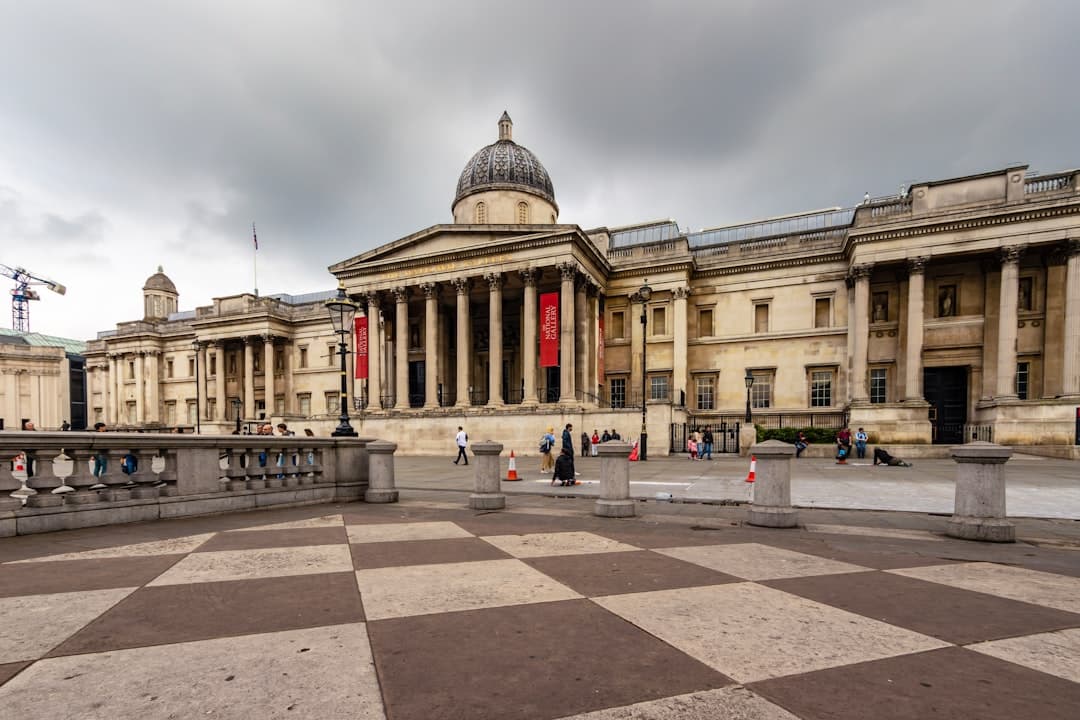
National Gallery
Seven centuries of Western art, free to enter, right on Trafalgar Square.
The National Gallery is one of the world's great art museums, housing a collection of over 2,300 paintings spanning from the 13th to the 19th century. Founded in 1824, it was designed from the outset to be a public institution — not a royal collection thrown open grudgingly, but a gallery built for everyone. That democratic DNA still shapes the place today: admission to the permanent collection is free, and the building sits at the symbolic heart of London on Trafalgar Square, accessible to anyone who walks through the door.
The collection moves chronologically and geographically through Western European painting. You'll find Van Eyck's jewel-like Arnolfini Portrait, Velázquez's haunting Rokeby Venus, Turner's stormy Fighting Temeraire, Vermeer's Young Woman Standing at a Virginal, and van Gogh's Sunflowers — and those are just the highlights everyone knows. Wander into the less-visited Italian rooms and you'll find Piero della Francesca, Raphael, and Caravaggio. The Sainsbury Wing, added in 1991, holds the earliest works and is worth seeking out specifically. Plan your route loosely — getting deliberately lost here is half the pleasure.
Friday evenings are the gallery's best-kept secret: it stays open until 9pm, and the crowds thin out dramatically after 6pm. If you want to stand alone in front of a Rembrandt, Friday evening is your moment. The gallery also runs free lunchtime talks and regularly rotates free temporary exhibitions alongside paid special shows. Bag check is available, and the café in the basement is decent enough for a break, though you'll eat better at almost anything on nearby St Martin's Lane.