Natural History Museum
A cathedral-like Victorian building packed with 80 million natural specimens.
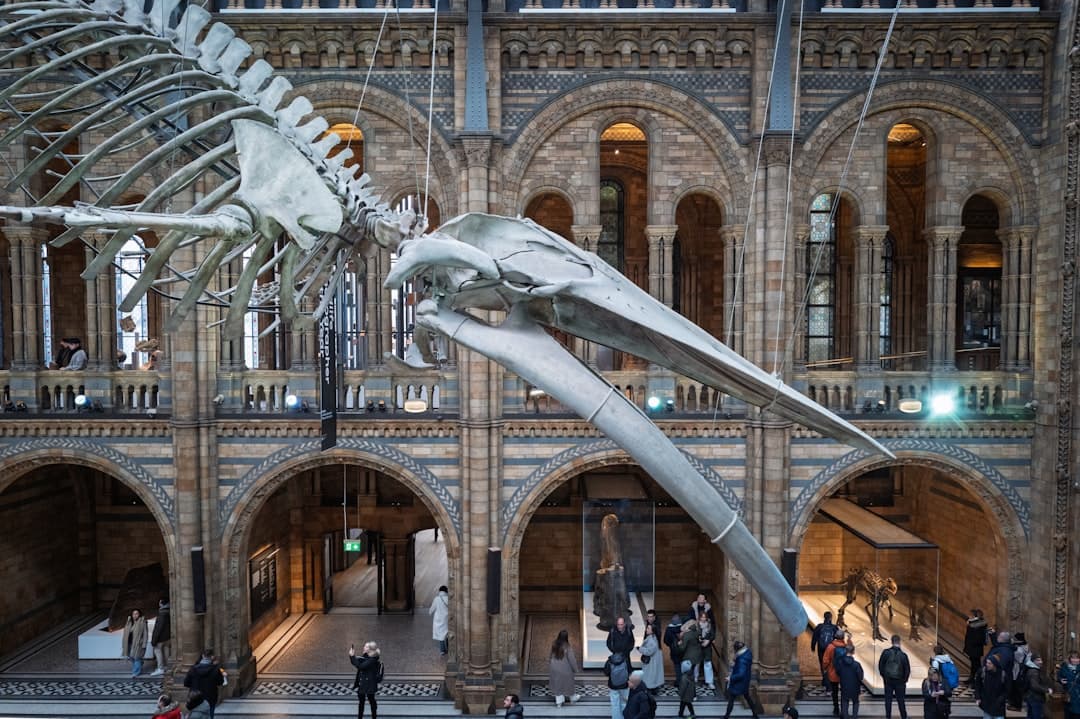
The Natural History Museum is one of the world's great science museums, housed in a breathtaking Romanesque building designed by Alfred Waterhouse and opened in 1881. It holds a collection of around 80 million specimens spanning billions of years of Earth's history — from meteorites older than the solar system to the skeleton of a blue whale hanging in the central Hintze Hall. It's free to enter, which makes it one of the best-value days out in London, and it draws around five million visitors a year for good reason.
The museum is divided into colour-coded zones, each covering a different part of the natural world. The Blue Zone is home to the iconic Diplodocus cast (now replaced by Hope, the blue whale skeleton) in the grand entrance hall, and leads into the dinosaur gallery — still one of the most popular rooms in any museum in London, with an animatronic T. rex that reliably terrifies small children. The Red Zone covers Earth's geology and includes a walk-through earthquake simulator set in a Japanese supermarket. The Green Zone holds the museum's Darwin Centre and a 26-metre cocoon building where you can peer into active research labs. The Orange Zone is a Wildlife Garden — a genuine slice of British habitat tucked into the museum grounds.
Given its size and popularity, arriving early matters. Queues on weekends and school holidays can stretch well down the Cromwell Road, but the museum operates a timed entry system for its ticketed special exhibitions — the permanent collection itself remains free and walk-in. The café and restaurant inside are functional but unremarkable; the South Kensington neighbourhood has better options within a few minutes' walk. Members can use a dedicated entrance on Exhibition Road, which skips the main queue entirely.