
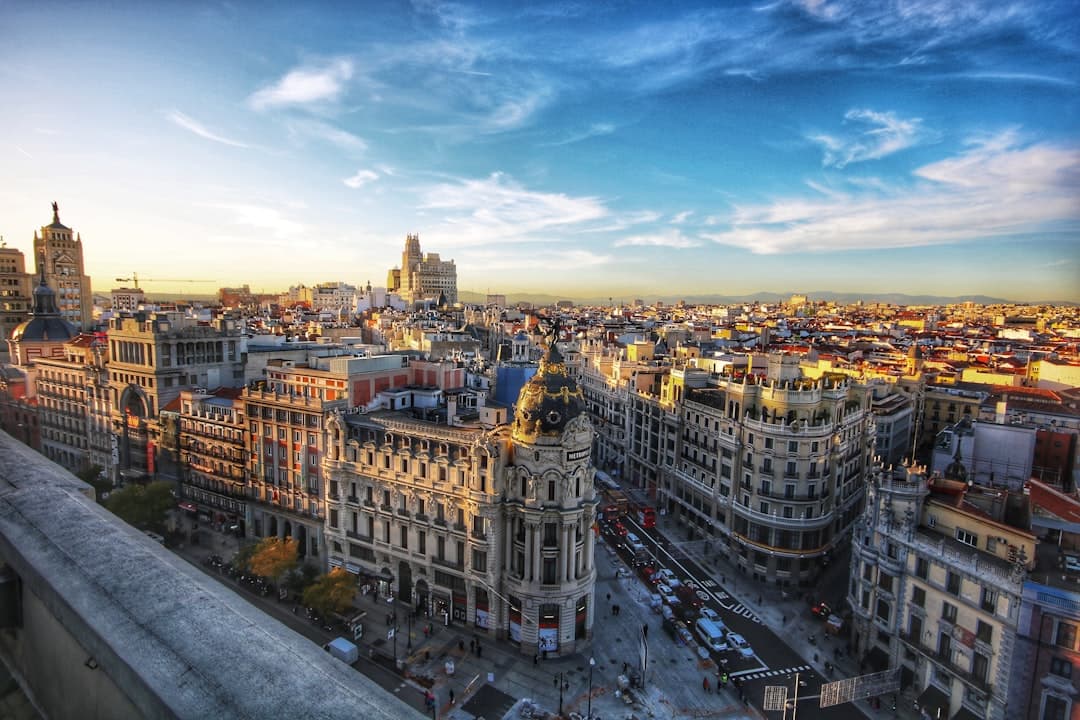
Puerta del Sol
Madrid / Puerta del Sol

Puerta del Sol

Madrid's beating heart: the central square where every road in Spain begins.

🏛️ Sights & Landmarks🏘️ Neighborhoods
👨‍👩‍👧 Family-friendly🎭 Cultural

Puerta del Sol is the geographic and symbolic center of Madrid — and by extension, of Spain itself. A large, semi-elliptical plaza in the heart of the city, it's the point from which all national distances are measured, marked by a small stone slab called Kilómetro Cero embedded in the pavement outside the regional government building. It's been a gathering place for centuries, witnessing everything from royal proclamations to revolutionary uprisings, and today it functions as the city's most recognizable crossroads: transit hub, meeting point, and perpetual street-level theater.

Walking into the square, you're surrounded by a ring of 19th-century neoclassical façades, dominated by the Real Casa de Correos — the old post office now serving as the seat of the Community of Madrid — topped by its famous clock tower. The bronze bear-and-strawberry-tree sculpture on the eastern side (El Oso y el Madroño) is Madrid's emblem and the obligatory photo stop. Tram-like electric billboards, chestnut vendors in winter, and a near-constant stream of Madrileños and visitors give the place a buzz that never really goes away, even late at night.

Practically speaking, Sol is more of a launchpad than a destination — you'll pass through it constantly because three metro lines converge here and the Preciados and Arenal pedestrian shopping streets radiate out from it. The best move is to arrive in the evening, when the light softens and the city starts to come alive, then use it as a starting point for the surrounding streets toward Callao, La Latina, or the tapas bars of Huertas.

Local Tips

  1. 1

    Look down for Kilómetro Cero — it's a small bronze plaque in the pavement directly in front of the Real Casa de Correos entrance. Easy to miss in a crowd, but it's the reason the square matters beyond aesthetics.

  2. 2

    The square is a prime spot for pickpockets, especially around El Oso y el Madroño during peak tourist hours. Keep bags in front of you and be wary of distractions.

  3. 3

    Use Sol as a transit hub rather than a place to eat — the immediate surrounding streets are full of tourist-trap restaurants. Walk two minutes in any direction toward Huertas or La Latina for dramatically better food at lower prices.

  4. 4

    The clock on the Real Casa de Correos chimes on national television every New Year's Eve — even if you're not visiting then, knowing this gives the tower a certain weight when you see it in person.

When to Go

Best times
New Year's Eve

Puerta del Sol hosts Spain's most famous New Year's countdown — thousands gather to eat 12 grapes at midnight to the strikes of the clock tower. Extraordinary atmosphere but extremely crowded; arrive early and expect closures.

Spring (April–May) and Autumn (September–October)

Mild temperatures make lingering in the square genuinely pleasant rather than a sprint between air-conditioned buildings.

Christmas season (December)

The square and surrounding streets are illuminated with spectacular lights, and the atmosphere in the evenings is festive and lively without the full chaos of New Year's Eve.

Try to avoid
July–August midday

The square is fully exposed with no shade, and Madrid summers regularly hit 38–40°C. Crossing it at noon in August is punishing.

Why Visit

01

Stand on Kilómetro Cero — the literal center point of Spain's road network, marked by a stone slab where locals make a wish and turn around three times for good luck.

02

The iconic El Oso y el Madroño bronze sculpture is Madrid's official symbol, and posing with it is a rite of passage for any first-time visitor.

03

It's the best place in the city to feel Madrid's pulse — the square transitions from morning commuters to afternoon tourists to a full-on New Year's Eve countdown party that rivals Times Square.