
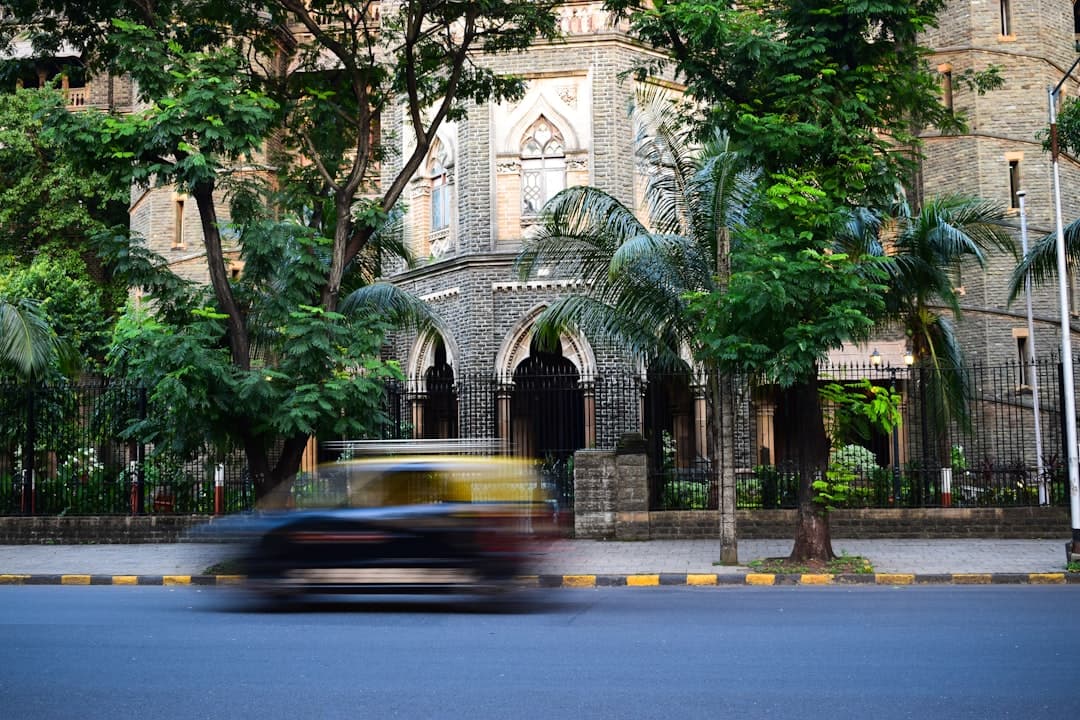
Chhatrapati Shivaji Terminus
Victorian Gothic meets Indian ambition in Mumbai's most theatrical train station.
Chhatrapati Shivaji Maharaj Terminus — still called CST or VT by almost everyone in Mumbai — is one of the most extraordinary railway stations on earth. Built between 1878 and 1888 by the British architect F.W. Stevens, it was designed to project imperial power and modern progress simultaneously, blending Victorian Gothic Revival architecture with Mughal and Hindu decorative details in a style sometimes called Indo-Saracenic. The result is a UNESCO World Heritage Site that looks more like a cathedral or a palace than a place to catch a commuter train. It remains a fully functioning station serving millions of passengers daily on both suburban and long-distance routes, which makes it one of the rare heritage monuments in the world that is also a living, breathing piece of urban infrastructure.
The building itself is the main event. The exterior is an overwhelming cascade of turrets, pointed arches, gargoyles, stained glass, and a central dome topped by a statue representing Progress. Inside, the booking halls and waiting areas retain ornate ironwork, tiled floors, and carved stone details that most stations of this era have long since demolished or covered over. The best approach is simply to walk around it slowly — both inside and out — letting the layers of detail reveal themselves. Look for the animal carvings (a tiger for India, a lion for Britain), the stained glass panels, and the stone scrollwork that runs along almost every surface. Come during the morning or evening rush and you'll also witness one of Mumbai's most cinematic spectacles: tens of thousands of commuters surging through a UNESCO monument as if it were the most ordinary thing in the world.
Entry to the station itself is free, and you don't need a ticket to walk through the main concourse areas, though you'll need a platform ticket (a small fee) to go onto the platforms. The best exterior views are from the street in front — stand back far enough to take in the full facade. Photography is generally permitted in public areas, though be mindful of security checkpoints and avoid photographing railway staff or security personnel directly. The surrounding Fort district is one of Mumbai's most architecturally rich neighborhoods, so combine this with a walk past the High Court, Bombay University, and the Oval Maidan for a full heritage stroll.