
Louvre Museum
Paris / Louvre Museum

Louvre Museum

Eight thousand years of human civilization housed in a former royal palace.

🏛️ Sights & Landmarks🎭 Arts & Entertainment
👨‍👩‍👧 Family-friendly🎭 Cultural🌹 Romantic

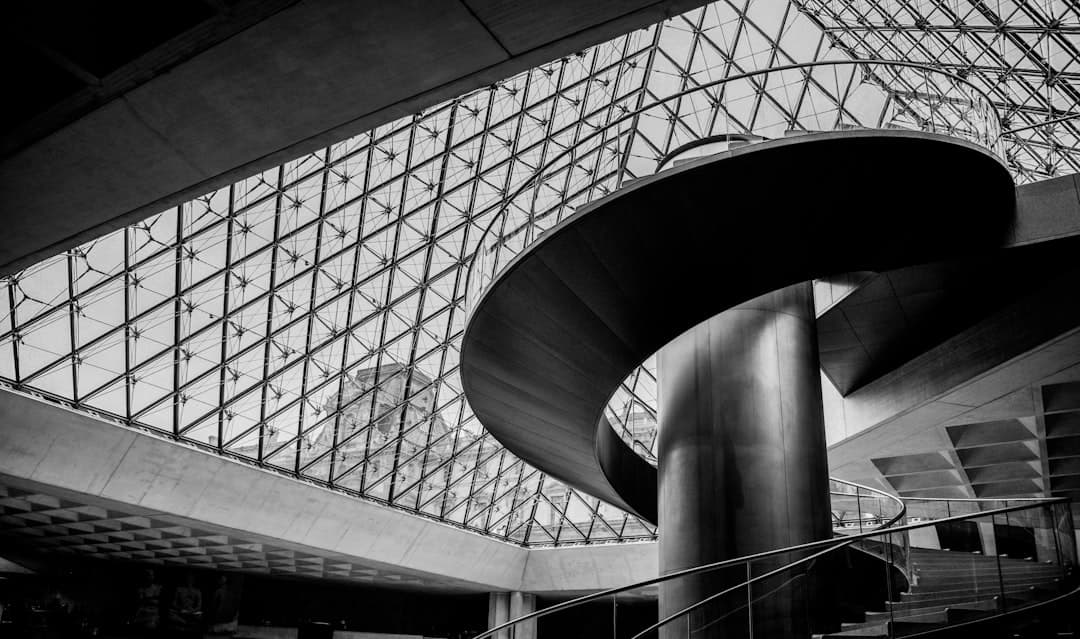
The Louvre is the world's most visited museum and one of the largest, occupying a grand palace complex on the right bank of the Seine that served as the seat of French royalty for centuries before becoming a public museum during the Revolution in 1793. It holds somewhere in the region of 35,000 works on permanent display — paintings, sculptures, antiquities, decorative arts — spanning from ancient Mesopotamia to the mid-19th century. The glass pyramid entrance, designed by architect I.M. Pei and opened in 1989, sits at the centre of the Cour Napoléon and has become as iconic as anything inside.

Most visitors come for the headline works: the Mona Lisa (smaller than you expect, behind glass, perpetually mobbed), the Venus de Milo, and the Winged Victory of Samothrace — the latter dramatically positioned at the top of a grand staircase and genuinely breathtaking. But the Louvre rewards anyone who wanders beyond these marquee stops. The ancient Egypt galleries are extraordinary, the Mesopotamian antiquities — including the Code of Hammurabi — are among the finest in the world, and the French crown jewels and royal apartments in the Richelieu Wing give real insight into the scale of Bourbon ambition. The building itself is part of the experience: gilded ceilings, parquet floors, and rooms that once housed kings.

The museum is divided into three wings — Denon, Sully, and Richelieu — and attempting to see everything in one visit is a fool's errand. Smart visitors pick two or three areas and go deep rather than rushing the whole thing. Book timed-entry tickets online well in advance, especially in summer. Wednesday and Friday evenings, when the museum stays open until 9pm, are significantly less crowded than daytime slots and are the insider's choice for a more peaceful experience.
Local Tips

  1. 1

    Enter through the Richelieu Passage (via the Rue de Rivoli entrance) or the Carrousel du Louvre underground mall entrance — both let you skip the main pyramid queue if you already have a ticket.

  2. 2

    The Mona Lisa is in the Denon Wing, Salle 711. It's worth seeing, but manage expectations: it's about the size of a large laptop screen, behind thick glass, and usually ringed by crowds. Visit early in the morning or near closing time for a slightly better experience.

  3. 3

    The Winged Victory of Samothrace at the top of the Daru staircase in the Denon Wing is arguably more spectacular than the Mona Lisa — and far less mobbed. Don't skip it.

  4. 4

    The museum café and restaurant options inside are decent but overpriced and crowded. A much better move is to bring a snack and eat in the Tuileries Garden next door, which is free to enter and beautiful.

When to Go

Best times
Wednesday & Friday evenings

The museum stays open until 9pm on these nights and the crowd thins noticeably after 6pm. Some of the most serene conditions for visiting the permanent collection.

January–March

Visitor numbers drop significantly after the holiday period, making this one of the most pleasant times to visit. You can actually stand in front of the Mona Lisa without being shoulder-to-shoulder with a hundred other people.

Try to avoid
June–August

Peak tourist season brings enormous crowds, especially around the Mona Lisa. Queues outside the pyramid can be long even with pre-booked tickets. Evening visits on Wednesday or Friday are the best way to beat the crowds.

Why Visit

01

Home to the Mona Lisa, Venus de Milo, and Winged Victory — three of the most famous artworks ever made, all under one roof.

02

The building itself is a monument: a former royal palace with gilded state apartments, grand staircases, and centuries of French history embedded in its walls.

03

The collection spans ancient Egypt, Greece, Rome, Mesopotamia, and European painting up to 1848 — it's genuinely one of the most comprehensive surveys of human art and culture anywhere on earth.