Montmartre
Paris's most atmospheric hilltop village, crowned by a gleaming white basilica.
Montmartre is a hilly neighborhood in the 18th arrondissement of northern Paris, perched on the city's highest point and anchored by the iconic white-domed Basilica of Sacré-Cœur. It was famously the bohemian heart of Paris in the late 19th and early 20th centuries — Picasso, Modigliani, Toulouse-Lautrec, and Van Gogh all lived or worked here, drawn by cheap rents and a creative, rebellious atmosphere. That artistic legacy is very much still present, though today it's one of the most visited neighborhoods in the world, so the crowd-management requires a little strategy.
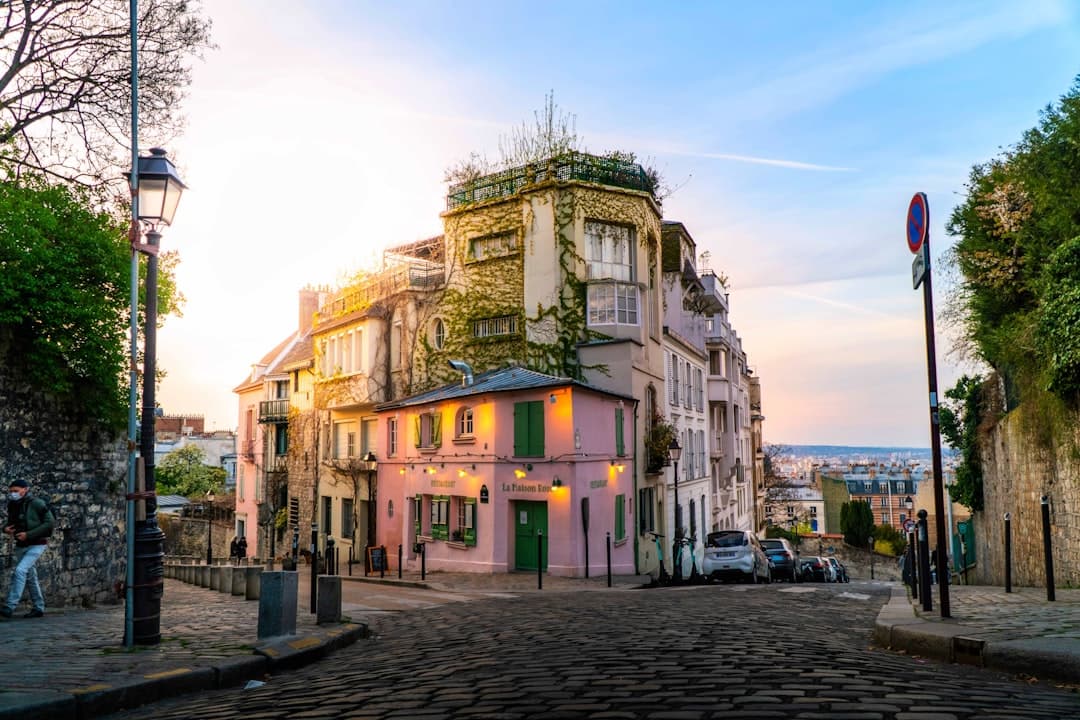
Wandering Montmartre is the whole point. You climb the hill — either via the steep steps from Place Saint-Pierre or the funicular from Abbesses metro station — and find yourself in a neighborhood that genuinely feels different from the rest of Paris. There are working artists in Place du Tertre (accept that it's touristy and enjoy it anyway), the oldest vineyard in Paris still producing wine each October, narrow cobbled streets like Rue Lepic that feel almost rural, and the evocative Moulin de la Galette — a real, still-standing windmill that Renoir famously painted. Sacré-Cœur itself is free to enter and the view from its steps over the Paris skyline is one of the best in the city.
The smartest way to experience Montmartre is to show up early — the neighborhood transforms before 9am, when the street cafés are quiet, the light is extraordinary, and the Place du Tertre is nearly empty. Come back in the evening for dinner in the village streets or a drink at a bar on Rue des Abbesses. Avoid arriving mid-afternoon on a weekend if you want any sense of the neighborhood's soul — it's genuinely overwhelming at peak times. The lower slopes around Pigalle and Rue des Martyrs offer excellent food shopping and some of Paris's best casual restaurants, giving the area a grounded, local energy below all the tourist action on the hill.