Musée d'Orsay
The world's greatest Impressionist collection, housed in a stunning converted railway station.
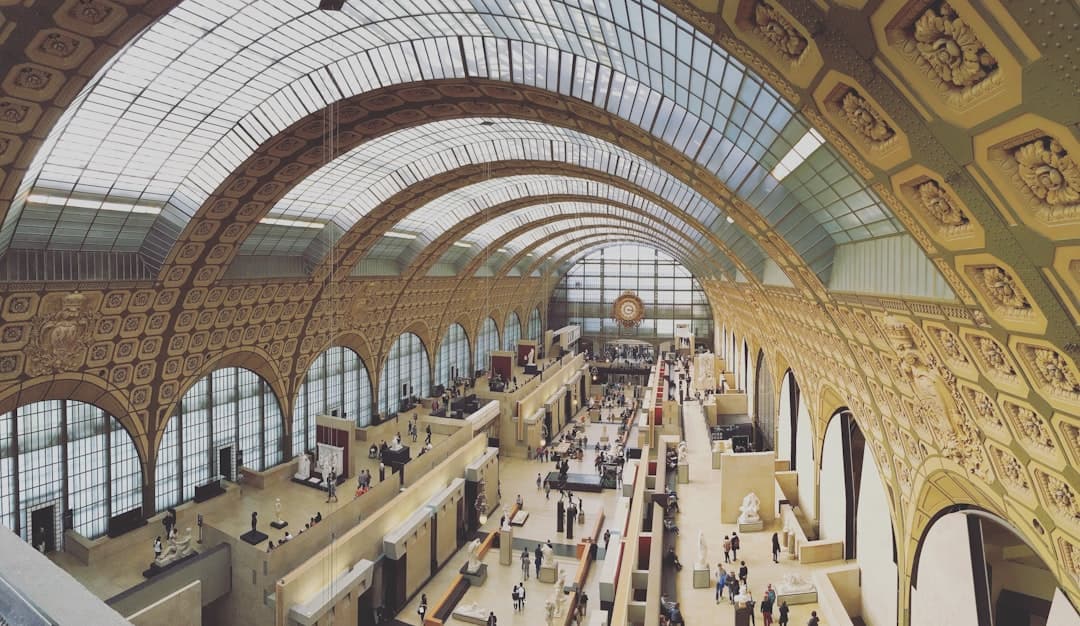
The Musée d'Orsay is a Paris art museum occupying a grand Beaux-Arts railway station built for the 1900 World's Fair. When the Gare d'Orsay was decommissioned, the building was saved from demolition and reopened as a museum in 1986. Today it holds one of the most important art collections on earth, spanning work from roughly 1848 to 1914 — the period that bridged academic painting, Realism, Impressionism, Post-Impressionism, and early Modernism. Think Monet, Renoir, Degas, Van Gogh, Cézanne, Gauguin, Seurat, and Klimt, all under one extraordinary roof.
Visiting means moving through high, light-filled galleries along the main nave and up into the upper floors where the Impressionist and Post-Impressionist masterpieces live. You'll stand in front of Van Gogh's Bedroom in Arles and Starry Night Over the Rhône, Monet's series paintings, Renoir's Moulin de la Galette, and Manet's scandalous Olympia and Le Déjeuner sur l'herbe — paintings you've seen reproduced a thousand times that look completely different in person. The building itself is part of the experience: the giant clock faces on the upper level are iconic, and the rooftop café offers one of the better views across the Seine toward Montmartre.
The Orsay is considerably more manageable than the Louvre — focused in scope, navigable in a single serious visit, and less overwhelming. Thursday evenings the museum stays open until 9:45pm and crowds thin out noticeably, making it the single best time to visit. The museum is closed on Mondays. EU citizens under 26 get in free, and the first Sunday of each month is free for everyone, though that draws significant crowds.