
Notre-Dame Cathedral
Paris / Notre-Dame Cathedral

Notre-Dame Cathedral

The Gothic cathedral that defines Paris, finally restored and reborn after fire.

🏛️ Sights & Landmarks🎭 Arts & Entertainment
👨‍👩‍👧 Family-friendly🎭 Cultural🌹 Romantic

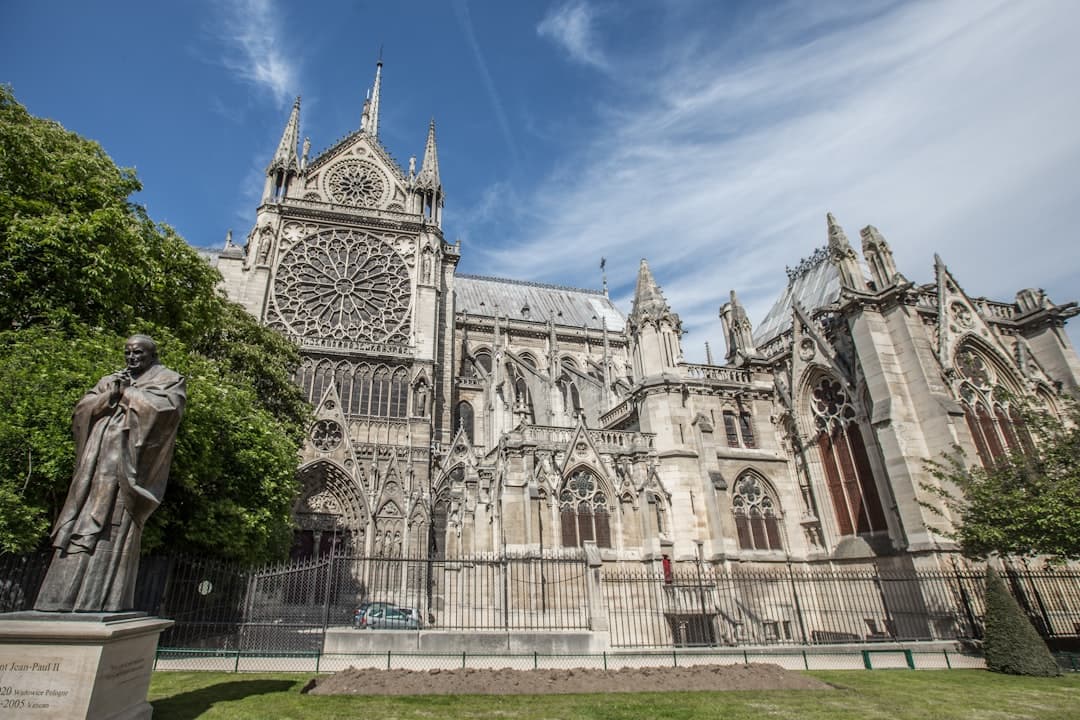
Notre-Dame de Paris is an 800-year-old Gothic cathedral sitting on the Île de la Cité, the small island in the Seine that is essentially the geographic and historic heart of Paris. Construction began in 1163 under Bishop Maurice de Sully, and the cathedral took nearly two centuries to complete — a timeline that produced one of the most sophisticated examples of medieval Gothic architecture anywhere in the world. It's the place where Napoleon crowned himself Emperor, where kings were mourned, where Quasimodo famously never actually lived (that was Victor Hugo's imagination), and where, in April 2019, the world watched its spire collapse in a devastating fire. After five years of painstaking restoration, the cathedral reopened in December 2024, and it has emerged looking more extraordinary than it has in generations.

Visiting Notre-Dame today means experiencing something genuinely rare: a medieval building that looks almost impossibly fresh. The interior nave, the famous rose windows — particularly the north rose window, which dates to around 1250 and retains most of its original glass — the ribbed vaulting, the flying buttresses outside, all of it is worth serious time and attention. The square out front, the Parvis Notre-Dame, gives you the full façade view with its three grand portals covered in carved biblical scenes. Inside, the cathedral is still an active place of worship, which means there's a rhythm and seriousness to the space that a museum can't replicate.

Because of the post-reopening demand, timed-entry reservations are strongly recommended and have been required during peak periods — check the official cathedral website before you go. Thursday evenings are a good option if you want fewer crowds and a slightly extended closing time. The island itself is worth lingering on: the Sainte-Chapelle, just a few minutes' walk away on the same island, has arguably even more dazzling stained glass and is often less crowded than Notre-Dame.
Local Tips

  1. 1

    Walk around to the back of the cathedral along the Rue du Cloître-Notre-Dame to see the flying buttresses up close — they're extraordinary pieces of engineering and look incredible from the small park (Square Jean XXIII) on the eastern end.

  2. 2

    The bronze star set into the pavement in front of the cathedral marks Kilometre Zéro, the point from which all road distances in France are officially measured. Easy to miss but worth finding.

  3. 3

    Combine your visit with Sainte-Chapelle, a five-minute walk away on the same island — it requires a separate ticket but its wall-to-wall 13th-century stained glass is jaw-dropping and the queues are typically more manageable.

  4. 4

    Free organ recitals take place on Sunday afternoons after the main mass — attending one is a profoundly different experience from a standard tourist visit and one of the best free things you can do in Paris.

When to Go

Best times
Early morning (opening time)

Arriving at opening — 7:50 AM on weekdays, 8:15 AM on weekends — gives you the best chance of a quieter interior and better light through the rose windows before the crowds build.

Thursday evening

The cathedral stays open until 10:00 PM on Thursdays, offering a dramatically quieter and more atmospheric visit than daytime, often with evening services adding to the ambience.

December

Christmas masses and carol services at Notre-Dame are a genuine Parisian tradition and deeply moving to attend or observe, with special seasonal decorations inside.

Try to avoid
Summer (June–August)

Peak tourist season means the square and entrance queues can be extremely long. Lines form early and the Parvis fills up by mid-morning.

Why Visit

01

The cathedral has just completed a landmark five-year restoration after the 2019 fire, making this a rare chance to see a medieval masterpiece looking closer to its original state than it has in living memory.

02

The three rose windows — especially the north window from around 1250 — are among the finest examples of medieval stained glass in existence, and they're genuinely breathtaking in person.

03

The building sits at Kilometre Zéro, the literal point from which all road distances in France are measured — you're standing at the symbolic centre of the country.