Palais Garnier
The world's most theatrical building, built to be seen as much as heard.
The Palais Garnier is a 19th-century opera house in the heart of Paris that ranks among the most extraordinary buildings ever constructed. Commissioned by Emperor Napoleon III and designed by architect Charles Garnier, it opened in 1875 after fifteen years of construction and became the defining symbol of Second Empire grandeur. It seats roughly 2,000 people under a ceiling famously painted by Marc Chagall in 1964 — a dreamy, swirling mural that still startles first-time visitors who expected something more historically austere. The building also inspired Gaston Leroux's 1910 novel The Phantom of the Opera, and yes, there really is an underground lake beneath it.
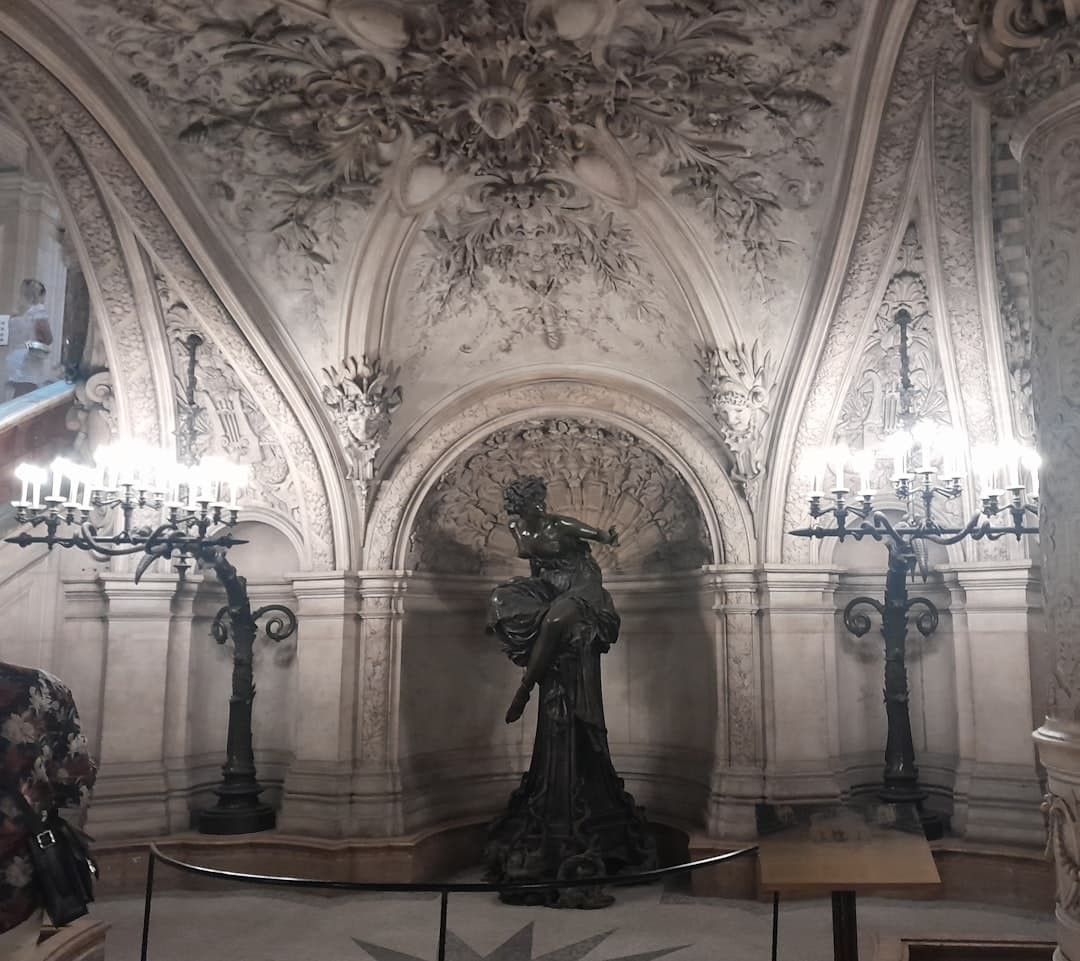
Most visitors come not just for a performance but to tour the building itself, and it holds up brilliantly. The Grand Staircase — white marble with double branching flights, illuminated by enormous chandeliers — feels like stepping into a fever dream of gilded excess in the best possible way. The Grand Foyer rivals Versailles in its mirrors and painted ceilings. The auditorium itself is red velvet and gold leaf everywhere you look, intimate despite its scale, with the Chagall ceiling floating above like a surrealist vision. The building contains a small museum dedicated to its own history, with costumes, set models, and archive material worth at least 30 minutes on its own.
The Palais Garnier now shares the Paris Opera's productions with the Opéra Bastille, the city's more modern second house, so programming here tends toward ballet rather than opera these days — which is worth knowing when you book. Day tours of the building run during hours when no rehearsals are scheduled, and the rooftop terrace (accessible on guided tours) delivers a surprisingly good panorama over the 9th arrondissement rooftops. Book a performance ticket to get the full experience of the building alive and lit, but even a daytime self-guided visit is absolutely worth it.