Sainte-Chapelle
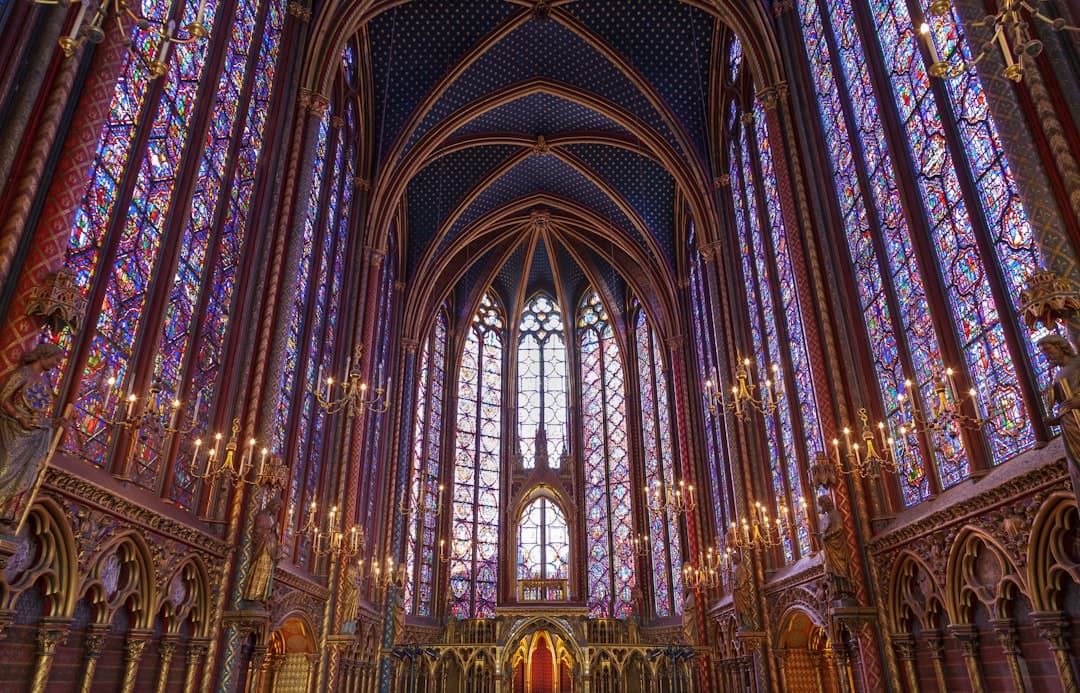
Fifteen meters of medieval stained glass that turns sunlight into something sacred.
Sainte-Chapelle is a Gothic chapel built in the 1240s by King Louis IX to house what he believed were the crown of thorns and a fragment of the True Cross — relics he'd paid a fortune to acquire from the Byzantine emperor. It sits tucked inside the Palais de la Cité complex on the Île de la Cité, Paris's oldest inhabited island, surrounded by the hulking Palais de Justice and easy to miss entirely if you don't know to look for it. The building was revolutionary for its time: the architects essentially dissolved the walls and replaced them with glass, making it one of the earliest and most ambitious expressions of High Gothic architecture anywhere in the world.
The experience is split between two levels. The lower chapel is modest and relatively dark — it was built for palace staff, and while it's beautiful, it's just the warm-up act. The upper chapel is the main event and one of the most genuinely arresting interior spaces in Europe. Fifteen enormous windows rise almost to the vaulted ceiling, each one densely packed with thousands of individual pieces of colored glass telling stories from both Testaments. On a clear day the light through those windows transforms the interior into something that doesn't feel entirely secular. You spend your time slowly circling the room, craning upward, getting close to individual panels, and trying to make sense of the iconography — there are illustrated guides for sale that help enormously.
Sainte-Chapelle sits within a working court complex, which means security screening at the entrance can be slow, especially in high season. Skip-the-line tickets bought in advance via the official Centre des monuments nationaux website make a real difference. It's also worth knowing the chapel shares a combined ticket with the Conciergerie just across the courtyard — the former royal prison where Marie Antoinette was held before her execution — which makes for a natural half-day pairing. Go on a sunny morning if at all possible; the difference between overcast and full sun inside that upper chapel is the difference between impressive and unforgettable.