
Castel Sant'Angelo
Rome / Castel Sant'Angelo

Castel Sant'Angelo

A 2,000-year-old fortress, mausoleum, and papal escape hatch above the Tiber.

🏛️ Sights & Landmarks🎭 Arts & Entertainment
🧗 Adventurous🎭 Cultural🌹 Romantic

Castel Sant'Angelo started life as a mausoleum built by Emperor Hadrian in 139 AD to hold the remains of himself and his successors. Over the centuries it was converted into a medieval fortress, a papal castle, a prison, and finally a museum — each era leaving its mark in layers you can still read in the walls. It sits on the west bank of the Tiber, connected to the Vatican by a raised passageway called the Passetto di Borgo, and its cylindrical silhouette topped by the bronze archangel Michael is one of the most recognisable skylines in Rome.

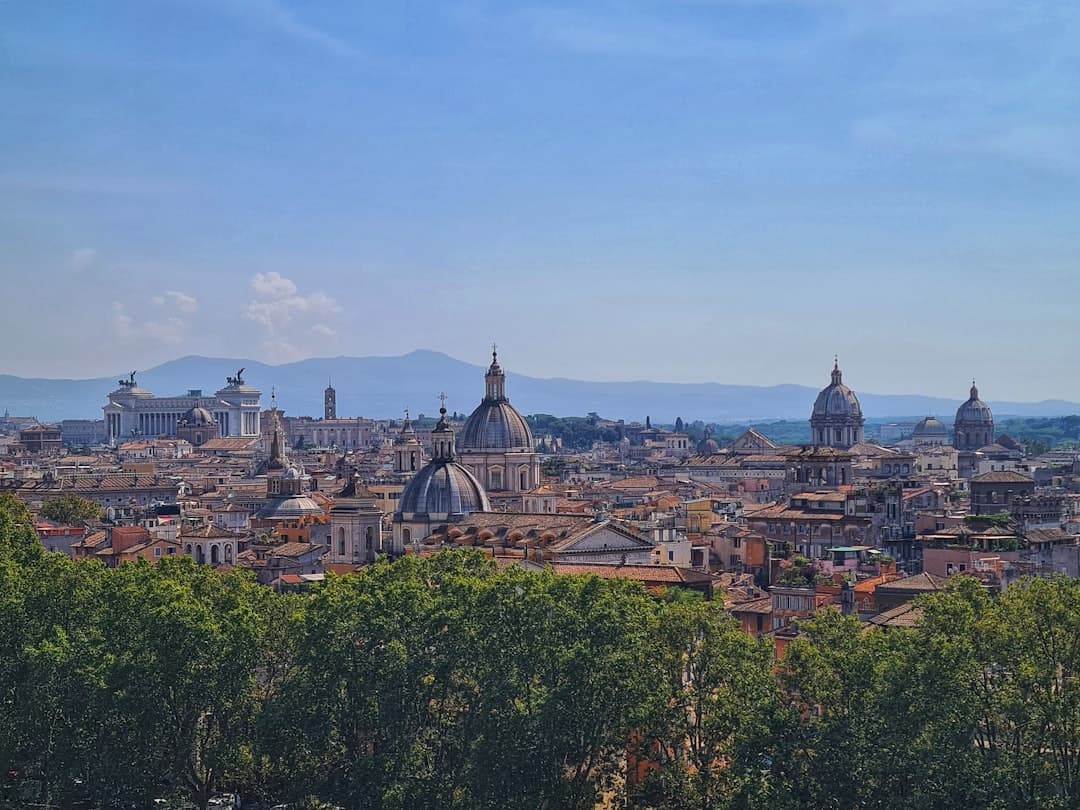
Inside, you move through roughly 2,000 years of history on foot: Hadrian's original spiral ramp winds up through the core of the building, Roman-era chambers give way to Renaissance papal apartments decorated with frescoes and period furniture, and execution courtyards sit just steps from ornate reception halls. The view from the terrace at the top — the same terrace where the climactic scene of Puccini's Tosca is set — stretches across the rooftops to St Peter's dome and down the length of the Tiber. It's genuinely one of the great urban panoramas in Europe.

The castle is a short walk from the Vatican and sits at one end of the Ponte Sant'Angelo, the pedestrian bridge lined with Bernini's angels that's worth crossing slowly. The castle is closed on Mondays. Lines can be long in peak season, and the interior involves a fair amount of climbing on uneven stone surfaces — wear sensible shoes. The upper terrace café is unremarkable, but the view from it is not.
Local Tips

  1. 1

    The Passetto di Borgo — the elevated corridor connecting the castle to the Vatican — is occasionally open for guided tours. If that option is available during your visit, take it: it's a remarkable piece of medieval escape infrastructure.

  2. 2

    Cross the Ponte Sant'Angelo on foot even if you approach from a different direction. Bernini designed the angel statues lining the bridge, and the view of the castle from the bridge's midpoint is the classic shot.

  3. 3

    The papal apartments on the upper floors are often underappreciated — visitors rush to the terrace and skip them. The frescoes in the Sala Paolina and the inlaid ceilings are genuinely beautiful.

  4. 4

    There's a small moat and garden area at the base of the castle that's often overlooked. It's a decent spot to decompress after the interior, especially if you're visiting with kids.

When to Go

Best times
Spring (April–May) and Autumn (September–October)

Ideal visiting conditions — mild temperatures, manageable crowds, and clear skies that make the terrace views spectacular.

Late afternoon (around 5–6 PM)

The light on the Tiber and St Peter's dome is at its best in the hour or two before closing, and crowds thin out compared to midday.

Try to avoid
Summer (July–August)

Peak crowds and intense heat make the climb through the interior uncomfortable and the queues outside long. Book ahead if you visit in these months.

Monday

The castle is closed every Monday — plan around this.

Why Visit

01

The rooftop terrace offers one of Rome's most sweeping panoramas — St Peter's, the Tiber, and the city skyline in every direction.

02

The building itself is the history: you walk through Roman, medieval, Renaissance, and baroque layers in a single visit, from Hadrian's original ramp to opulent papal apartments.

03

Standing on the spot that inspired the final act of Puccini's Tosca is one of those moments that makes Rome feel genuinely cinematic.