Palatine Hill
The mythical birthplace of Rome, layered with imperial palaces and sweeping city views.
Palatine Hill is one of the seven hills of Rome and, according to legend, the very spot where Romulus founded the city in 753 BC. It sits directly above the Roman Forum to the north and the Circus Maximus to the south, and for centuries it was the most prestigious address in the ancient world — emperors including Augustus, Tiberius, and Domitian built their vast palace complexes here, giving us the English word 'palace' from the Latin 'Palatium.' Walking its paths today means moving through almost three thousand years of continuous human history, from Bronze Age huts to the ruins of rooms where emperors ruled the known world.
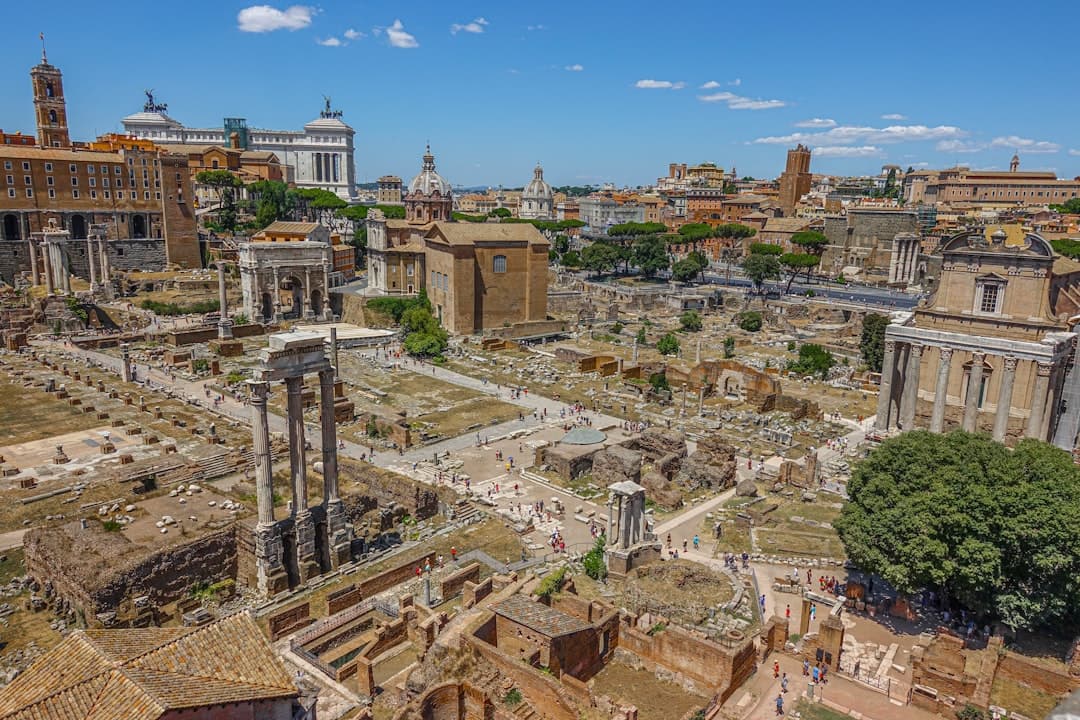
In practice, visiting the Palatine means wandering through a sprawling open-air archaeological site covered in umbrella pines, wild herbs, and ancient brick. You'll see the foundations of the House of Augustus and the House of Livia, both of which still contain extraordinary frescoes — rare survivals in remarkably vivid colour. The vast terraced platforms of the Flavian Palace give a sense of the sheer scale of imperial ambition. The Farnese Gardens at the northern end, built in the 16th century over older ruins, offer some of the best views in all of Rome: the Forum below, the Colosseum beyond, and the whole city stretching out under the Italian sky. The Palatine Antiquarium museum on-site holds sculptures and artefacts found during excavations.
The Palatine is included in the combined ticket with the Roman Forum and Colosseum, so most people arrive having already booked entry. The crowds tend to thin out up on the hill compared to the Forum floor below — many visitors don't linger. Come in the late afternoon when the light is golden and the tour groups have mostly moved on. Wear good shoes; the surfaces are uneven and the site is larger than it appears on a map.