Piazza Navona
Rome's grandest baroque square, built on the bones of an ancient stadium.
Piazza Navona is one of the most beautiful public squares in the world — a long, oval-shaped open space in the heart of Rome that follows the exact outline of the ancient Stadium of Domitian, built in 86 AD. For nearly two thousand years this space has been the center of Roman public life, from athletic competitions to a weekly market that ran until the 19th century. Today it's a showpiece of baroque architecture and sculpture, anchored by three magnificent fountains and ringed by elegant palaces, churches, and outdoor cafés.
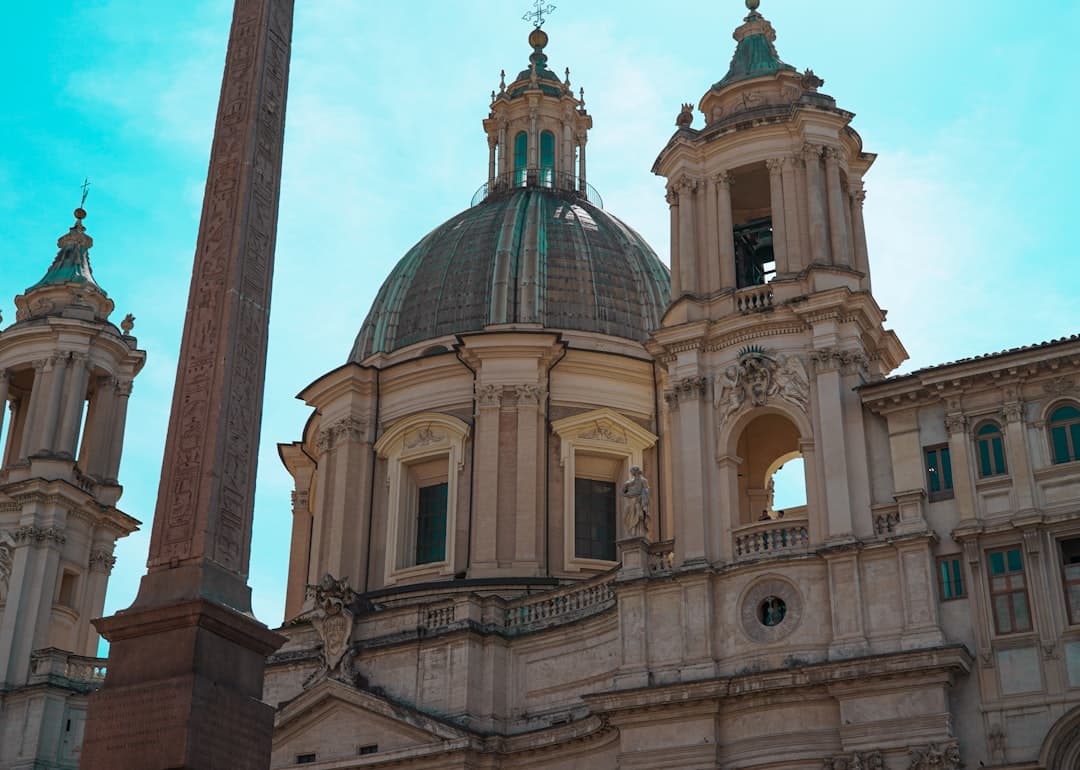
The square's undisputed centerpiece is Gian Lorenzo Bernini's Fontana dei Quattro Fiumi — the Fountain of the Four Rivers — completed in 1651. It's one of the most theatrical sculptures you'll ever see: four colossal river gods representing the Nile, Ganges, Danube, and Río de la Plata, all gathered beneath an ancient Egyptian obelisk. There are two other fountains flanking it — the Fontana del Moro to the south and the Fontana del Nettuno to the north. The piazza also fronts the Church of Sant'Agnese in Agone, a stunning baroque facade designed partly by Borromini, Bernini's great rival. Street artists, portrait painters, and musicians fill the square during the day, while the cafés along the edges hum well into the evening.
Piazza Navona is free, open always, and genuinely unmissable — but go early in the morning to feel what it's really like before the tour groups arrive. The cafés on the square itself, like Caffè Bernini, charge a significant premium for their location. If you want a proper espresso without paying tourist prices, duck into a bar on one of the surrounding streets — Via della Pace or the lanes near Sant'Agostino are good bets. The piazza is also the site of a beloved Christmas market (Mercato di Natale) from early December through Epiphany on January 6th, one of Rome's most atmospheric seasonal traditions.