
Roman Forum
Rome / Roman Forum

Roman Forum

Two thousand years of Roman power laid bare in a single open-air site.

🏛️ Sights & Landmarks🎭 Arts & Entertainment
👨‍👩‍👧 Family-friendly🎭 Cultural🌹 Romantic

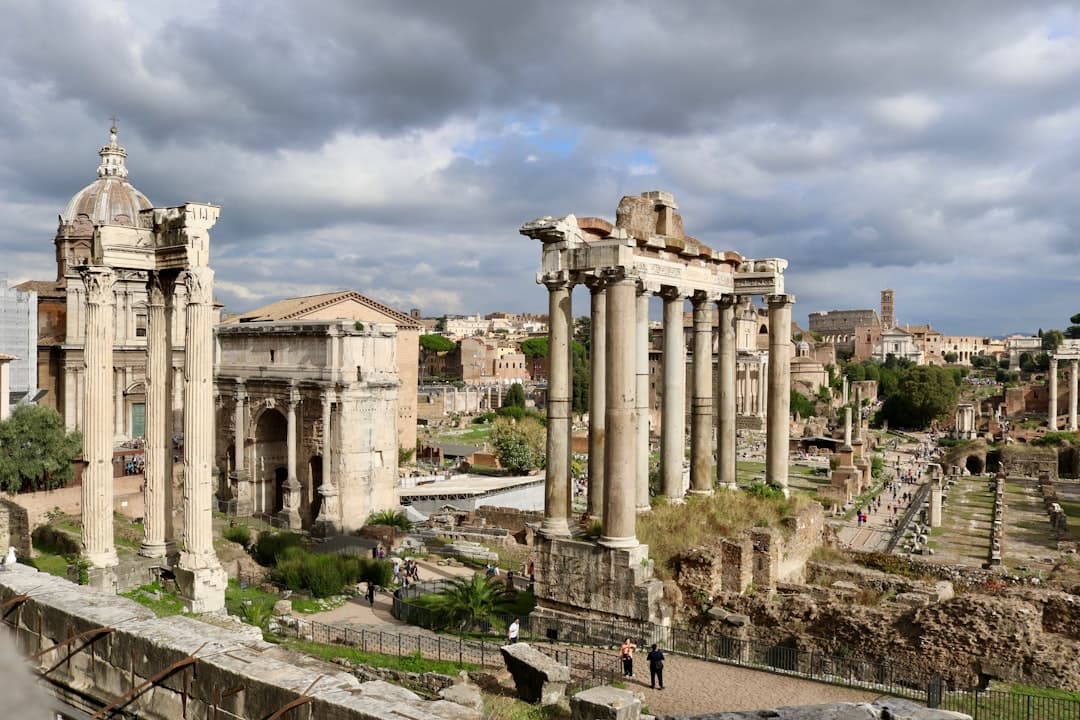
The Roman Forum was the beating heart of ancient Rome — the civic, religious, and political center of one of history's greatest empires. For nearly a thousand years, this rectangular valley between the Palatine and Capitoline hills was where Romans gathered to vote, hold trials, conduct business, and watch triumphal processions. Today it's an extraordinary archaeological site stretching across several acres, packed with the ruins of temples, basilicas, arches, and sacred roads that shaped Western civilization. If you've ever wondered where the idea of a senate, a public square, or a triumphal arch came from, you're standing in the answer.

Walking through the Forum, you follow the Via Sacra — the Sacred Road — past landmarks that every Roman would have known by heart. The Arch of Septimius Severus, still remarkably intact, marks one end. The Temple of Saturn's eight surviving columns rise dramatically against the sky. You can peer into the Curia Julia, where the Roman Senate met, and stand at the spot where Julius Caesar's body was cremated, marked by the Temple of Divus Julius, where flowers are still occasionally left. The Basilica of Maxentius gives you a sense of the staggering scale Romans worked at. Nothing is roped off at a safe distance — you walk among the stones themselves.

The Forum is covered by the same combined ticket as the Colosseum and Palatine Hill, and visiting all three on the same day is the standard approach — and a smart one, since the Palatine's hilltop views over the Forum are genuinely spectacular. Come early in the morning to beat both the crowds and the heat, especially in summer. The site has very little shade, so a hat and water are non-negotiable in July and August. Audio guides and apps (the Colosseum's official app is worth downloading) help enormously, because signage on-site is sparse and without context, ruins can blur together quickly.
Local Tips

  1. 1

    Enter the Forum from the Via Sacra entrance near the Arch of Titus rather than the main Colosseum-side entrance — it's less congested and gives you a better sense of arrival.

  2. 2

    The Palatine Hill is included in your ticket and most visitors underestimate it. The hilltop ruins of imperial palaces and the views directly down into the Forum are worth the climb.

  3. 3

    Download the official Colosseum app or a dedicated Rome audio guide before you arrive — on-site signage is genuinely inadequate for understanding what you're looking at.

  4. 4

    Flowers left at the Temple of Divus Julius mark the traditional site of Caesar's cremation. It's a small, easily missed structure — look for the semicircular brick apse near the center of the Forum.

When to Go

Best times
Early morning (opening time)

Arriving at 9am gets you the site before tour groups take over. The light is also softer and better for photography, and the heat hasn't built yet.

Late October–November

Crowds thin out significantly, temperatures are mild, and the low autumn light across the columns is particularly atmospheric. One of the best windows to visit.

January–February

Lowest tourist numbers of the year and cool but usually manageable temperatures. Some facilities may have reduced hours, but the site itself is quieter and more contemplative.

Try to avoid
July–August

The Forum is almost entirely exposed to direct sun with minimal shade. Midday heat can be brutal and the site is at peak tourist density — conditions that make the visit genuinely uncomfortable.

Why Visit

01

Walk the same road — the Via Sacra — that Roman generals marched down during triumphal processions celebrating victories across the ancient world.

02

See the spot where Julius Caesar was cremated after his assassination in 44 BC, one of the most consequential events in Western history.

03

The combination of scale, age, and open access is almost unmatched anywhere — you walk through the ruins rather than looking at them from behind a barrier.